Europe
Outer Hebrides
"I came for a week and stayed three, waiting for a ferry I kept missing on purpose."
The ferry from Ullapool crosses the Minch in about three hours, and by the time Lewis appears through the rain — a dark ridge of peat and rock with no obvious invitation — you already understand this is not a place that wants to be visited. It wants to be earned. I arrived on a Tuesday in early October, waterproof packed, half my Spanish still tangled in my head from the month before. The Hebrides don’t ease you in. The wind hits the harbour like a flat hand.
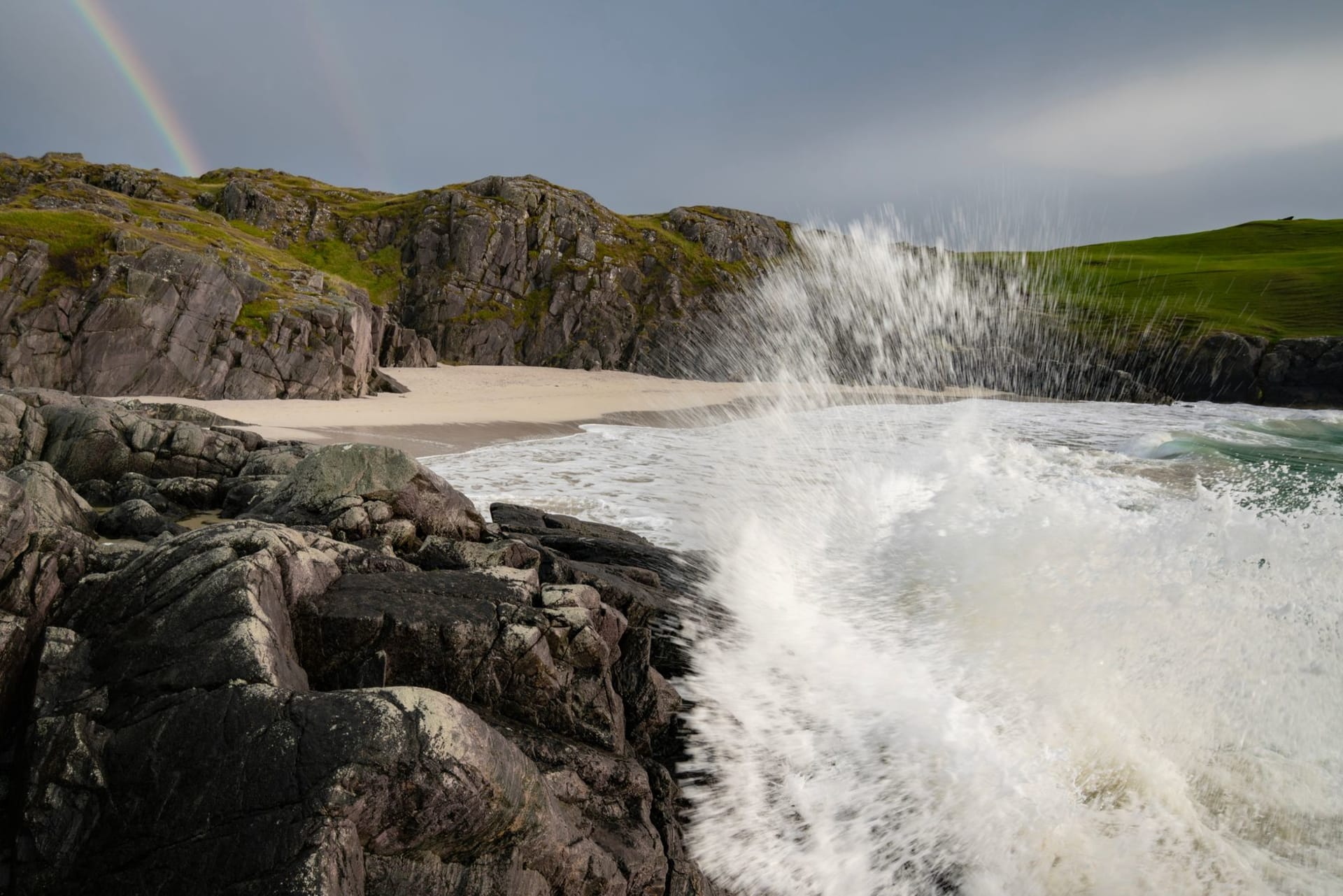
What I wasn’t prepared for was the light. After years in Mexico, where the sun is a permanent fact, the Outer Hebrides offer something I’d forgotten existed: a light that changes every twenty minutes. At Luskentyre on Harris, the sand is so fine and white it looks borrowed from the Caribbean, except it’s framed by peat-black hills and a sky doing six things at once. I stood there in my waterproof watching the tide pull back across a kilometre of sand that turned from cream to silver to gold in the space of a cigarette. Nobody else was there. Nobody. I’ve been to beaches in Mexico with signs and ropes keeping you fifty metres from the actual water. Here I had the whole Atlantic.
The food is not the point — that much is honest. You eat smoked salmon from a shack near Stornoway, and you drink too much whisky in pubs where the barman has the same last name as the street. But the machair in June, if you go then, is one of Europeinely botanical moments: meadows of wild orchids and clover and buttercups rolling right to the dune edge, kept alive by the same Atlantic wind that makes you eat dinner at four in the afternoon to avoid the gales. I missed it by a season but found the ghost of it in the colours of the lichen on the Callanish stones — that prehistoric ring on Lewis where people were doing something important four thousand years before anyone thought to write it down.
When to go: May and June for the machair flowers and the longest days — light until nearly midnight. September and October if you want solitude and drama without caring much about warmth. Avoid July and August unless midges are your idea of local culture.
What most guides get wrong: They sell the Outer Hebrides as a “remote wilderness escape” as if emptiness is the main attraction. The real thing is the culture — Gaelic is still spoken here as a first language, the Sunday ferry to Harris only started running in 2009, and the rhythm of these islands is genuinely different from the rest of Britain. Go to a cèilidh. Learn three words of Gaelic. Eat the black pudding. The landscape is spectacular, yes, but it’s the people who make it make sense.