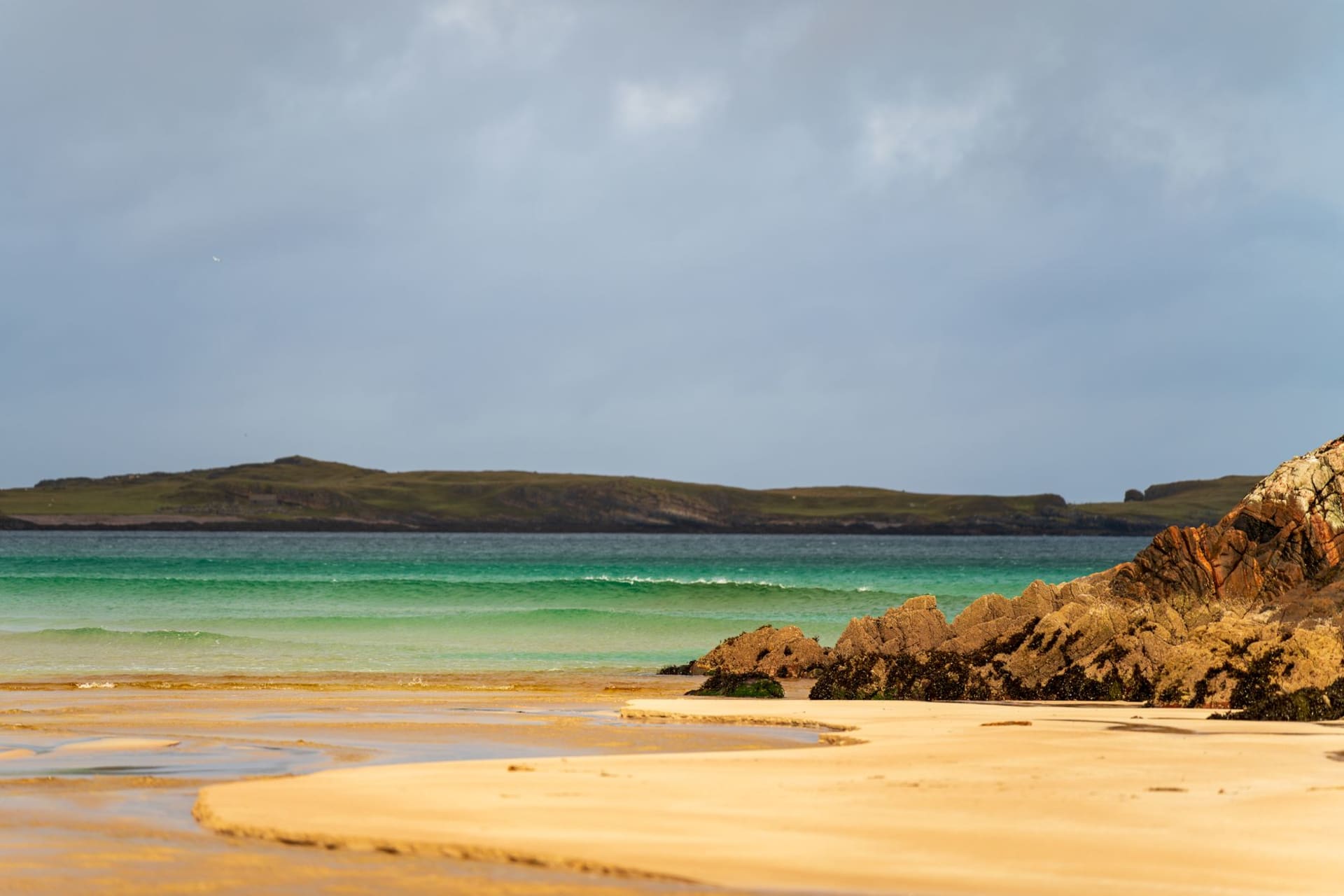
Butt of Lewis
"The wind at the Butt of Lewis hits so hard it feels like the island is trying to get rid of you. I stayed three hours."
The road north from Stornoway runs through peatlands that feel like they extend forever — flat, black, sectioned by drainage ditches, punctuated by the occasional white house with its peat stack by the door. The villages thin out as you go north: Port of Ness, Eoropie, and then the road simply terminates at a car park where a sign in English and Gaelic confirms that this is, indeed, the end. I walked the path to the lighthouse in a gale that came off the Atlantic with nothing between it and me except the width of an ocean, and I understood for the first time what people mean when they say a place is scoured.
The lighthouse is brick-red and stocky, built in 1862 to warn ships of the reef that extends into the Minch, and it stands on black basalt cliffs that drop thirty metres into water the colour of hammered pewter. From the lighthouse railing — when the wind allows you near the railing — you can see the stack of Sula Sgeir to the north-northwest, barely visible in clear weather, the island where the men of Ness still take gannets for the traditional harvest they’ve practiced for centuries. There is nothing else. No islands between here and Iceland worth mentioning.
The gannets are the performance. They work the updrafts off the cliff face below the lighthouse in loose groups of ten or twenty — white with black-tipped wings, nearly three metres across when they spread out — folding into the dive at the last instant with a violence that seems excessive for catching one mackerel. I watched them for an hour from the cliff edge, lying flat against the grass in the lee of the wind. The sound when they fold and hit the water carries all the way up: a muffled concussive report, then nothing, then the bird surfaces with its fish and everything begins again.
The village of Ness to the south is the last substantial community before the point, and worth a slow drive through: croft houses, the An Comunn Eachdraidh heritage centre, and a small café that does sandwiches and milky coffee in a room with the deliberate warmth of somewhere that knows it is the last warm room for a while. I went twice, once on the way out and once on the way back, both times deeply grateful for the hot chocolate. The woman behind the counter didn’t ask where I was going. She could tell by the look on my face.
When to go: Summer for the gannet activity and the dramatic long light on the cliffs — the Butt in June is lit until eleven at night and the cliffs glow orange in the low sun. Autumn for the storms, which are spectacular when the Atlantic swell is running: walls of spray off the reef, the lighthouse beam visible through rain. In all cases bring a windproof that you genuinely believe in.