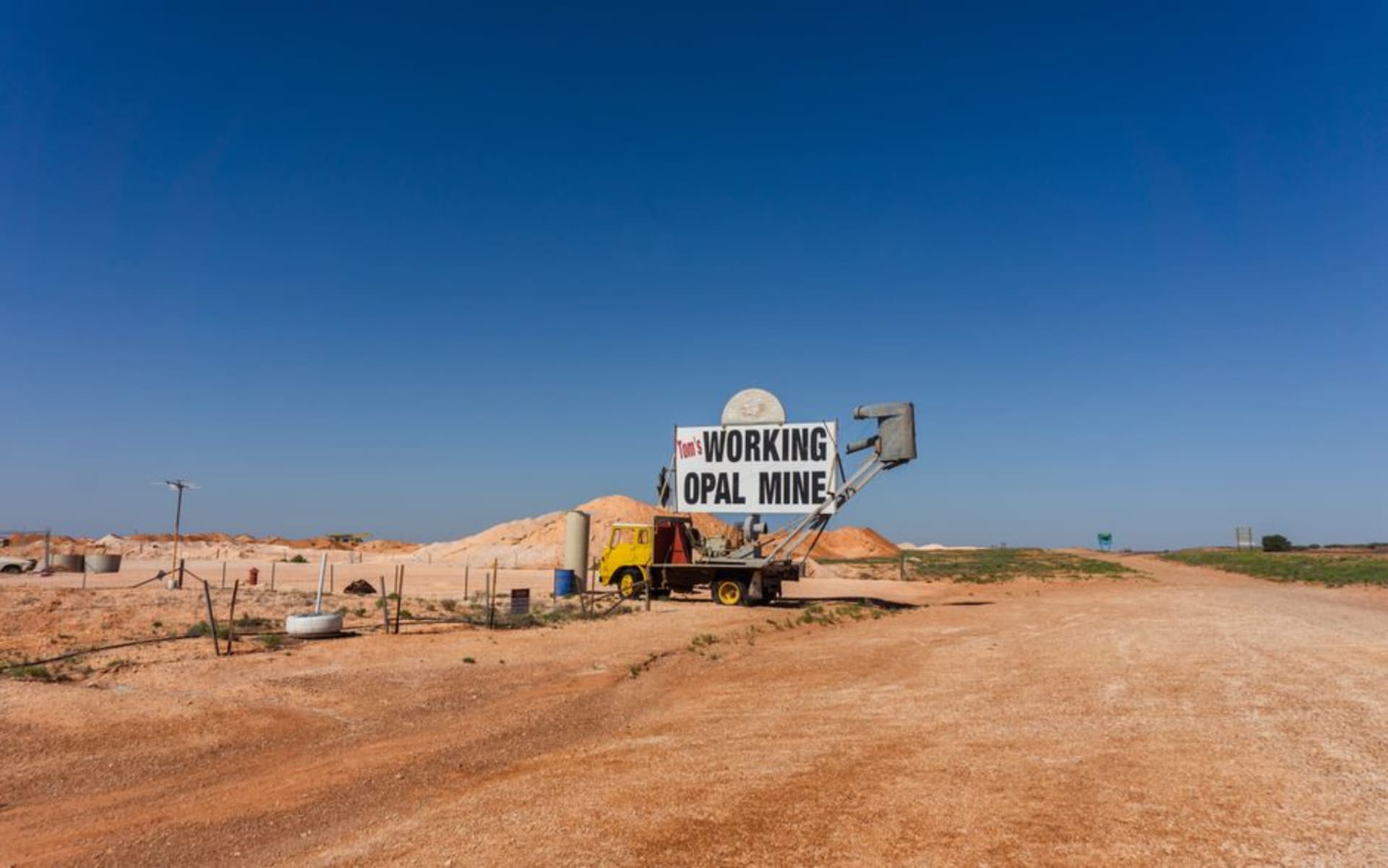
Lightning Ridge
"Half this town lives underground, and once you feel a Ridge summer, it stops being eccentric and starts being obvious."
The only place on earth where black opal forms in commercial quantity, mined by a population living half underground to escape the heat.
Lightning Ridge is the only place on the planet that produces black opal in real commercial quantity, and the town has organised its entire personality around that one geological fact. I drove in from Walgett across flat mulga scrub and the first thing I noticed wasn’t a building — it was the mullock heaps, pale conical mounds of excavated earth dotting the landscape in every direction, each one marking a shaft some miner had sunk chasing colour underground. There are said to be more than fifty thousand of these old shafts scattered around the Ridge, most unmarked, which is why every sign in town warns you, with real seriousness, not to walk off the tracks at night.
The heat here is genuinely dangerous in summer, which is why a significant number of Ridge residents live in dugouts — homes carved directly into the sandstone hillsides that stay at a stable 22°C year-round regardless of what’s happening outside. I toured one, the Chambers of the Black Hand, a dugout carved by a single miner over decades into an underground gallery of sculpted biblical and cultural scenes lit by strings of bulbs, and it remains one of the strangest, most singular things I’ve encountered anywhere in this country — one man’s decades of obsessive, unpaid, underground art.
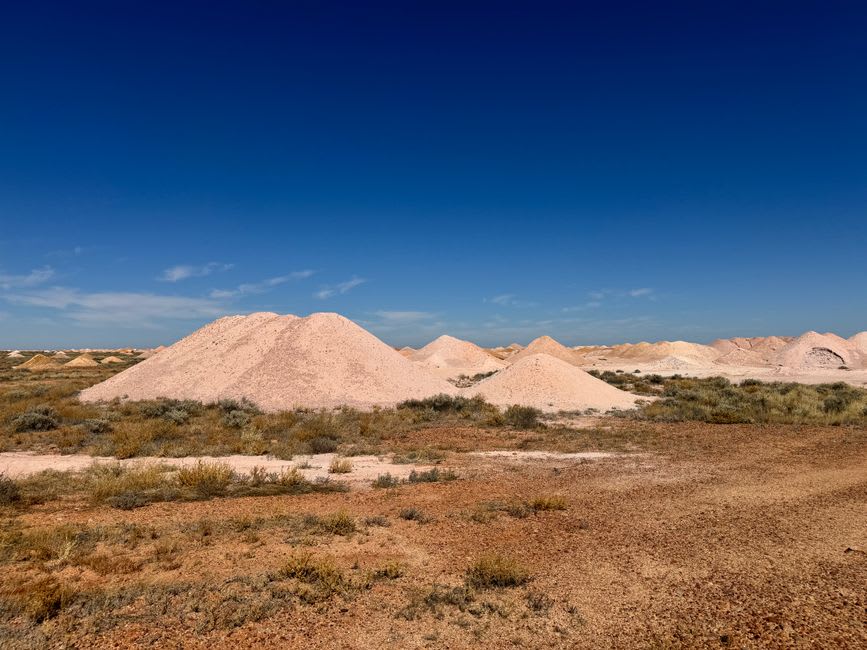
I tried noodling — sifting through mullock dumps at the public fossicking area for opal chips missed by machines — and found nothing, which apparently is the standard experience and part of the appeal. What I did find, in a small shopfront gallery on Morilla Street, was a piece of black opal held up to a bare bulb, flashing electric blue-green-red in a way that made the whole absurd, sunburnt, half-underground economy of this town make sudden, complete sense.
When to go: April through September. Summer temperatures routinely exceed 40°C and make anything above ground unbearable by mid-morning; winter days are mild and clear, ideal for touring the dugouts and fossicking fields.