Oceania
The Outback
"Nothing prepares you for how loudly the Outback says nothing at all."
I drove into Karijini National Park from Port Hedland on a road that stopped pretending to be a road about 40 kilometres in. The rental car was wrong for the terrain — too low, too timid — and I kept stopping not because anything broke down but because I needed to get out and stand in it. The red iron-rich earth. The spinifex catching late afternoon light like it was made of copper wire. That specific smell of hot dust cooling as the sun dropped. I hadn’t been anywhere this quiet since I was a kid in the Auvergne, and even then there were cows.
The Outback is not one place. It’s an attitude the continent holds toward the interior — a vast dismissal of human pretension that stretches across Western Australia, the Northern Territory, South Australia, and Queensland. But what I found in Karijini specifically was something that doesn’t photograph well: depth. The gorges cut 100 metres into the earth and the light inside them turns amber and rose and, at the very bottom where water runs cold year-round, a kind of blue that has no business existing in a desert. I lowered myself down Hancock Gorge on a rope and swum through a slot canyon where the walls pressed close enough to touch with both arms. The water was freezing. I stayed in for twenty minutes, which felt reckless and correct.
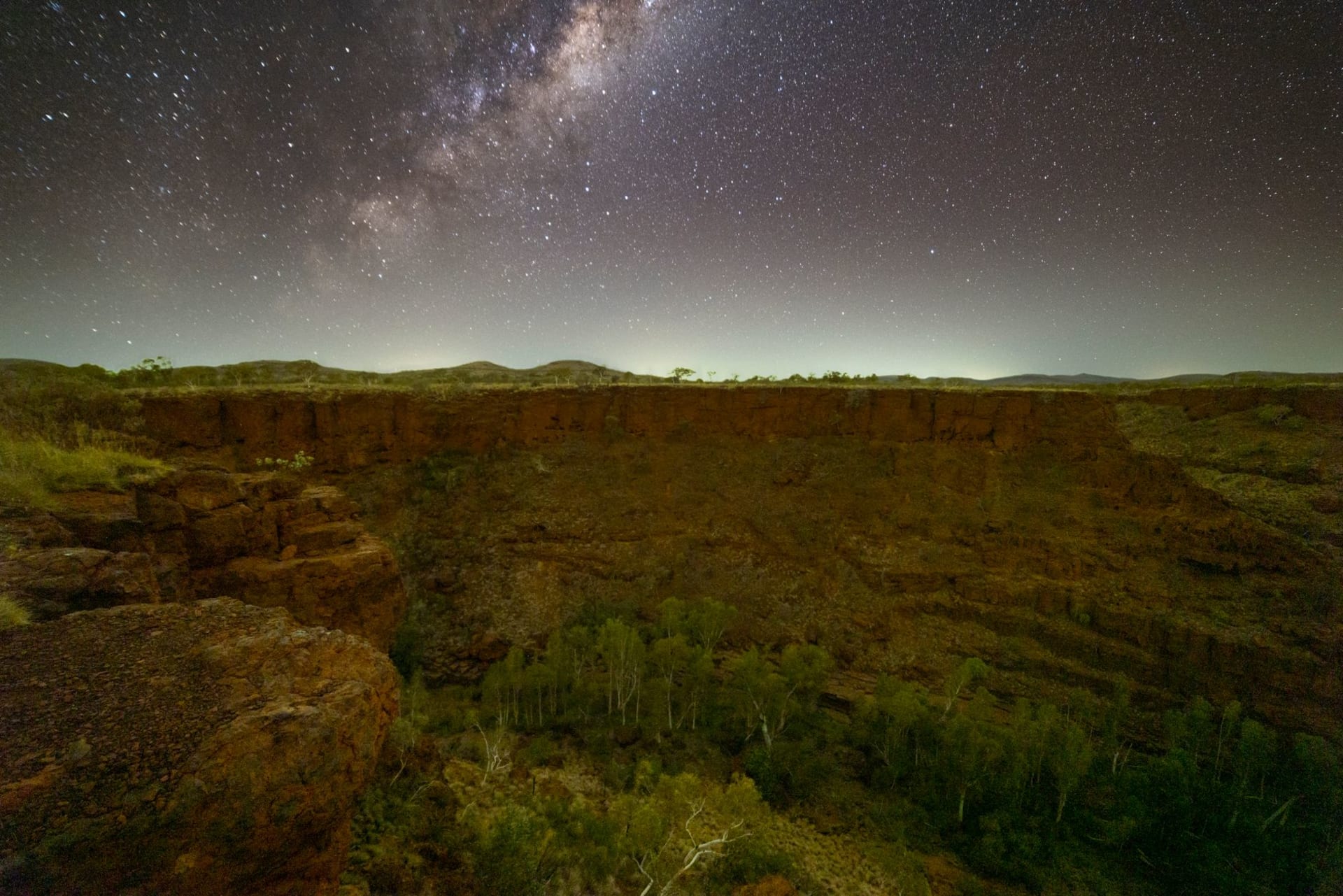
Food in the Outback is a matter of managing expectations and then being surprised anyway. The roadhouses — Tom Price, Newman, Paraburdoo — serve pies that are better than they have any right to be and coffee that isn’t, but nobody comes to the Outback for the coffee. I cooked most evenings on a camp stove: rice, lentils, canned tomatoes, a tin of sardines I’d brought from Mexico out of habit. I ate sitting on the bonnet of the car watching the sky go from orange to purple to black so studded with stars that the Milky Way cast a shadow. That last part is not a metaphor. You can see your hand in Milky Way light out here.
When to go: May through September. Desert winters mean days between 20–28°C and nights cold enough to need a sleeping bag — ideal walking and gorge-swimming conditions. Avoid December to February entirely: 45°C heat, flash flooding, and roads that close without notice.
What most guides get wrong: They treat the Outback as a bucket-list checkbox — Uluru photo, done — rather than a place that requires time to enter. Two days is tourism. A week is when it starts to work on you. The transformation happens slowly, around the third or fourth day, when you stop reaching for your phone and start noticing the specific sound a wedge-tailed eagle makes when it rides a thermal directly overhead. That’s when the Outback becomes something other than scenery.