Kakadu National Park
"Kakadu is where you go to understand that Australia has been occupied, lovingly, for a very long time."
I arrived at Yellow Water Billabong in Kakadu at 5:50 in the morning on a flat-bottomed boat that moved quietly through water so still it doubled the sky. The light was coming in flat and pink from the east, and the paperbarks along the shore were reflected perfectly below, their grey trunks inverted in the black mirror of the water. Then a jabiru waded into view — that enormous black-and-white stork of the tropics, standing a metre and a half at the shoulder, moving through the shallows with the unhurried authority of a bird that has been doing this since the Pleistocene. I stopped breathing for a moment. The guide kept the engine barely turning.
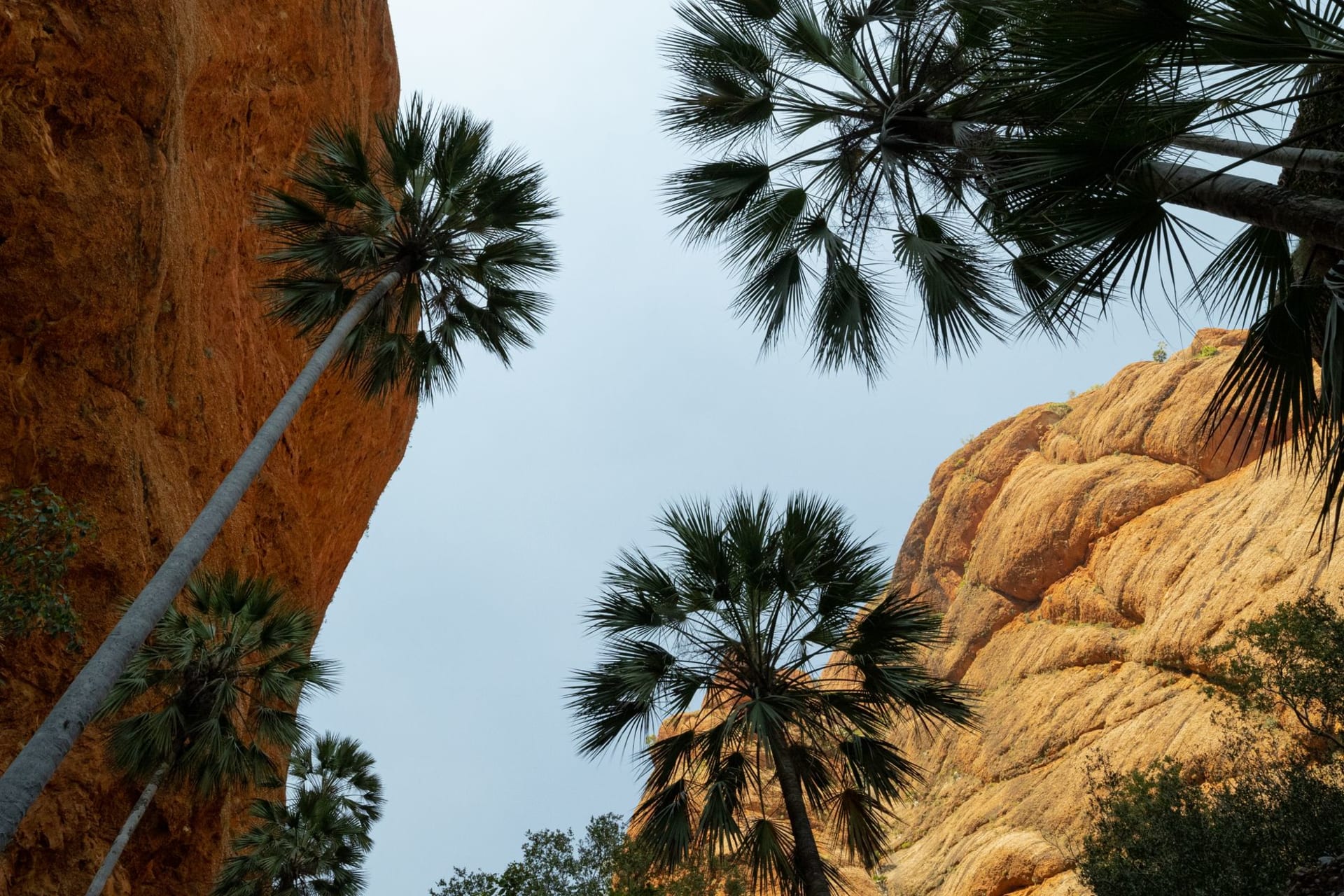
Kakadu is Australia’s largest national park — nearly 20,000 square kilometres covering two distinct and equally extraordinary ecosystems: the stone country of the Arnhem Land escarpment rising in the east, and the vast floodplains of the South Alligator River system filling the west. The wet season — November through April — floods the plains to depths of several metres, and the dry season — May through October — draws them back to a network of billabongs and channels where wildlife concentrates in extraordinary density. The birds alone at Yellow Water in June and July are worth the trip from anywhere.

The rock art at Ubirr, in the northern section of the park, is among the most significant in the world. The Bininj/Mungguy people have been painting on the sheltered rock faces of the Arnhem Land escarpment for at least 20,000 years, and the gallery at Ubirr contains works from multiple periods: the old Mimi spirit figures, elongated and in mid-motion; the x-ray paintings of fish and wallabies that show internal organs and bones; more recent contact-era paintings showing sailing vessels and men with rifles. Standing beneath these works, you are not looking at history in the usual sense. You are standing inside a tradition that is continuous and alive, painted by people whose descendants are still here.
I climbed to the Ubirr lookout at sunset and watched the floodplain go from gold to orange to a deep purple-blue, the escarpment holding the last light and releasing it slowly. Below, the plain was braided with waterways. Flying foxes by the tens of thousands poured out of the paperbarks in a stream that lasted forty minutes. The people standing around me — a group of German tourists, an Australian family with teenagers, a man with a serious camera — all stopped talking at the same point, and stayed stopped.

I ate bush tucker at the Aurora Kakadu Lodge — crocodile spring rolls, barramundi with native finger lime — and both were genuinely good rather than novelty dishes performed for tourists. The barramundi was freshwater and caught locally and the difference from farmed fish was immediate and decisive, the flesh dense and clean tasting, the finger lime beside it popping acid green against the white.
When to go: June and July are the peak dry season months — maximum wildlife on the billabongs, cool nights, manageable humidity. May and August are excellent and quieter. October brings dramatic storm-building skies but roads start to close. The wet season makes most roads impassable but charter flights offer aerial views of the flooded plains that are worth the price if you can manage the cost.