
Ring of Brodgar
"No fence. No interpretation panel at the stones themselves. Just you, the heather, and whatever this was built to mean."
You walk to the Ring of Brodgar across open ground. There is a car park some distance back, and then a path through heather, and the stones become visible on the horizon as you get closer — first as dark shapes, then as tall individual presences. There is no fence around them. No rope, no barrier of any kind. You walk straight up to the circle and, if you want to, you walk through it. The stones are up to four and a half metres tall, weathered to a dark lichen-covered surface, and they stand in a circle 104 metres in diameter that was cut into the bedrock to a depth of nearly a metre. The ditch alone is an enormous piece of Neolithic engineering. Standing inside it, with Loch of Harray to one side and Loch of Stenness to the other, the narrow isthmus of the Ness of Brodgar stretching away in both directions, you feel the deliberateness of the location — this was chosen, not happened upon.
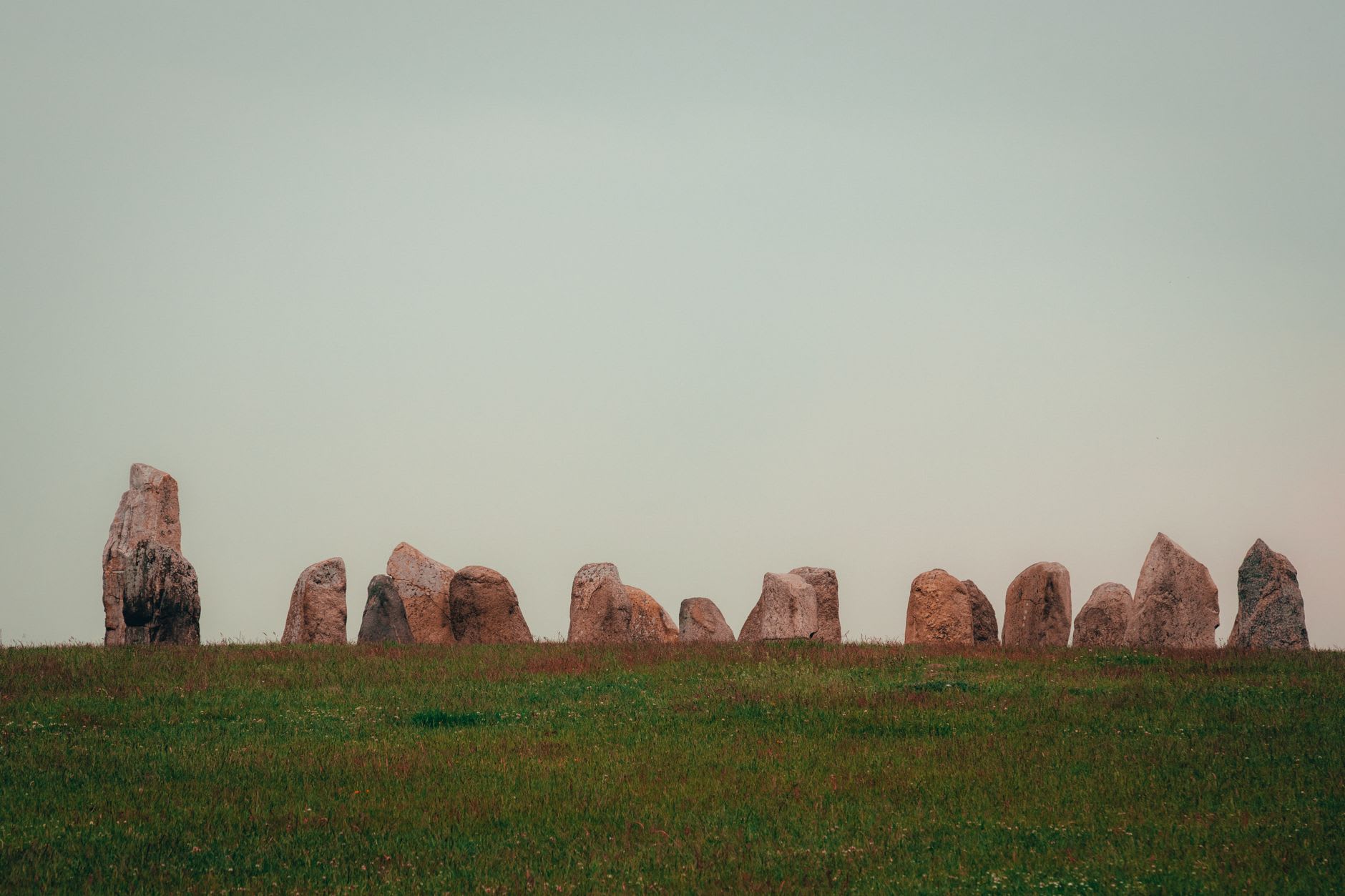
There were originally sixty stones, of which thirty-six remain. The circle dates to between 2500 and 2000 BC, making it younger than the nearby Standing Stones of Stenness but roughly contemporary with the later phases of Stonehenge. Between the Ring of Brodgar and Stenness, on the narrow neck of the Ness of Brodgar itself, archaeologists have been excavating since 2008 and have found what appears to be a Neolithic ceremonial complex of extraordinary scale — a large structure they call the Temple of Brodgar, with decorated stonework and evidence of feasting on a communal scale, that suggests the entire isthmus functioned as a ritual centre for the people of Neolithic Orkney. The excavations are visible from the road, and in summer you can sometimes watch the dig in progress from the path.
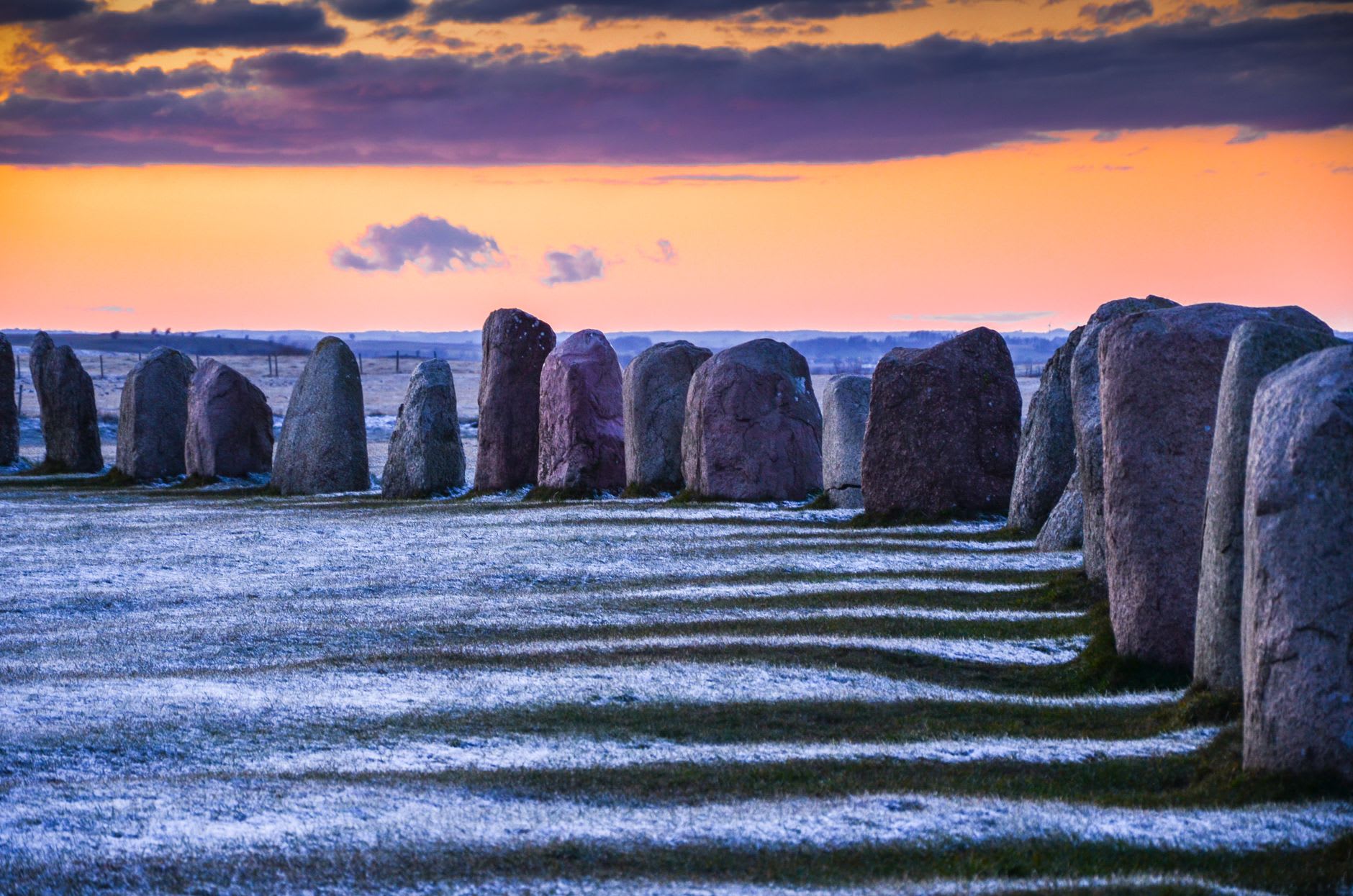
The light at the Ring of Brodgar changes the experience considerably depending on when you come. I visited late in the afternoon when the sun was low and hitting the stones from the west, throwing long shadows across the heather and illuminating the orange and grey lichen on their surfaces. The water on both sides was silver. A group of tourists was taking photographs near the entrance; inside the circle, in the western arc, I was completely alone. The wind was the only sound, and it was constant. I stayed until the tour bus left and then stayed longer, and the silence — not quite silence, always the wind — was something close to the feeling you get in a cathedral. Not religious, exactly, but serious. Something here demands to be taken seriously, and the landscape, given no barriers and no interpretation, obliges.
When to go: May through September for the most comfortable conditions. Late June and early July for the simmer dim light — visit at ten at night when the sky is still pale and the site is empty. October through April brings dramatic skies and the chance to see it in real solitude, though the walk across open moorland in Atlantic winter weather requires proper preparation.