Europe
Orkney Islands
"Five thousand years of history and the wind never once let you forget where you are."
I came over on the ferry from Scrabster, a two-hour crossing that deposited me into Stromness under a sky the colour of wet slate. The town climbs a single flagstoned main street that has changed very little since the whalers and Hudson’s Bay Company ships used to stop here to take on crew. I carried my bag up that street and immediately felt that Orkney was operating by different rules — older ones, ones that predated the idea of a country by several millennia.
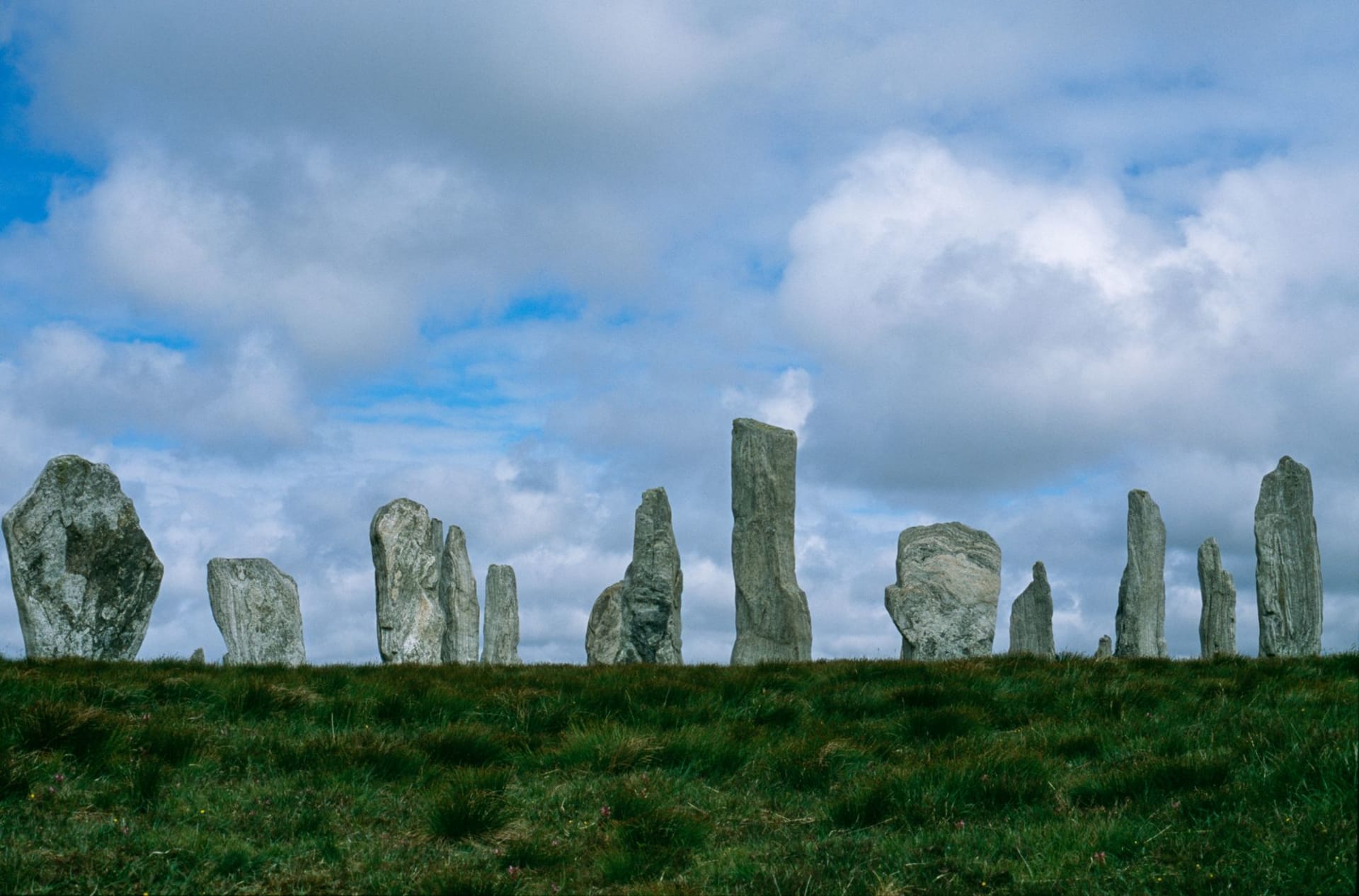
The Standing Stones of Stenness go up around 3100 BC. The Ring of Brodgar, a few kilometres away across a narrow isthmus between two lochs, followed a few centuries later. Skara Brae, the Neolithic village preserved under sand dunes near the Bay of Skaill, was built and abandoned before the Egyptians broke ground at Giza. These sites are not presented as theme parks here — Skara Brae has a modest visitor centre, but the Ring of Brodgar you simply walk up to across open ground, the stones rising out of heather in a circle that still communicates something wordless and serious about the people who dragged them there. The light helps. Orkney light is extraordinary: low-angled for most of the year, bouncing off water on almost every horizon, casting the landscape in a silver-grey luminosity that makes everything feel slightly unreal. In late June the sky barely darkens. I sat at the Stones of Stenness at eleven at night in something close to daylight and found it genuinely strange.
The food on Orkney centres on beef and fish — the Orkney cattle breed is noted enough that you see it on menus across Scotland, and the crab and lobster landed at Stromness and Kirkwall are some of the best I’ve eaten anywhere. I had a crab sandwich at a bakery in Kirkwall that required two hands and was obscenely good. The local beer from the Orkney Brewery is worth drinking seriously. Kirkwall itself has the red sandstone cathedral of St Magnus from the twelfth century sitting in the town centre as if it arrived by accident and simply decided to stay — extraordinary building for a town of this size, this far north.
When to go: May through August offers the mildest temperatures and the famous simmer dim light — late June is peak, when nights barely exist. Seabirds nest on the cliffs of Marwick Head and Hoy through spring and early summer. September is quieter with turning heather. January through March is raw and elemental with spectacular skies and almost no other visitors, but you earn every moment.
What most guides get wrong: They concentrate the itinerary on the Heart of Neolithic Orkney UNESCO sites and neglect the island of Hoy, which is a completely different landscape — steep hills, the 137-metre Old Man of Hoy sea stack, deep valleys that feel Scandinavian rather than Scottish. It takes only a short ferry from Stromness and most of the coach tours do not bother. Go there on a day with low cloud sitting on the hills and you will understand why the Vikings felt at home.