Italian Chapel
"From the outside: a tin shed on a flat island. From inside: a small miracle of homesickness and devotion."
The Churchill Barriers are causeways connecting the Orkney Mainland to the southern islands — built during the Second World War to block the eastern approaches to Scapa Flow after a German submarine sank HMS Royal Oak in October 1939, killing 833 men. The barriers were built largely by Italian prisoners of war: 550 men from Camps 60 and 34, put to work on this enormous engineering project in an archipelago at the top of Scotland, in Atlantic weather, for years. On Lamb Holm — a flat, small, almost entirely featureless island on the causeway route — the remains of their camp are essentially gone. Except the chapel.
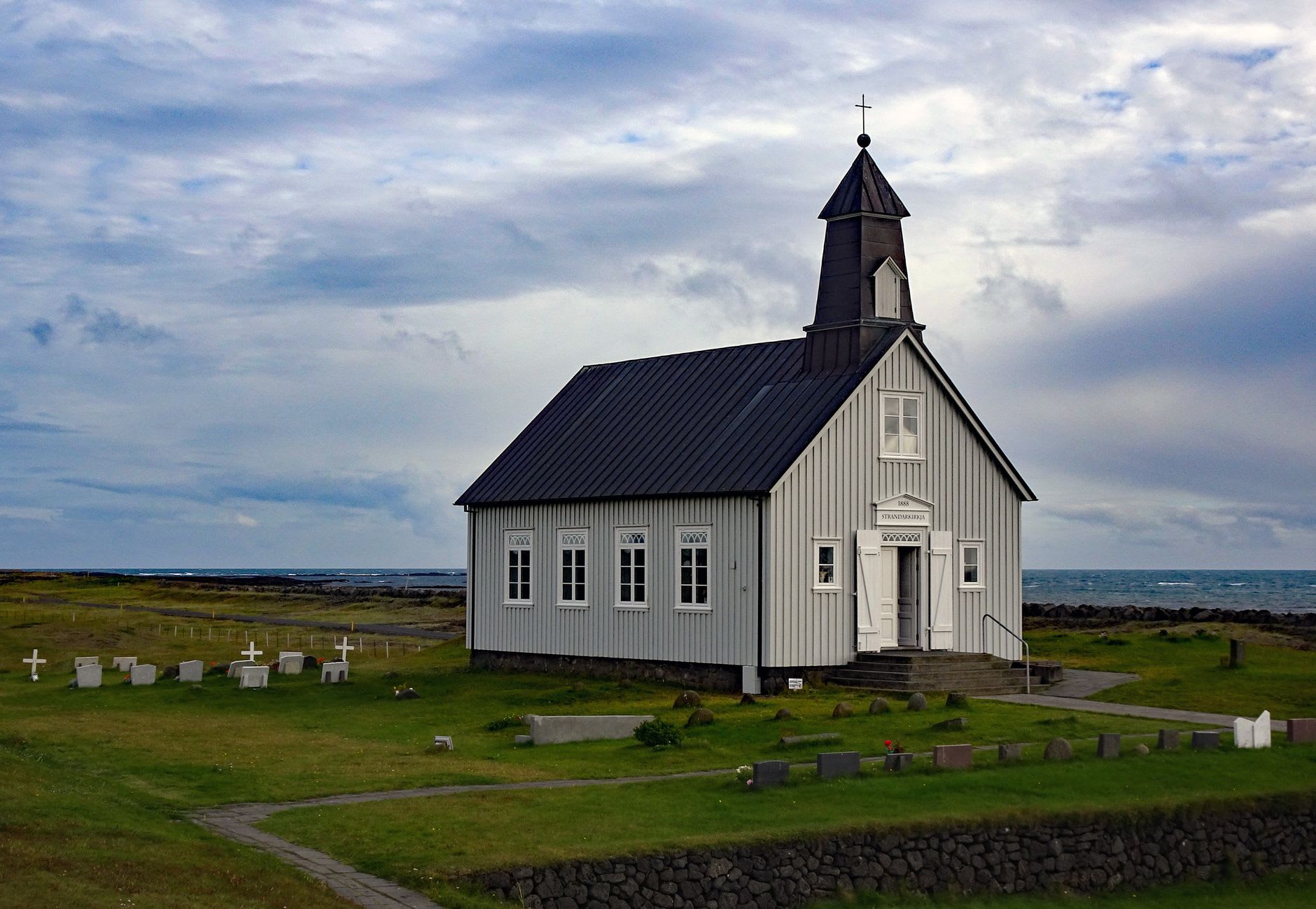
Two Nissen huts were joined end to end and given to the prisoners to use as a place of worship. What they did with them is the point of the story. Domenico Chiocchetti, a painter and craftsman from Moena in the Dolomites, led the decoration work. From the outside, you are looking at a corrugated iron shed with a small facade added to the front — the kind of structure that would be unremarkable anywhere in the world. Then you step inside. The walls are painted in trompe l’oeil to resemble stone blocks and ornate plasterwork. The rood screen separating the nave from the sanctuary was fashioned from scrap metal — iron bars and mesh twisted and worked into something that looks, from any distance, like a cast bronze screen in a Roman church. The altar surrounds are painted to imitate marble. The Madonna and Child above the altar was an image Chiocchetti brought from Italy, a print of a painting he had always loved.
There is a quality to the effort that moves beyond craft into something harder to name. These were prisoners of war building a chapel from scavenged materials on a windswept island thousands of kilometres from home, and the care they brought to every painted surface and every bent piece of metal is enormous. When the war ended and the camp closed, Chiocchetti stayed behind to finish the decoration. He returned in 1960 and again in 1964 at the invitation of the Orkney Islands Council to restore it. He came back one final time in 1992 with his family, and the people of Orkney turned out to thank him. He died in 1999 and is buried in Moena. The chapel is maintained by a dedicated committee and still used for services. I sat in one of the pews for a while and looked at the painted ceiling and the iron screen and thought about all the effort directed into making something this beautiful in a place this difficult, and found I didn’t have a neat thought to match it.
When to go: Open year-round during daylight hours with no admission charge. The drive along the Churchill Barriers is itself notable — the Second World War concrete blocks still visible in the sea, the flat southern islands opening out. Allow at least thirty minutes for the chapel; allow longer if you want to sit in it quietly, which I recommend.