
Brough of Birsay
"We timed our whole day around a tide table, and it was the best schedule I've ever kept."
A tidal island of Pictish stones and Norse ruins, reachable only when the sea steps back twice a day.
Lia found the tide times pinned to a corkboard in our guesthouse in Birsay village, and I remember feeling almost giddy about it — a piece of travel logistics dictated entirely by the moon. We’d read that the causeway to the Brough only appears for a few hours around low tide, and that if you dawdle, you either wade back through cold water or wait out the whole cycle stranded on a Norse ruin. So we set an alarm, ate a rushed breakfast of oatcakes and cheese, and walked down to the shore just as the sea was pulling away from the concrete path, leaving it slick and studded with limpets.
Crossing that causeway felt like stepping into a different century with every stride. On the island side, the ruins spread out low against the grass — the footprint of Norse longhouses, and what’s left of a bathhouse the Vikings built sometime between the 9th and 12th centuries. I crouched by one wall and tried to picture it roofed and smoking with peat fire, some earldom official issuing orders that once mattered as much as anything happening in Kirkwall does today. Because that’s the thing that stuck with me: this quiet grassy nub of an island was once a real seat of power, before the balance shifted east.
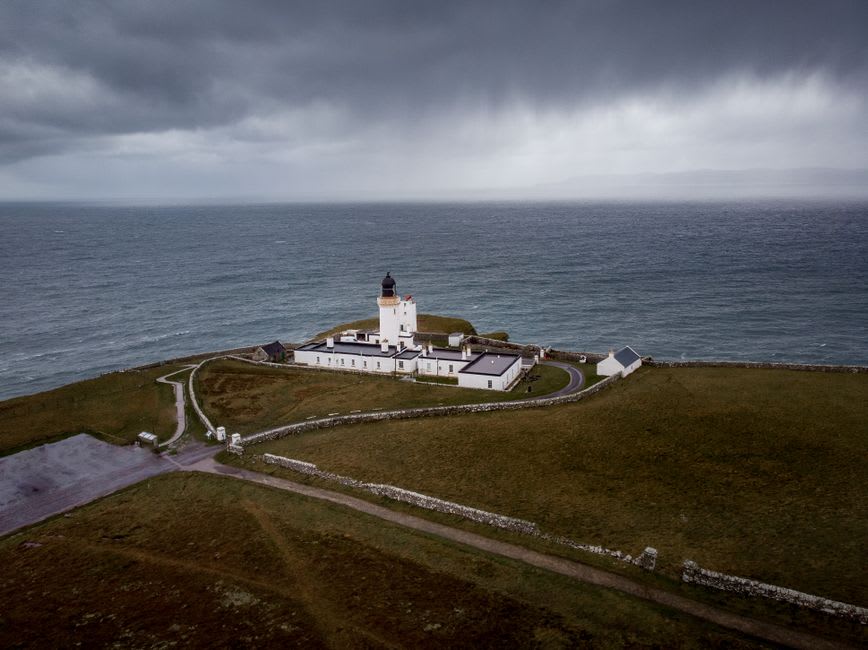
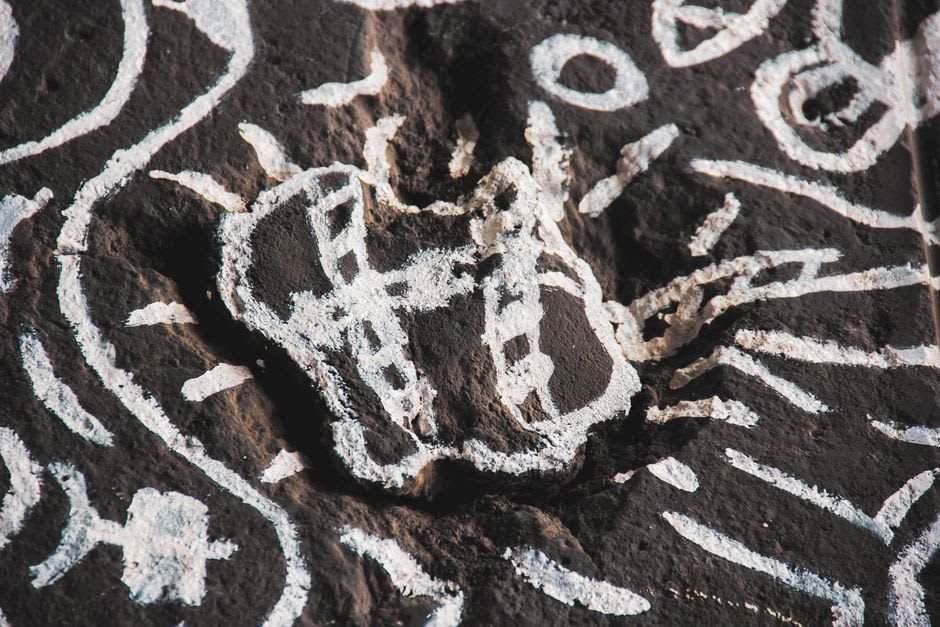
Near the ruined 12th-century church, a replica of the Birsay stone stood under a small shelter, its three carved warrior figures still sharp enough to make out. I’d read that the original Pictish symbol stones found here suggest an even older monastery beneath the Norse layers, and standing there I felt that particular vertigo I only get in Orkney — layers of entirely different peoples choosing this exact same patch of rock, generation after generation, for reasons that must have felt obvious to each of them. Lia was more taken with the lighthouse further north, a solid white 1925 Stevenson build that seemed almost modern next to everything else. We sat below it eating the last of our oatcakes, watching gannets fold themselves into the water offshore.
We lost track of time up there, which is exactly what you cannot afford to do on a tidal island, and ended up half-jogging the last stretch of causeway with the water already licking at its edges. I’ve rarely felt so aware of a deadline set by nature rather than by any human. When to go: aim for low tide between April and September, and check the local tide tables before you cross — the causeway gives you a window, not a guarantee, and the sea does not negotiate.