
Bend
"Smith Rock at dawn, before the climbers arrive — just the rock and the river and three hundred kilometers of high desert silence."
A high-desert outpost that built itself around Smith Rock and the Deschutes River and learned to do outdoor culture without the performance of it.

I drove into Bend from the west in late afternoon, dropping out of the Cascade forests and into the high desert almost without a transition marker — one moment there were Douglas firs and the next there was sage and juniper and a wide sky that had been hidden by the canopy for the last hour. The light on that side of the mountains is different in a way I couldn’t precisely describe at first and then recognized: it’s drier light, less diffused, the kind that casts hard shadows at every angle and makes the volcanic rock formations look like they’ve been cut rather than eroded.
Bend sits at about eleven hundred meters on the dry eastern slope of the Cascades, straddling the Deschutes River where it runs cold and fast through downtown past the old mill district. The town grew from a timber economy into something more deliberately outdoor — the transition happened in the 1990s and accelerated into the 2000s and now Bend is the kind of place where the gear shop is better than the art gallery and the craft brewery is more thoughtfully considered than the restaurant, which is not a complaint. Deschutes Brewery, which started here in 1988, has a taproom on the river that does good things with hops and lager malt and a certain Pacific Northwest confidence.

Smith Rock State Park is fourteen kilometers north of town and is the specific reason many people make the drive to Bend in the first place. The rock — welded tuff and rhyolite, volcanic remnants shaped by water over millions of years into towers and walls and steep canyon sides — rises about two hundred and fifty meters above the Crooked River, which bends around the formation’s base in a tight meander. The climbing is world-class; the hiking is accessible to anyone willing to descend into the canyon and climb back out. I did the Misery Ridge trail on my first visit, named for the switchbacks that earn the view at the top — the full basin of the high desert visible in every direction, Mount Hood and Mount Jefferson and the Sisters visible to the west, the rock itself reddish-orange in late afternoon light and the river far below, turquoise and flat.
I arrived at five-thirty in the morning on my second visit to have the canyon before the climbers, and that’s the version I recommend. The light comes over the east rim first and hits the west faces of the columns, and for forty minutes the rock is amber and the river below it is still cold-dark and the only sound is the Crooked River and one or two early birds at the trailhead. Then the climbers arrive and it becomes communal in the best way — ropes going up the wall, chalk on holds you can spot from a distance, conversations in multiple languages about gear and grades.

The Newberry National Volcanic Monument, thirty kilometers south of Bend, contains Paulina Lake and East Lake sitting inside a caldera similar to Crater Lake but older, more eroded, and completely unknown to people who don’t live nearby. The obsidian flow at the Big Obsidian Flow trailhead — a field of black volcanic glass the size of several city blocks, deposited about thirteen hundred years ago — is one of those geological features that requires you to stand there and reconsider your sense of geological time. The obsidian is fresh-looking. It looks like it cooled last year. It cooled while people were farming in medieval Europe.
When to go: May through October for reliable weather and full trail access. July and August are peak outdoor season, genuinely warm and dry. For fewer crowds, September is ideal — the light is longer and softer, the crowds have thinned, and the Cascades to the west have their first dusting of snow on the summits, which provides contrast. Winter brings skiing at Mount Bachelor, twenty-three kilometers from town, which is one of the better ski mountains in the Pacific Northwest.
Keep exploring
More from Oregon
 oregon
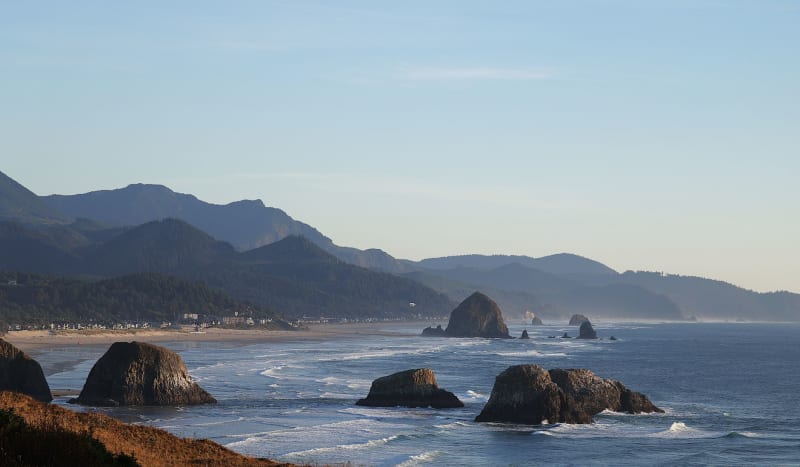
 Cannon Beach
A sea-stack coast so dramatically composed it looks arranged by someone who understood exactly what a shoreline should do.
Explore oregon
 Cape Perpetua
Ancient Sitka spruce forest meeting raw Pacific cliffs, with tide pools and a spouting horn that reminds you what the ocean is actually capable of.
Explore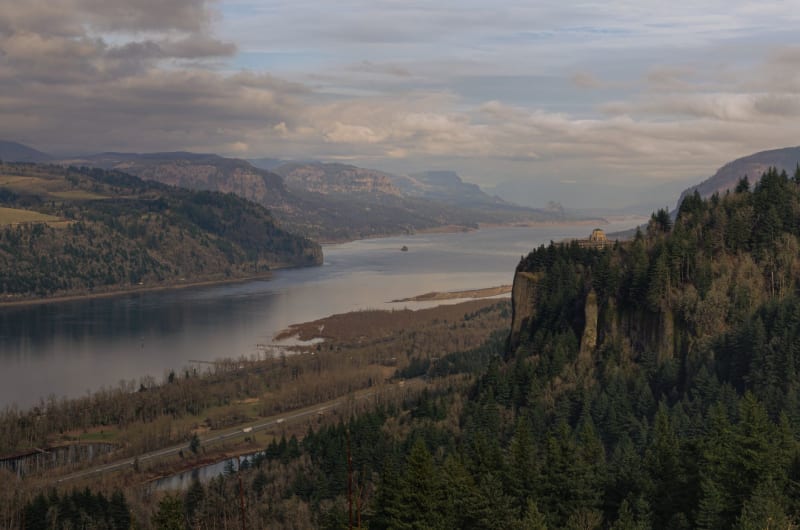 oregon
 Columbia River Gorge
Basalt walls four hundred meters high, a dozen waterfalls, and a river wide enough to make you feel very small very quickly.
Explore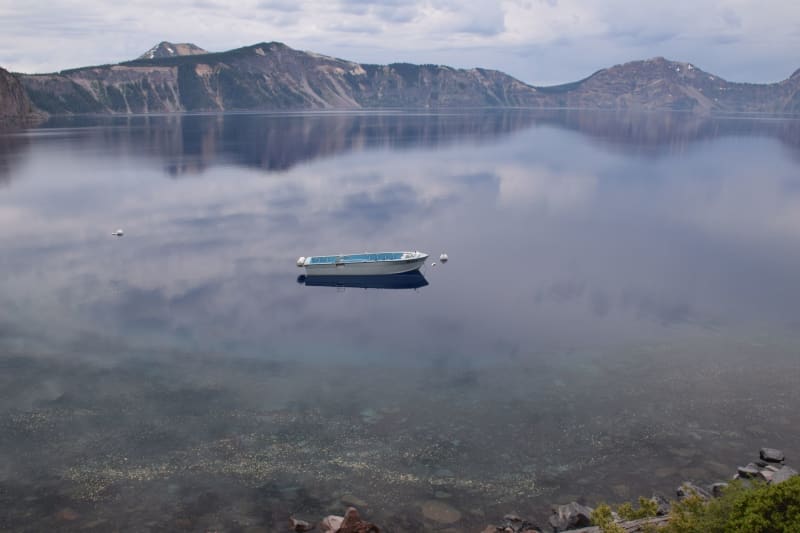 oregon
 Crater Lake
A caldera lake so impossibly blue it looks like the Earth is showing off — and the silence around it only makes it worse.
Explore oregon
 Hells Canyon
North America's deepest gorge, where the Snake River carves a wilder, quieter rival to the Grand Canyon along Oregon's edge.
Explore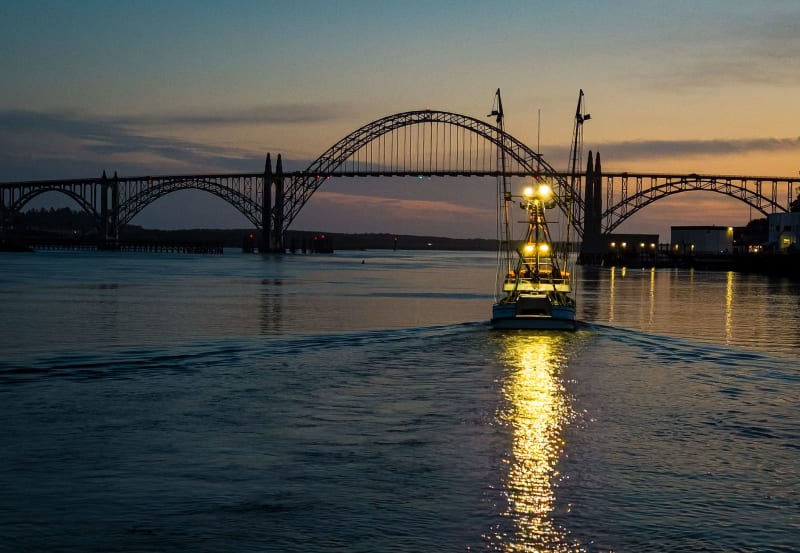 oregon
 Newport
A real working fishing harbor that happens to have excellent oysters, a decent lighthouse, and no particular interest in being quaint.
Explore