A quiet frontier town beneath the western Al Hajar mountains, gateway to abandoned copper-mining villages and a fort most travelers never learn exists.
Yanqul sits at a point on the map where Oman’s tourist infrastructure quietly gives up. We passed through it on our way toward the more remote reaches of the western Hajar range, and I only stopped because the fuel gauge and my curiosity both hit empty at roughly the same time. It turned out to be one of those places that rewards exactly the kind of aimless stop I try to build into every trip and rarely manage to justify.
A Fort With No Ticket Booth
Yanqul’s fort sits on the edge of town, a mud-brick and stone structure with round corner towers that has clearly seen restoration work at some point but receives almost no visitors to justify staffing an entrance. There was no ticket booth, no guide, no sign explaining who built it or when — just an open gate and a courtyard full of afternoon shadow. I climbed one of the towers and looked out toward the mountains rising sharply behind the town, a wall of exposed rock that made it obvious why this location mattered strategically for whoever controlled it.
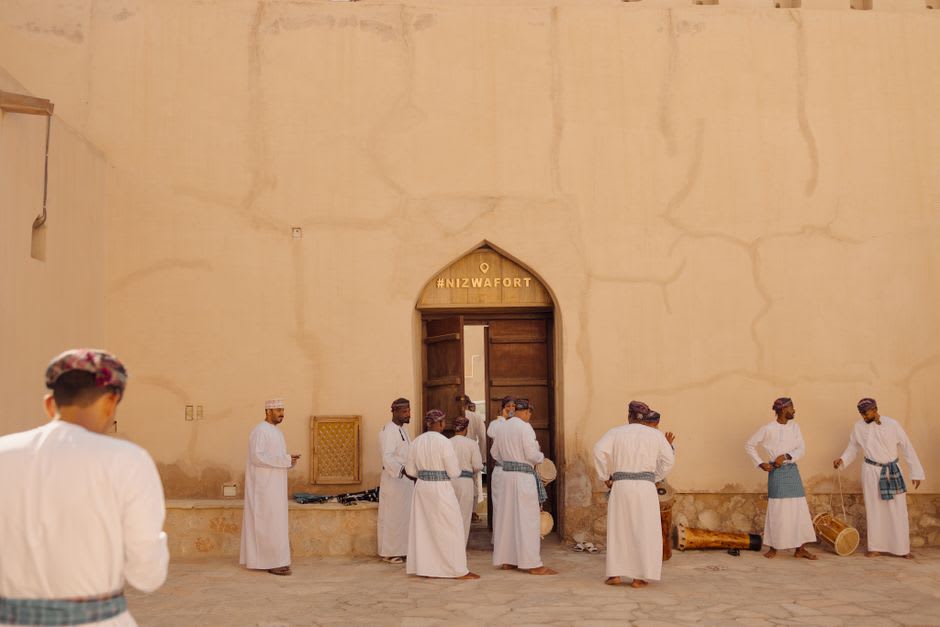
An old man selling vegetables from the back of his truck near the fort’s entrance struck up a conversation in broken English, mostly about how few foreigners ever stopped in Yanqul on purpose. He seemed genuinely pleased that we had, and pressed a bag of dates on us that he refused to let us pay for.
The Ghost Villages in the Hills
What actually drew us toward Yanqul in the first place was word of abandoned copper-mining settlements in the surrounding hills, remnants of an industry that dates back thousands of years in this part of Oman and was still active in a smaller form well into the 20th century. We found one — a cluster of collapsed stone buildings clinging to a slope, tailings still visible in dark streaks across the hillside, utterly silent except for wind moving through the gaps in the walls.
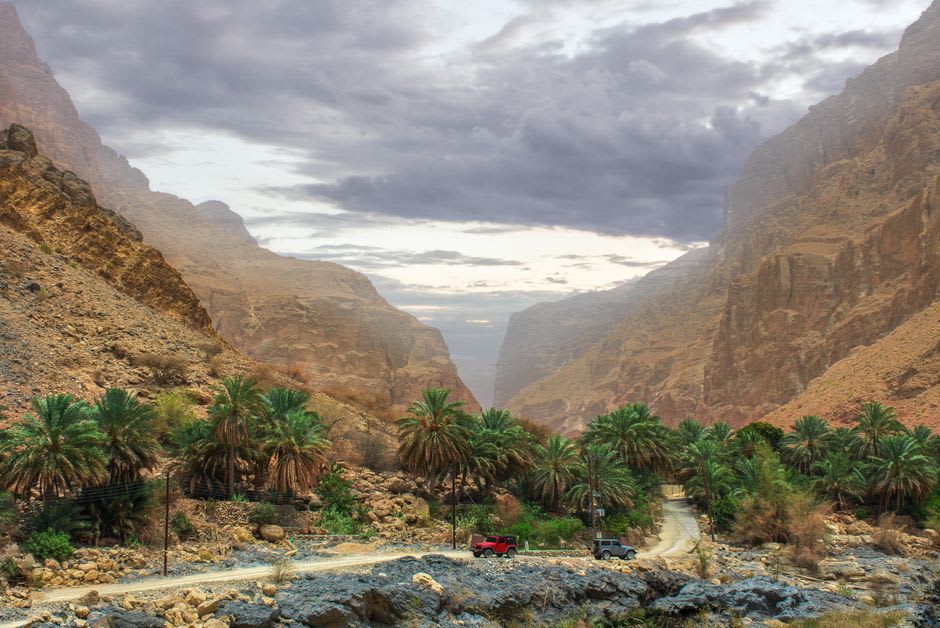
Standing there, it struck me that Yanqul had quietly given us two entirely different kinds of history in one afternoon — a fort built for defense, and a village built for extraction — and neither one had asked us for a single rial.
When to go: October through March. The unpaved roads to the mining villages can be difficult to navigate without local knowledge or a GPS track, so ask locally in town before heading into the hills.
Keep exploring
More from Oman
 oman
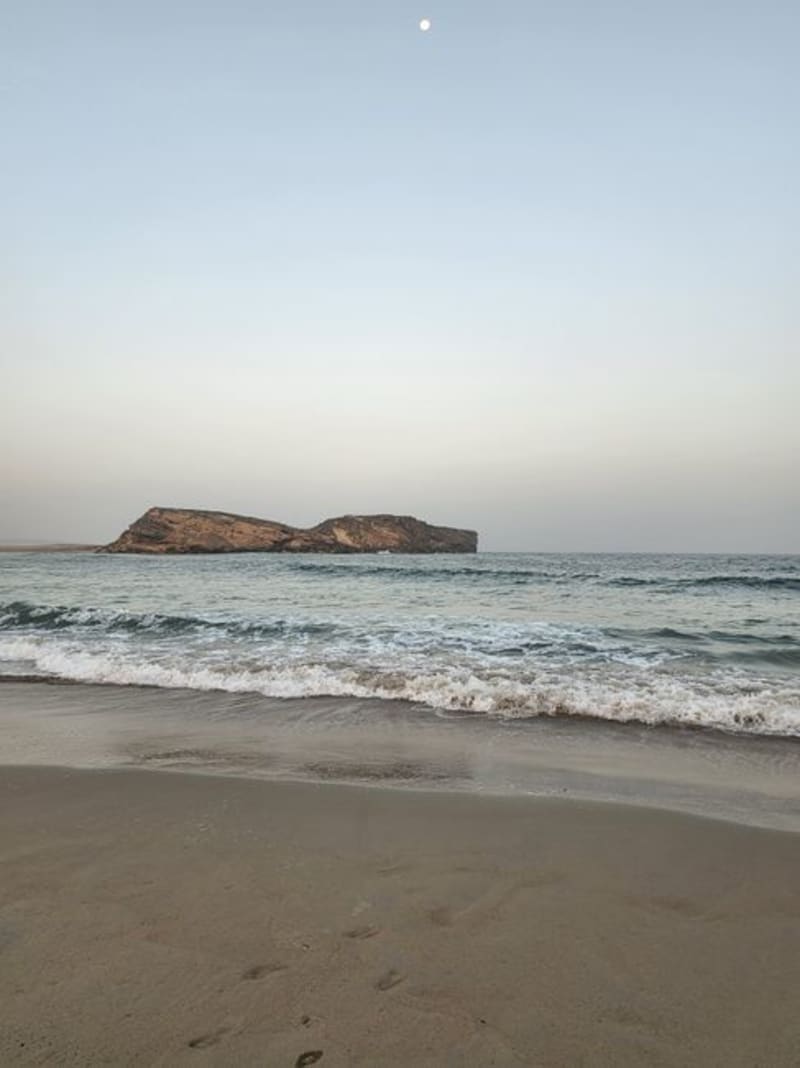
oman Yiti Beach
A rugged fishing-village beach past Muscat's last roundabout, where the crowds thin out and the road itself becomes part of the trip.
Explore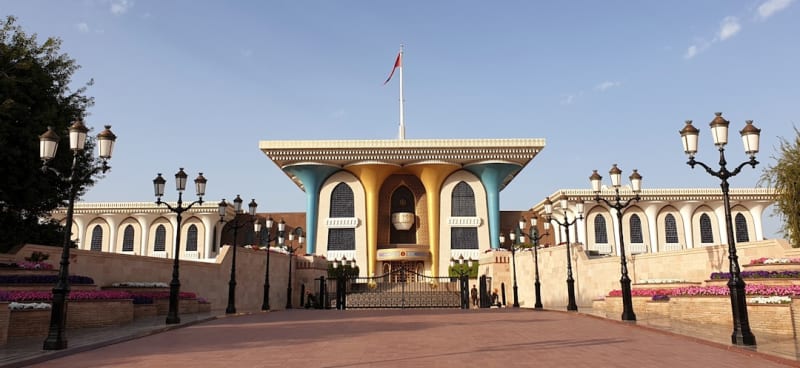 oman
oman Al Alam Palace
The Sultan's ceremonial palace, all blue-and-gold columns, wedged between two Portuguese forts on Muscat's old harbour.
Explore oman
oman Al Ashkharah
A working fishing town at the edge of the desert coast, the last real stop before the ferry crossing to Masirah Island.
Explore oman
oman Al Ayn Beehive Tombs
The best-preserved cluster of Bronze Age beehive tombs in Oman, lined up along a ridge against the jagged backdrop of Jebel Misht like a row of stone teeth.
Explore oman
oman Al Baleed and the Frankincense Land Museum
The ruins of a medieval trading port and a museum that explains, finally, why frankincense was ever worth fighting over.
Explore oman
oman Al Fazayah Beach
A crescent of white sand reached by a single hairpin road through the mountains, with almost nothing on it but coconut palms and camels.
Explore