Sinaw Souq
"Commerce that has nothing to do with tourists, which is exactly why you should watch it."
A Friday livestock and Bedouin market on the edge of the Sharqiya sands, where goats change hands faster than the crowd can be counted.
Nobody looked at us twice, which was the whole appeal. We’d read a single paragraph about Sinaw’s Thursday and Friday livestock market in an old guidebook and driven two hours inland from the coast on not much more than that, half expecting to find a handful of stalls and a disappointing footnote of an experience. Instead we found one of the most unfiltered scenes we saw anywhere in Oman.
Sinaw sits on the western edge of the Sharqiya Sands, at the junction where the interior desert routes meet, and its souq has functioned for generations as the trading point for Bedouin families bringing goats, sheep, and the occasional camel in from the desert to sell to buyers from the surrounding towns. The animal market runs loudest on Thursday and Friday mornings, a chaotic, fast-moving circuit of pens, price haggling, and men leading reluctant goats on rope leads through crowds that part and reform without anyone seeming to organize it.
The Animal Market
The pace is the thing that struck me first — deals happen in seconds, a price is named, a counter-offer fired back, hands are shaken, and the animal changes owners before you’ve finished processing what you watched. There’s a rough hierarchy to where things are sold: goats and sheep in the open pens near the entrance, camels further back where there’s more space to walk them.
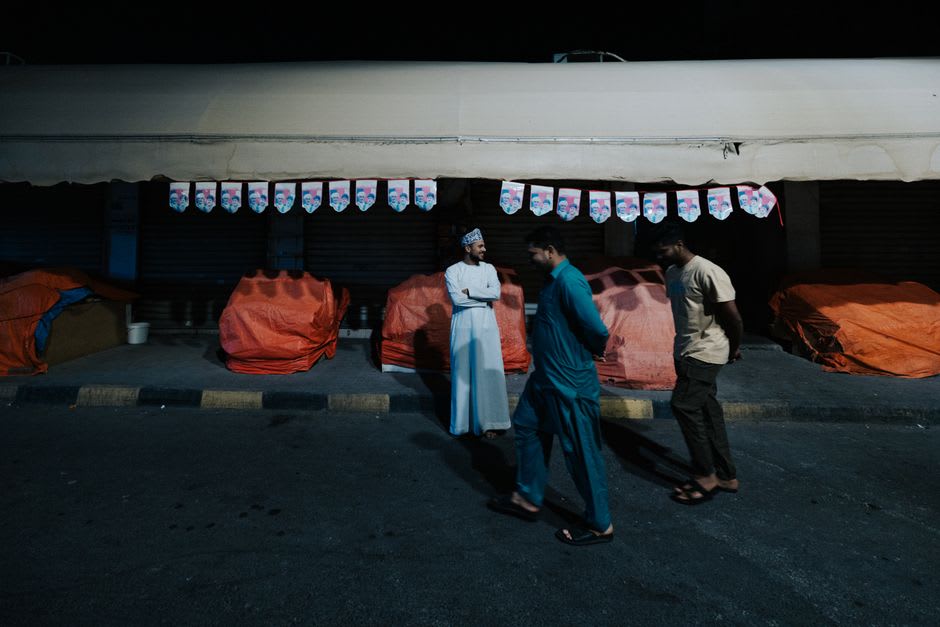
We were waved toward tea more than once by sellers on a slow morning, an offer we took as pure hospitality rather than any interest in selling us a goat, and sat cross-legged on a rug drinking sweet karak while the market carried on around us.
Beyond the Animals
Adjacent to the livestock pens, a separate covered souq sells traditional silver jewelry, khanjars — the curved ceremonial daggers — and household goods aimed squarely at local Bedouin customers rather than visitors, which means prices are refreshingly free of the tourist markup we’d gotten used to in Muscat and Nizwa.
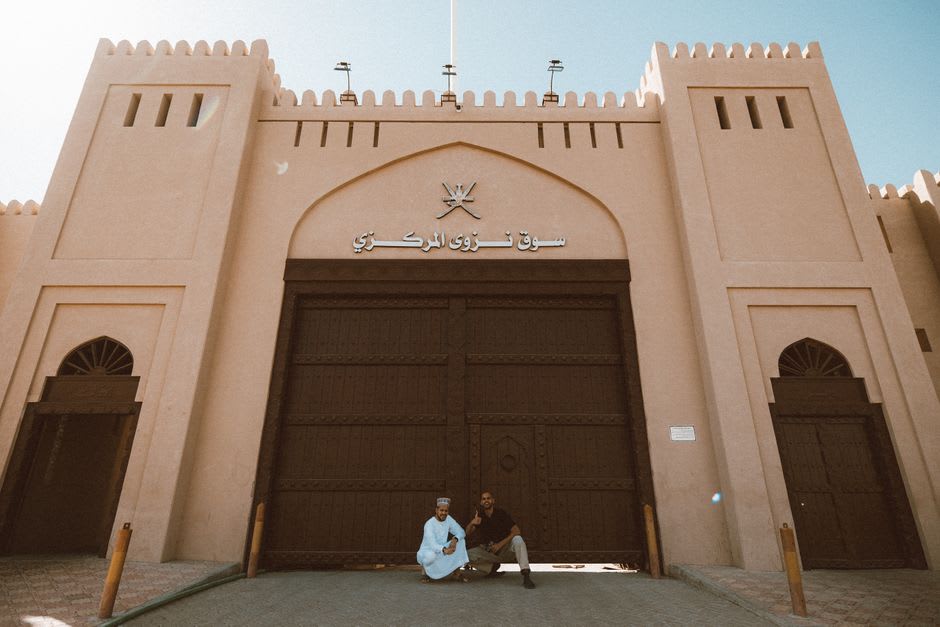
Sinaw makes a natural stop on the drive between Wahiba Sands and the eastern coast, and arriving before nine gives you the market at its most active, before the midday heat thins the crowd out considerably.
When to go: Thursday and Friday mornings only, arriving by 8 a.m. — the market winds down by early afternoon and is largely dormant the rest of the week.
Keep exploring
More from Oman
 oman
oman Sohar Fort
The whitewashed fort that guards Oman's Sindbad legend, standing watch over a coastline that once traded copper and pearls with half the Indian Ocean.
Explore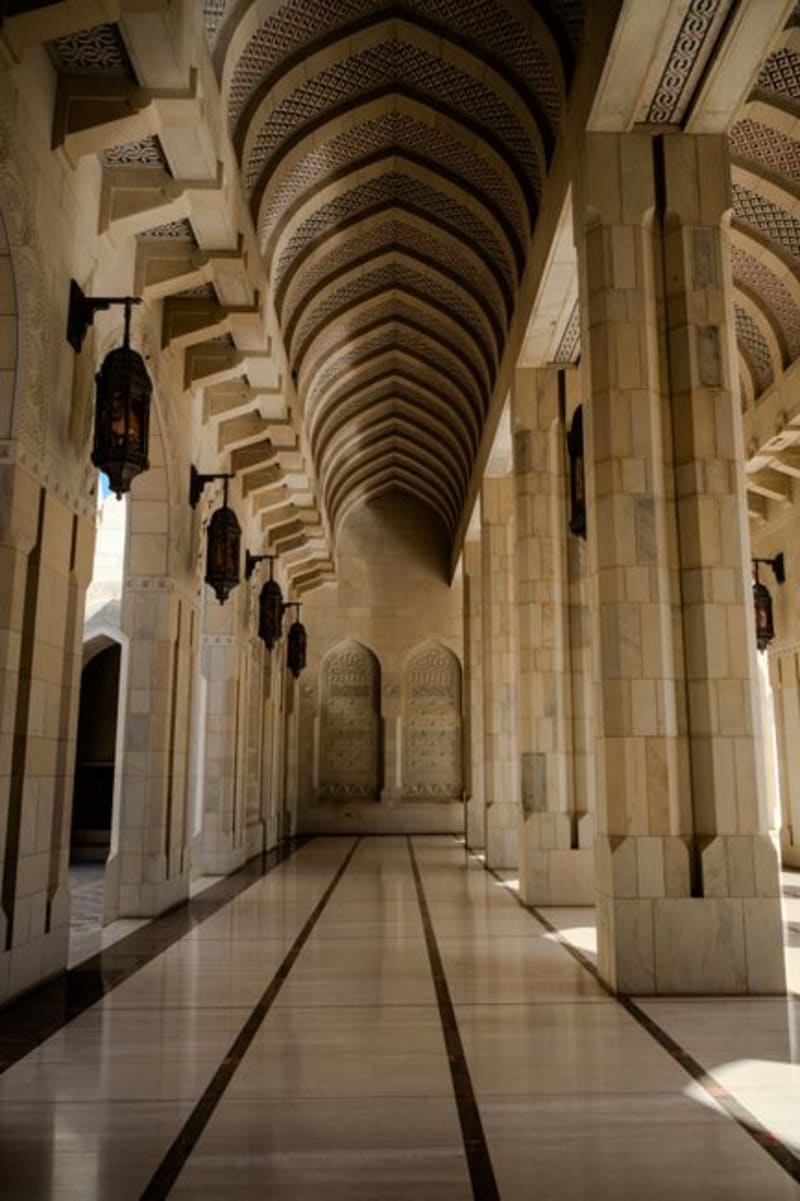 oman
oman Sultan Qaboos Grand Mosque
The country's largest mosque, home to a hand-knotted carpet the size of a football pitch and a chandelier that took years to build.
Explore oman
oman Sur
The last working dhow shipyard in Arabia, where master craftsmen still build vessels by hand without plans.
Explore oman
oman Tanuf Ruins
A village leveled by the Sultan's air force in 1956 and never rebuilt, left standing as rubble above a spring-fed wadi that still runs green.
Explore oman
oman Taqah
A quiet fishing town with a restored fort, a lagoon full of flamingos, and none of Salalah's tour buses.
Explore oman
oman Wadi Al Arbeieen
Seven spring-fed pools stepping down a quiet canyon near Al Hamra, popular with Omani families on weekends and almost unknown to foreign visitors.
Explore