A 17th-century Ya'arubi palace-fortress famous not for its walls but for what's inside them — painted ceilings, a hidden library, and a falaj channel running straight through the building.
I’ll admit I nearly skipped Jabrin. Bahla Fort was twenty minutes away and already ticked the UNESCO box, and from the outside, Jabrin looked like just another sand-colored box on a flat gravel plain, unremarkable next to the mountains further north. Lia insisted we stop anyway, on the strength of a single paragraph in a guidebook that used the phrase “the most beautiful interior in Oman.” She was right to insist.
A Fort Built for Books, Not Battles
Jabrin was built in 1675 by Imam Bil’arab bin Sultan al-Ya’rubi, and almost everything about it argues against the standard fort logic. Most Omani forts are built to repel — thick walls, few windows, arrow slits angled for maximum coverage. Jabrin has those too, but the imam who commissioned it was, by most accounts, more interested in astronomy, medicine, and Islamic law than warfare. He built himself a library wing and a room specifically for teaching, and the castle’s most famous feature — a ceiling in the Sun and Moon room painted with geometric patterns in reds, blues, and gold, still vivid after three and a half centuries — has nothing to do with defense at all.
I stood under that ceiling longer than I stood anywhere else in the building. The paint has faded in patches, but the pattern still reads clearly enough that you can trace where the artist’s hand slowed down for the finer details around the center medallion. No plaque explained the meaning behind the specific geometry, and I preferred it that way.
The Falaj Through the Floor
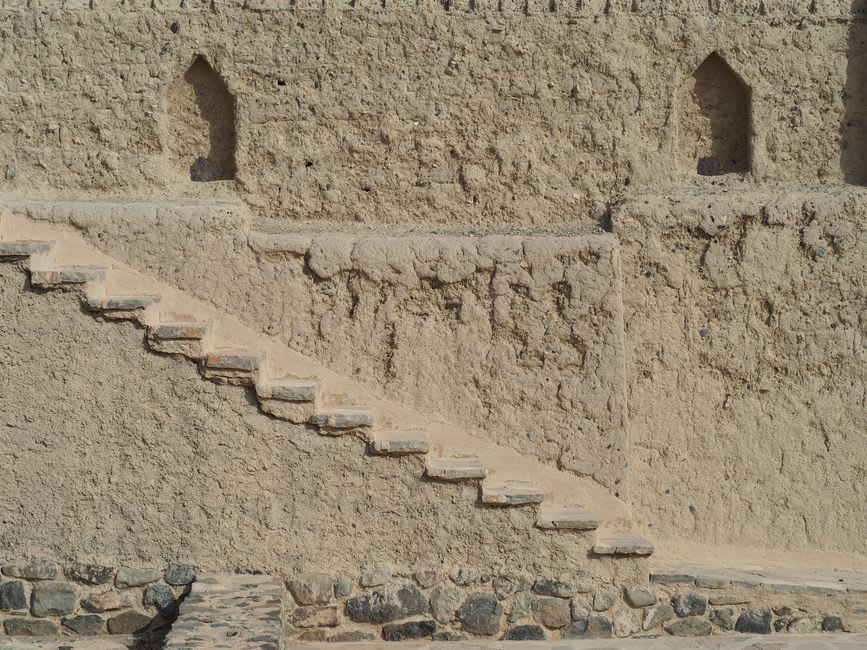
The detail that actually stopped me on the stairs, though, was a channel of moving water cut directly through the ground floor of the castle — a falaj diverted from the main irrigation system outside, routed under the building for cooling and for the household’s use, then routed back out to continue feeding the palm groves beyond the walls. It is such a simple piece of engineering that I almost walked past it, until I noticed the sound and looked down.
The stairwells themselves deserve mention on their own terms. Jabrin has an unusual number of them — the interior is a genuine three-dimensional puzzle, false doors and short staircases leading nowhere, apparently built deliberately to slow down an attacker who made it past the outer defenses. Lia got turned around twice on the top floor while I stood at the bottom laughing, then got turned around myself finding her.
The Room at the Top
The uppermost chamber opens onto a flat rooftop with a clear view across the plain toward the Al Hajar foothills — no other structures for a long way in any direction, just gravel, scattered acacia, and heat shimmer. It’s a quiet, almost anticlimactic view after the density of the rooms below, and that contrast is exactly what makes it land. You climb through three centuries of painted ceilings and secret staircases and arrive at nothing but open desert.
When to go: October through March. Combine it with Bahla Fort in a single day — they’re close enough to see both without rushing, and the contrast between Bahla’s scale and Jabrin’s intimacy makes each one sharper.
Keep exploring
More from Oman
 oman
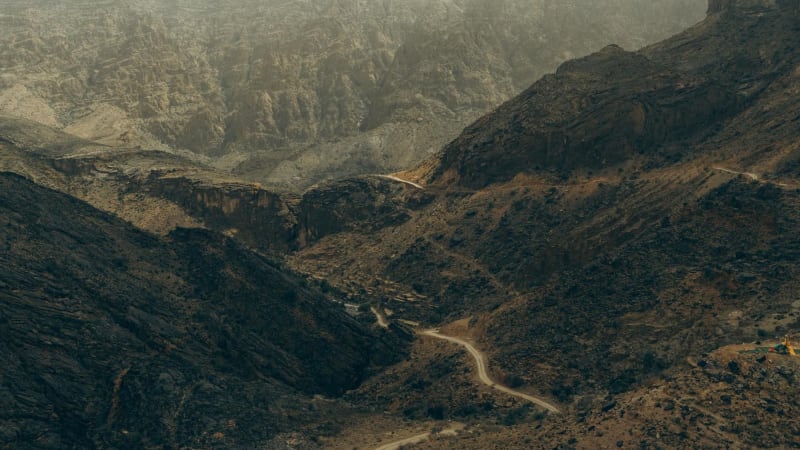
oman Jebel Akhdar
The 'Green Mountain' towering above Oman's heat — rose farms, cool air, and ancient terraced villages.
Explore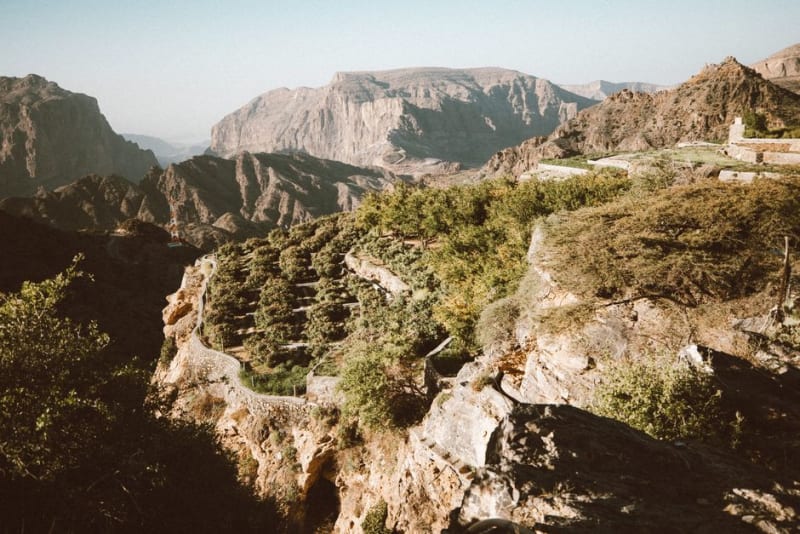 oman
oman Jebel Misht
A serrated limestone massif rising from the desert plain, uplifted from an ancient seabed and considered one of Oman's great scrambling and climbing objectives.
Explore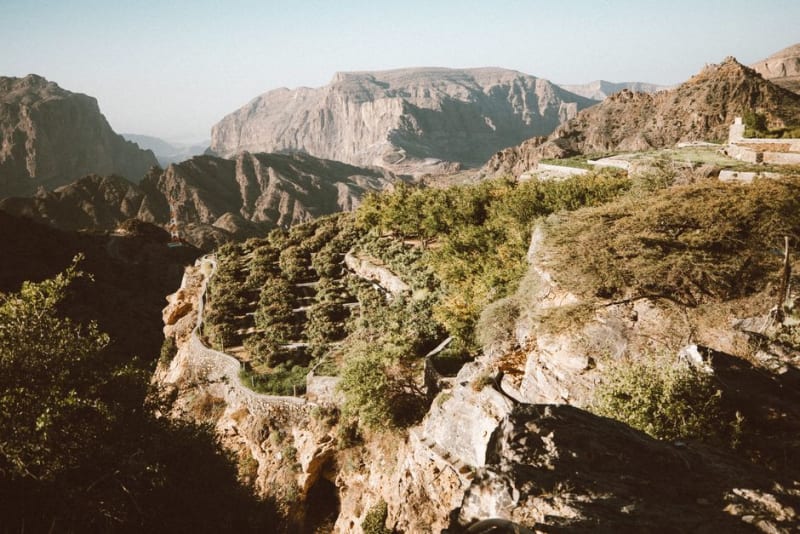 oman
oman Jebel Samhan
A vast escarpment nature reserve above Mirbat where the plateau drops a kilometer straight down and Arabian leopards still roam, rarely seen.
Explore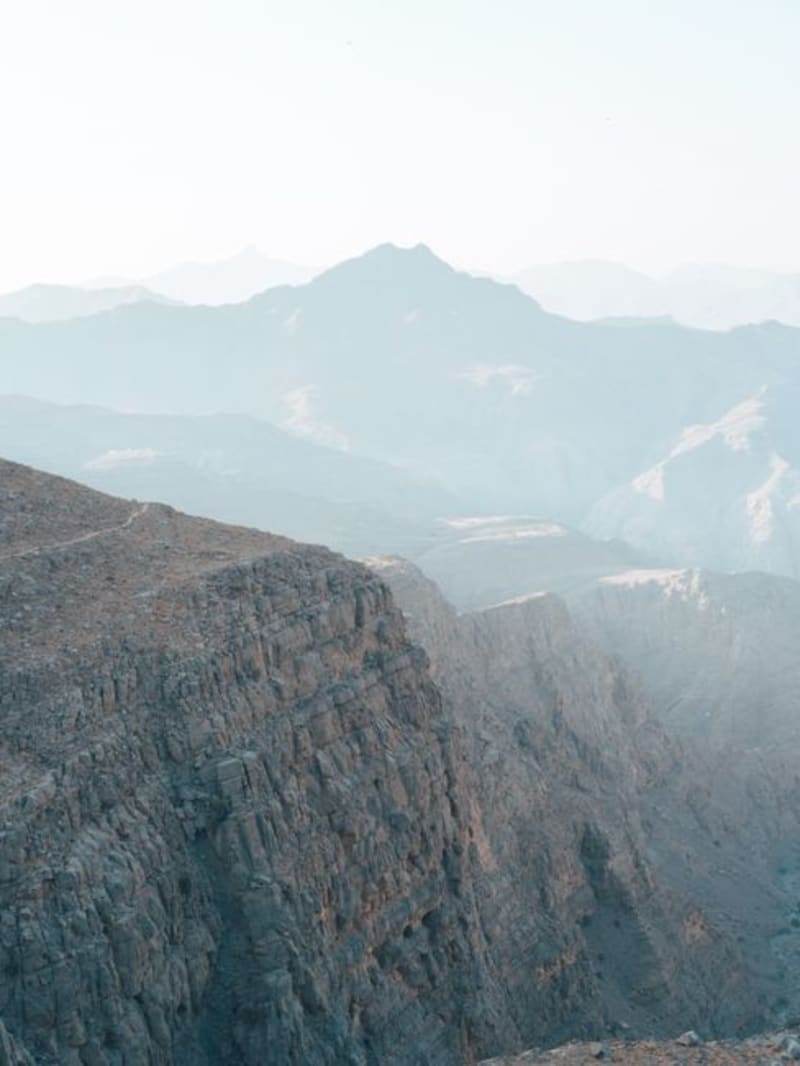 oman
oman Jebel Shams
Oman's highest peak and the rim of Wadi Ghul, the 'Grand Canyon of Arabia' — a mile-deep gash in the Al Hajar range.
Explore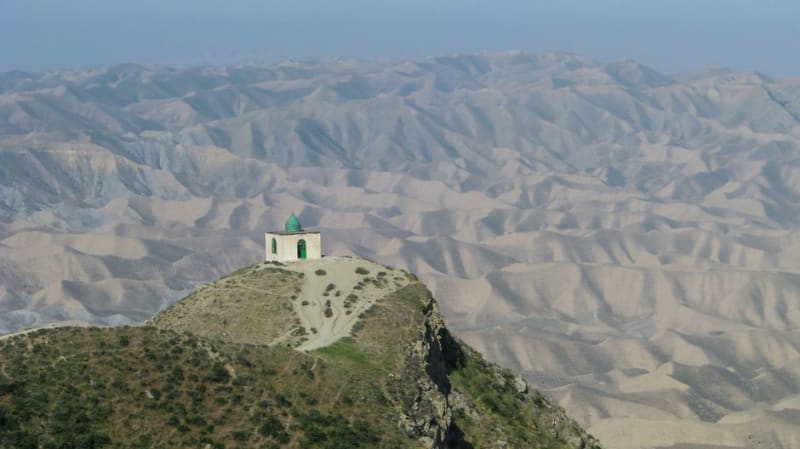 oman
oman Job's Tomb (Nabi Ayoub)
A hilltop shrine to the biblical and Quranic prophet Job, wrapped in cloud and one of the best views in Dhofar.
Explore oman
oman Khasab Fjords
The 'Norway of Arabia' — dramatic sea inlets cutting through barren limestone mountains of the Musandam.
Explore