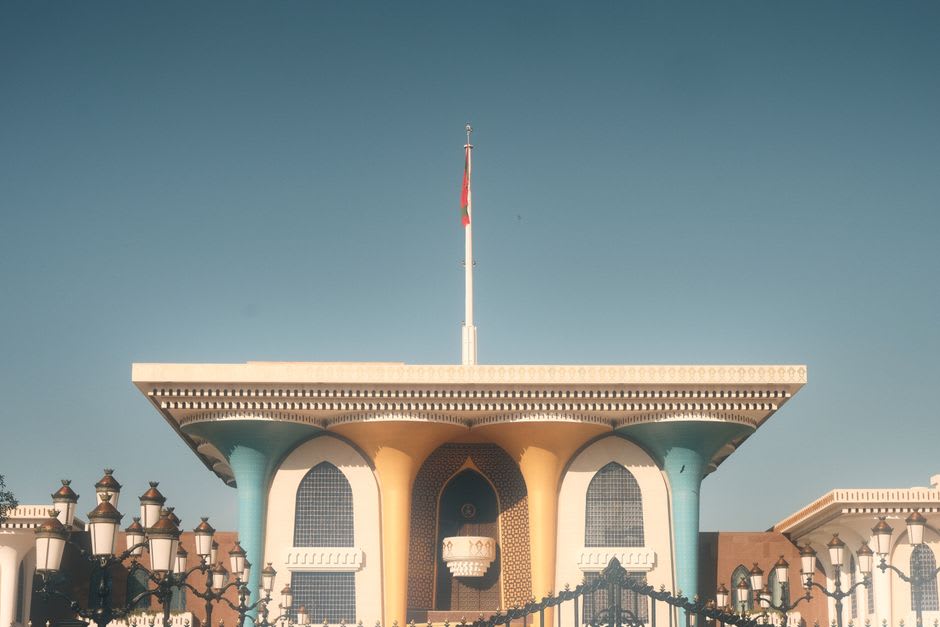
The Sultan's ceremonial palace, all blue-and-gold columns, wedged between two Portuguese forts on Muscat's old harbour.
You can’t go inside Al Alam Palace. That’s the first thing anyone tells you, usually with a slight apology in their voice, as if the building owes you something. I didn’t feel shortchanged. Standing in the plaza in front of it, at the point where Muscat’s old town narrows into a single dramatic gesture, felt like enough.
A Facade Built to Be Looked At
Al Alam — “the flag palace” — is the Sultan’s ceremonial residence, used for state functions and official receptions rather than daily life. What you get from the outside is already the whole performance: gold columns fanning out at the top like a stylized sun, a deep blue that shifts with the light, and a symmetry so precise it looks almost computer-generated against the raw hills behind it. Lia said it looked like a stage set. I think that’s exactly the intention.
Flanked by History
The palace sits between two sixteenth-century Portuguese forts, Al Jalali and Al Mirani, both perched on rocky outcrops guarding the harbour mouth. Neither fort is open to the public with any regularity, but their presence frames the palace in a way that makes the whole plaza feel like a timeline — colonial fortification on either side, a modern sultan’s house in between, and the Arabian Sea completing the picture behind it all.
The Plaza Itself
Late afternoon is when the plaza earns its keep. The heat drops, Omani families arrive with folding chairs and thermoses of chai, and the guards at the palace gates — sharply dressed, mostly indifferent to photographers — become part of the scenery rather than an obstacle to it. I sat on a low wall near the fountain and watched the light change on the columns for close to an hour, which is a strange thing to admit about a building I never went inside.
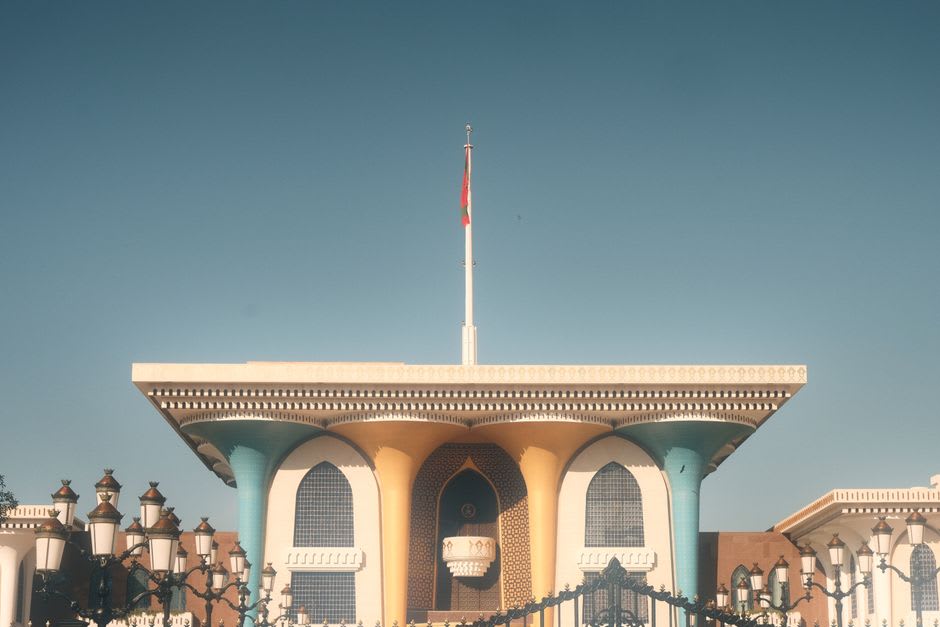
When to go: Late afternoon, an hour or two before sunset, when the plaza cools and the palace’s gold trim catches the light directly.
Keep exploring
More from Oman
 oman
oman Al Ashkharah
A working fishing town at the edge of the desert coast, the last real stop before the ferry crossing to Masirah Island.
Explore oman
oman Al Ayn Beehive Tombs
The best-preserved cluster of Bronze Age beehive tombs in Oman, lined up along a ridge against the jagged backdrop of Jebel Misht like a row of stone teeth.
Explore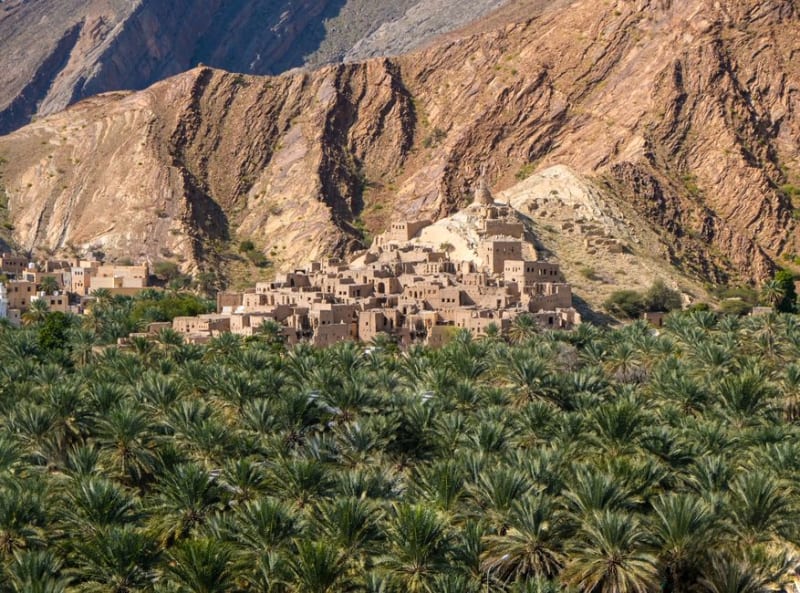 oman
oman Al Baleed and the Frankincense Land Museum
The ruins of a medieval trading port and a museum that explains, finally, why frankincense was ever worth fighting over.
Explore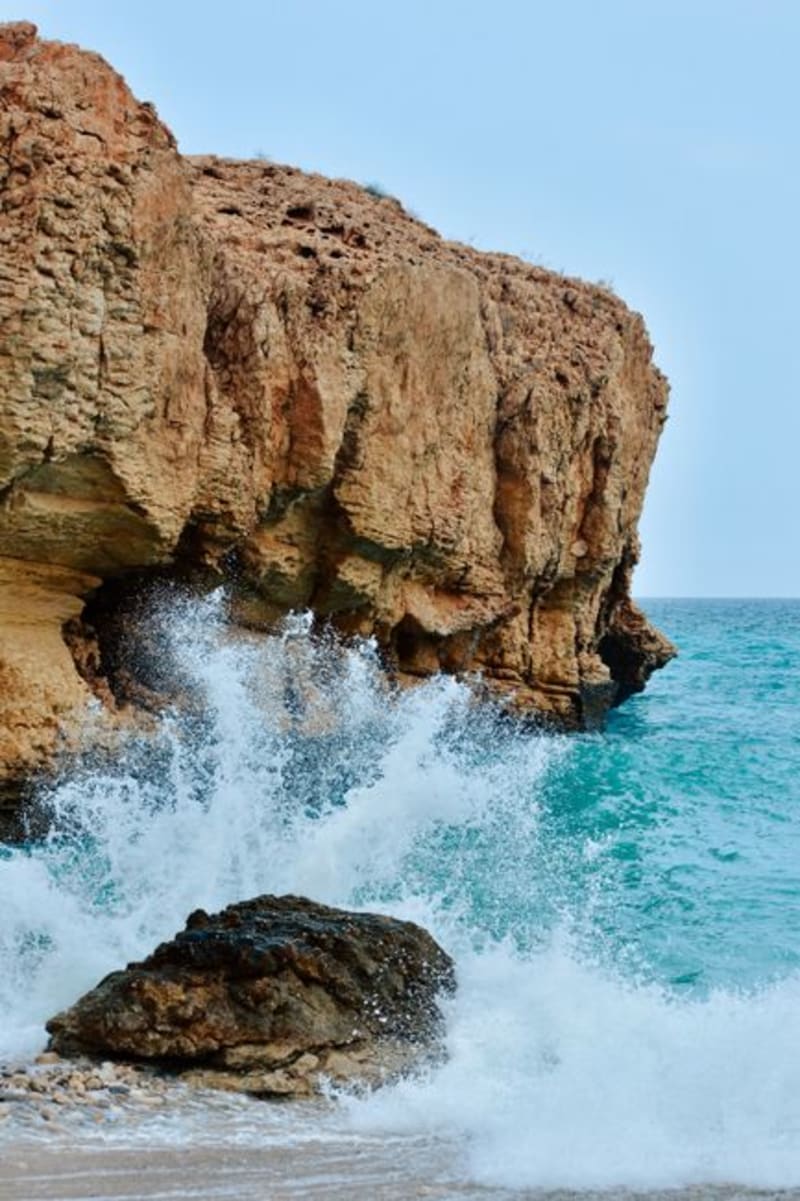 oman
oman Al Fazayah Beach
A crescent of white sand reached by a single hairpin road through the mountains, with almost nothing on it but coconut palms and camels.
Explore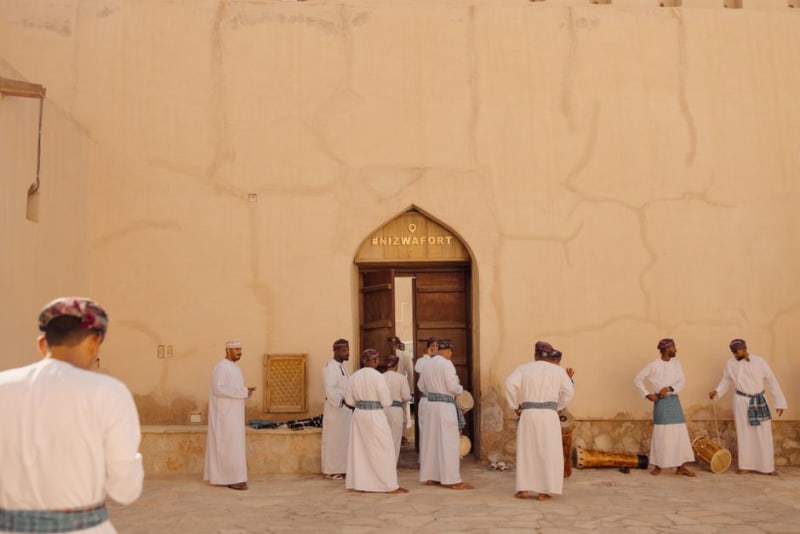 oman
oman Al Hamra
A 400-year-old mud-brick town at the foot of the Al Hajar mountains, where two-story merchant houses stand empty and unlocked, waiting for nobody in particular.
Explore oman
oman Al Hazm Fort
A fortress built without a single supporting pillar in its main hall, hidden in plain sight in the quiet Batinah town of As Suwayq.
Explore