Tsodilo Hills
"We came for rock art and left feeling like we'd trespassed into someone's cathedral."
Four thousand rock paintings scattered across sacred Kalahari sandstone, where San spirits are said to linger among the outcrops.
Lia found the brochure for Tsodilo Hills tucked into a lodge reception in Shakawe, and she read the line “Louvre of the Desert” out loud twice before I even looked up from my coffee. Neither of us had heard of the place before that morning, which felt strange once we understood what it actually was: four rock outcrops rising out of the Kalahari sand, packed with something like four thousand individual paintings across four hundred sites, all within an area you could walk across in an afternoon. We hired a local guide in the village at the base of the hills, a quiet man named Xontae who’d grown up there, and within ten minutes of following him up the trail I’d stopped trying to count the paintings and just started looking.
What struck me most wasn’t the density of the art but the technique. I’d expected something like the brush-painted San sites I’d read about further south, but Xontae pointed out that many of the images here were made with fingers pressed straight into pigment, and once you know that you can’t stop noticing it — the slight smudge at the edge of an eland’s flank, the way a line thickens and thins like a fingertip dragging across stone. He showed us a cluster of cattle figures, maybe a dozen of them clustered on one panel, part of the roughly 160 cattle images scattered across the site. That detail alone rewired how I’d been picturing this place: not just a gallery of wild animals, but a record of herding lives layered onto something far older.

Xontae was careful about where he let us stand, and gentle but firm about it. He explained that his community still considers these hills a place where the spirits of the dead reside, and that archaeological digs here have turned up evidence of human presence and ritual use going back at least 100,000 years — a timescale that made my legs go a little weak sitting on a rock in the shade trying to process it. We ate lunch, bread and biltong from our cooler, on a flat stone with a view over the plain, and I remember Lia going quiet for a long stretch, which she almost never does.
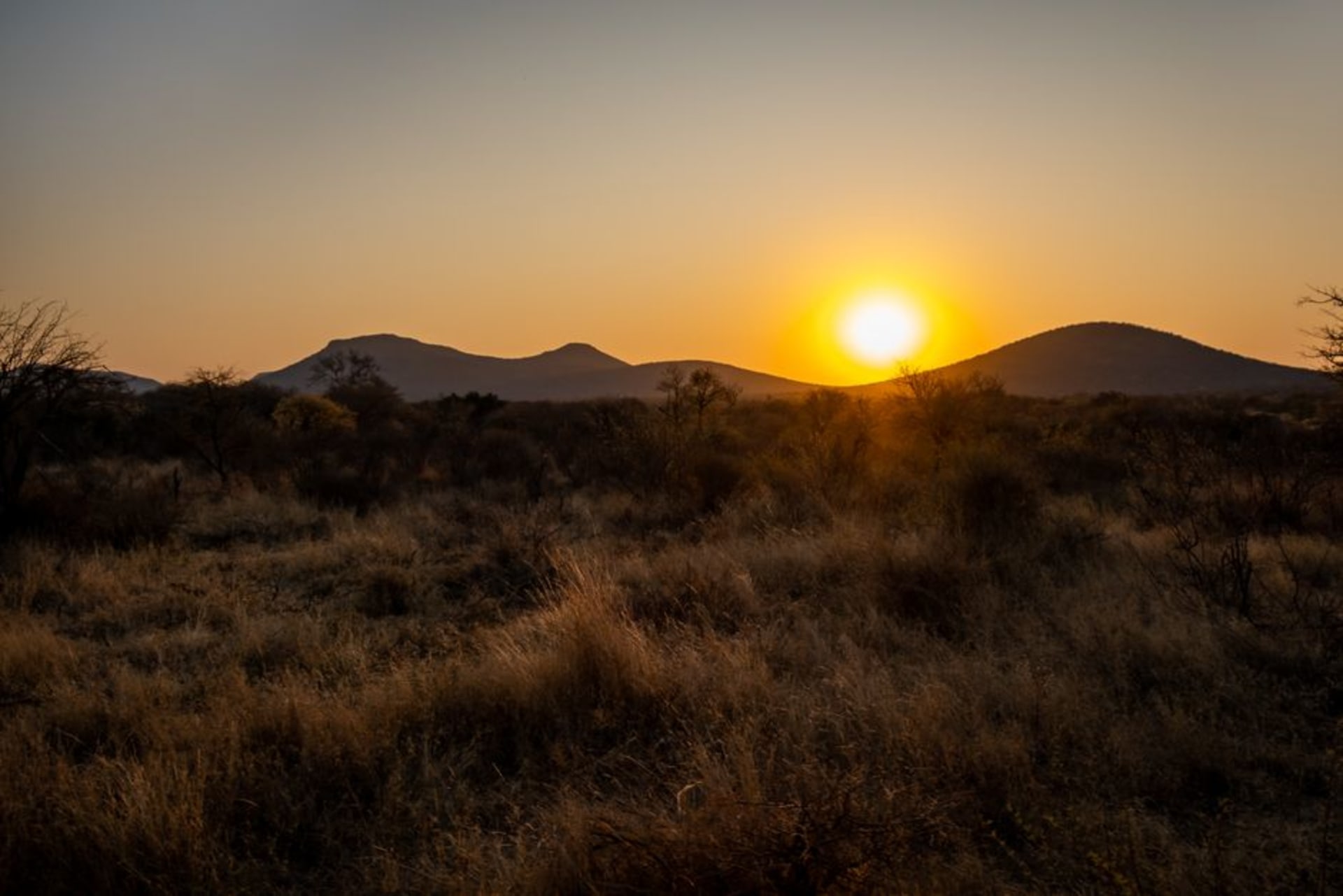
By late afternoon the light had turned that low gold that makes red sandstone look like it’s lit from inside, and we climbed to a ridge where you could see paintings on one side and, if you turned around, nothing but Kalahari scrub stretching to the horizon on the other. It’s a strange, humbling kind of two-directional view — one that looks straight into a hundred thousand years, the other into total emptiness.
When to go: We hiked in May, right at the start of Botswana’s dry winter, and the cooler air made the climbing between sites far more bearable — I’d steer clear of the hot, humid months if you want to actually linger at each panel instead of rushing for shade.