Africa
Okavango Delta
"The only place I've ever felt like an uninvited guest in the best possible way."
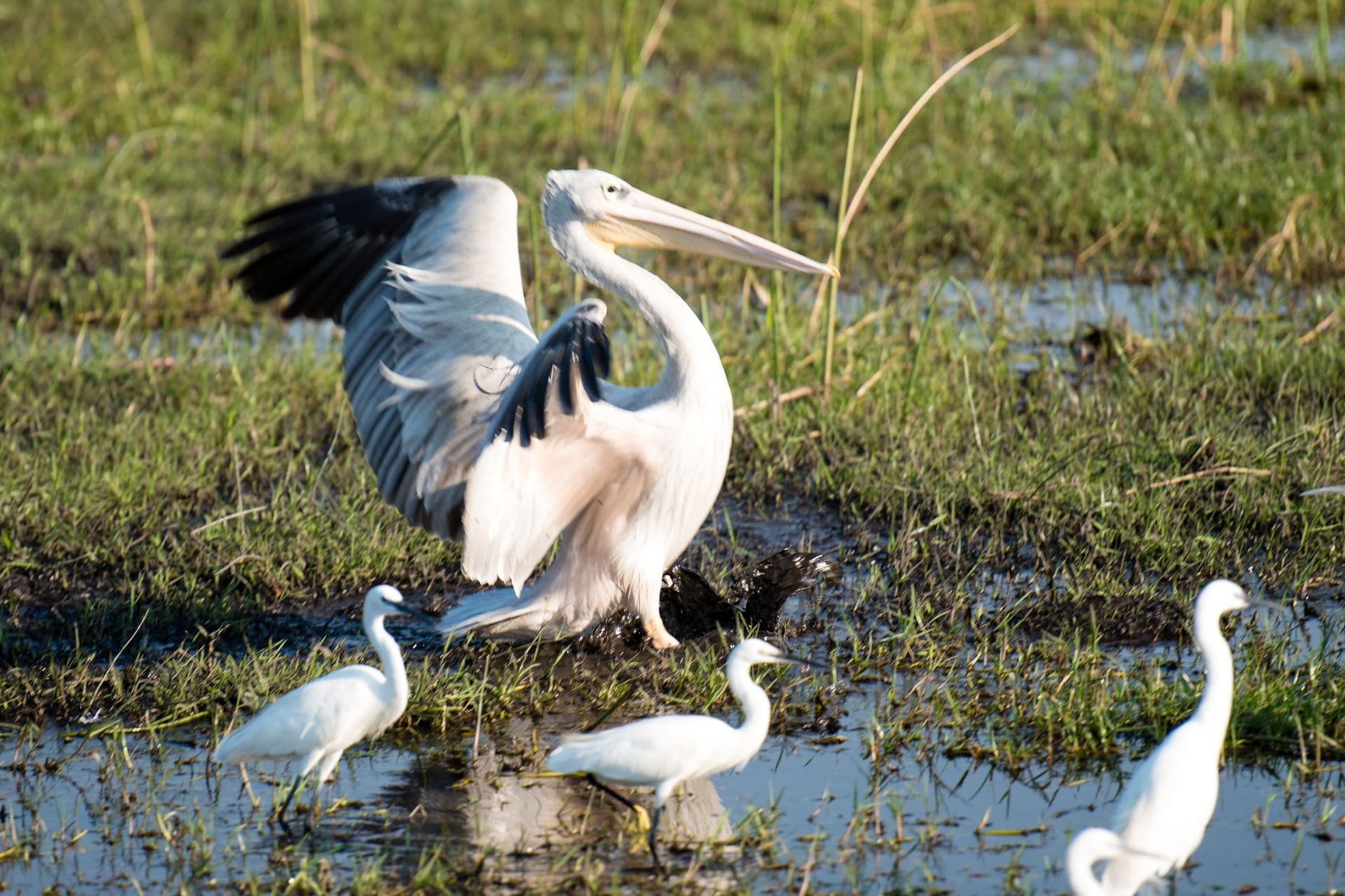
The first thing you notice is the silence. Not the absence of sound — the Okavango is never truly quiet — but the absence of engine noise, of notifications, of the low-frequency hum that you carry everywhere without knowing it. We had been poled through papyrus channels for two hours in a mokoro, flat-bottomed canoe, sitting just centimetres above the water’s surface, before I realised I hadn’t thought about my phone once. The papyrus walls rose on both sides, the water was the colour of black tea from the tanins, and a malachite kingfisher sat on a reed not two metres away as if we were the furniture.
The Okavango arrives from Angola each year with no drama and no announcement. It floods the Kalahari desert — an inland delta that covers 15,000 square kilometres at peak — and then vanishes entirely into thirsty sand. Nothing about this makes scientific sense until you’re in the middle of it, watching an elephant wade chest-deep through a lagoon in Moremi Game Reserve, the water sheeting off its back, its trunk raised like a snorkel. Chief’s Island draws the big predators — lion, leopard, wild dog — because it stays dry. The outer delta floods and drains on rhythms tied to rainfall in Angolan highlands a thousand kilometres north. You are a guest in a system that was never designed around visitors.
Maun is the gateway and does not pretend to be glamorous. The airport is chaos, the main strip is dust and quad bikes, and the sundowner crowd at Audi Camp is equal parts hardcore overlanders and first-time safari-goers with brand-new gear. It doesn’t matter. You’re here for what lies beyond. The cheaper mokoro trips leave from the Boro River area, poled by community guides who know every channel from childhood. The expensive camps — Mombo, Jao, Little Vumbura — deliver the theatrical version: lantern-lit dinners, elevated walkways, game drives in open vehicles. Both versions deliver. The Okavango doesn’t save its best for the people paying the most.
When to go: June to September for the peak flood (water highest in July–August) and dry-season wildlife concentrations. Animals crowd the permanent water as surrounding land desiccates, making game viewing exceptional. April and May see the flood arriving with lush greenery but murkier water. Avoid November to March if you want mokoro access — channels can be too shallow or dangerously high depending on the year.
What most guides get wrong: They treat the Okavango as pure luxury territory, which prices most travellers out before they even look at a map. The community campsites along the southern fringes — Oddballs, Island Safari Lodge, the community trusts near Seronga — offer genuine delta immersion at backpacker rates. The wildlife doesn’t thin out when you leave the premium camps. What thins out is the thread count on your sheets.