Kejimkujik
"The silence here is so complete it starts to feel like a sound — something between breathing and patience."
I paddled out onto Kejimkujik Lake at dusk in a rented canoe, and within ten minutes of leaving the dock the world had become entirely quiet. Not the relative quiet of somewhere without traffic, but the absolute quiet of a place that has no roads within earshot, no buildings in the sight line, and no human sounds of any kind — only the dip of the paddle, the call of a loon somewhere in the spruce trees to the west, and the small sound of water finding its own level against the hull. The lake was the colour of strong tea, tinted amber by the tannins of the surrounding bogs, and the last of the evening light was doing things to that water that I could not have described accurately if someone had paid me.
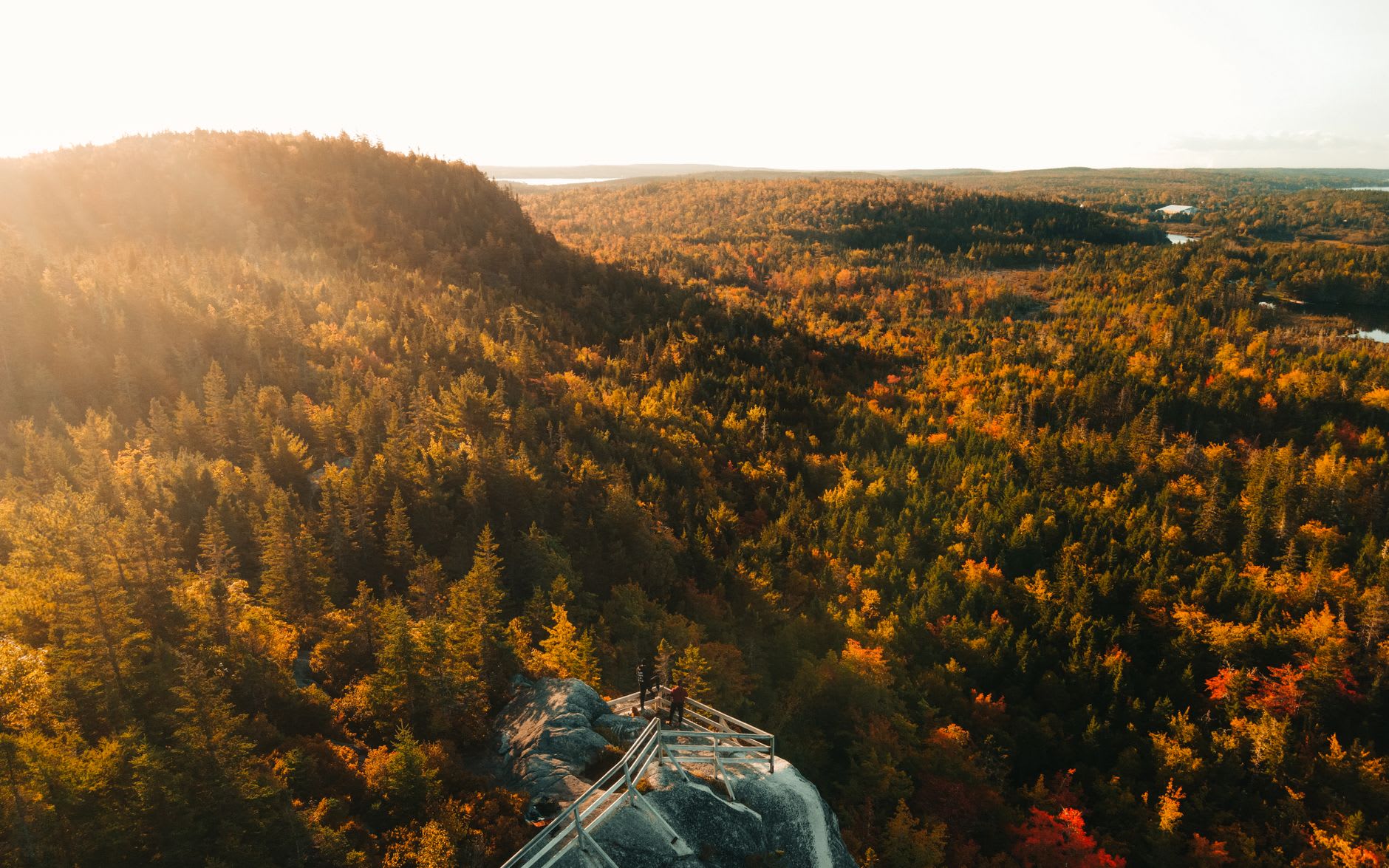
Kejimkujik National Park is Nova Scotia’s inland wilderness — no ocean, no granite coastline, no salt in the air. Instead it offers spruce-hemlock forest, rivers connecting dark-water lakes, and the darkest skies in Nova Scotia, which have earned it Dark Sky Preserve status. On a clear night in August, away from the campfire and flat on my back in the canoe with my life jacket as a pillow, the Milky Way was not the subtle smear it appears from most places I have lived but a thick river of light with depth and structure visible to the naked eye. I lay there for an unreasonable amount of time and felt the specific smallness that is, paradoxically, one of the most comforting sensations available.
Along the shores of the lake and river system, at the waterline where the dark slate lies exposed in flat sheets, the Mi’kmaw petroglyphs are carved. There are over five hundred individual carvings across the park, made over thousands of years — animals, human figures, canoes, spiritual beings — etched into the stone with patient, deliberate tools. I found them unexpected in their intimacy: not monumental art, not ceremonial architecture, but something closer to marks left in a margin, the casual record of people who lived here completely and knew these shores in a way I was only briefly approximating.
The painted turtles of Kejimkujik are one of Nova Scotia’s rarest species, and the park is the last significant stronghold for them in the province. On warm mornings they pile onto fallen logs and rocks at the lake’s edge to absorb heat, and if you paddle close enough and slowly enough, they allow remarkable proximity before sliding back into the amber water. The loons, more tolerant of human presence than almost any other water bird I have encountered, will often surface beside the canoe and regard you with the yellow-eyed composure of animals that have been here incomparably longer than any of us. The swimming, in that clear tannin-stained water, is one of the unexpectedly wonderful things: cold, dark, softly amber, and deeply clean.
When to go: June through September for paddling and canoeing; August for the best dark sky conditions and warmest swimming. Spring brings wood warblers and breeding amphibians in numbers that birders travel specifically to see. Book canoe rentals and backcountry permits in advance for July and August — the park fills up.