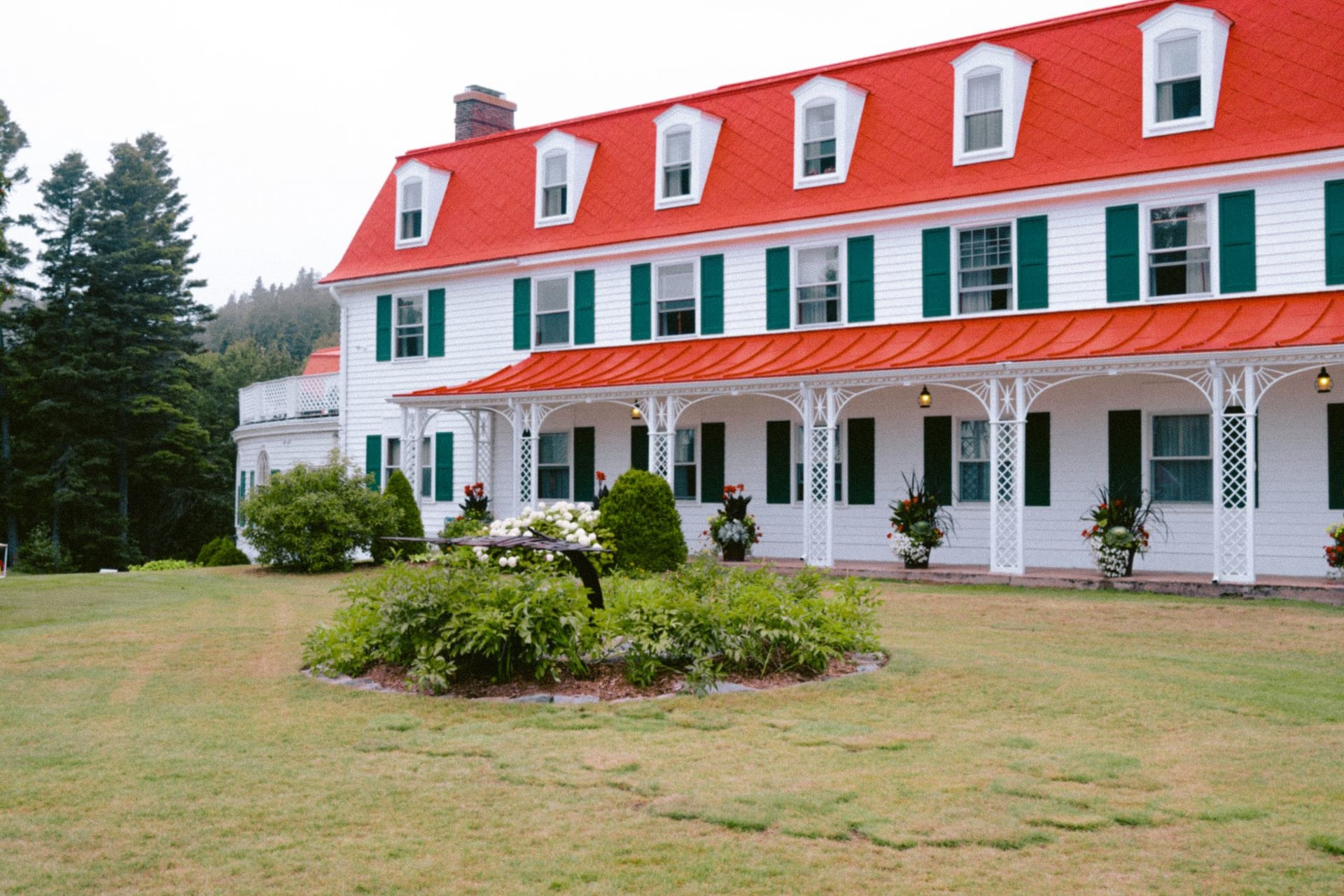
Chéticamp
"The Acadian flag hangs from every second house — not a statement, just how a community marks that it came back."
An Acadian fishing village where the highlands rise behind the harbour and the hooked rugs tell the story of a culture that refused to disappear.

I came around a bend on the western approach to the Cabot Trail and the village of Chéticamp appeared below me — white wooden houses strung along the coast, the tall silver spire of Saint-Pierre Church catching the afternoon sun, and above everything the green wall of the Cape Breton Highlands rising like a wave that had stopped mid-break. The Acadian flag — three coloured horizontal bands with a gold star in the blue field — hung from every second house, which is not a statement but simply how this community marks itself: with the particular insistence of people who were deported, scattered, came back, and decided never to be invisible again.

The Acadian Deportation of 1755 is a story that Chéticamp lives with actively, not as distant history but as the foundational event that explains why this community speaks French on an island that is otherwise English, why the cooking and music and crafts here feel continuous with something much older than the tourist infrastructure around them. The ancestors of these families were expelled from their land by the British, scattered across the eastern seaboard and further, and those who returned to Nova Scotia rebuilt their communities in the places that remained available to them — along this coast, in the fishing economy. The result is a cultural depth that is not performed for visitors but simply present, the way a language is present in the words people use when they are not thinking about language.
The hooked rug tradition of Chéticamp deserves its own paragraph. The Coopérative Artisanale de Chéticamp has been producing hand-hooked rugs since 1927, and the work done here — particularly the large pictorial tapestries — is textile art of serious calibre. Elizabeth LeFort, who lived and worked here through the twentieth century, made tapestries that hang in the Vatican, the White House, and the Canadian Parliament. Watching a woman hook a two-metre landscape tapestry with the speed and precision of someone who learned this before she could read is one of those craft experiences that recalibrates your sense of what skill looks like.

The food in Chéticamp is fishing-community food at its best. The fish chowder served at the local restaurants uses fresh haddock and potatoes in a cream base with enough body to constitute a meal, and the fresh crab — snow crab and rock crab, pulled from the cold waters just offshore — appears on every menu in summer, usually steamed and served with drawn butter and the expectation that you will make a mess of yourself and enjoy doing it. The evening at the local restaurant had a particular quality — French being spoken at every table, an accordion somewhere in the back, the smell of chowder and wood smoke coming from the kitchen — that felt less like a tourist experience and more like being briefly included in something private.
When to go: June through October. The Festival Acadien in August celebrates Acadian culture with music, food, and dancing and the energy it sends through the village is genuine. September is when the fall colour begins in the highlands directly above town and the tourist traffic reduces enough to let the village breathe. The Cabot Trail in October is dramatic and largely empty.
Keep exploring
More from Nova Scotia
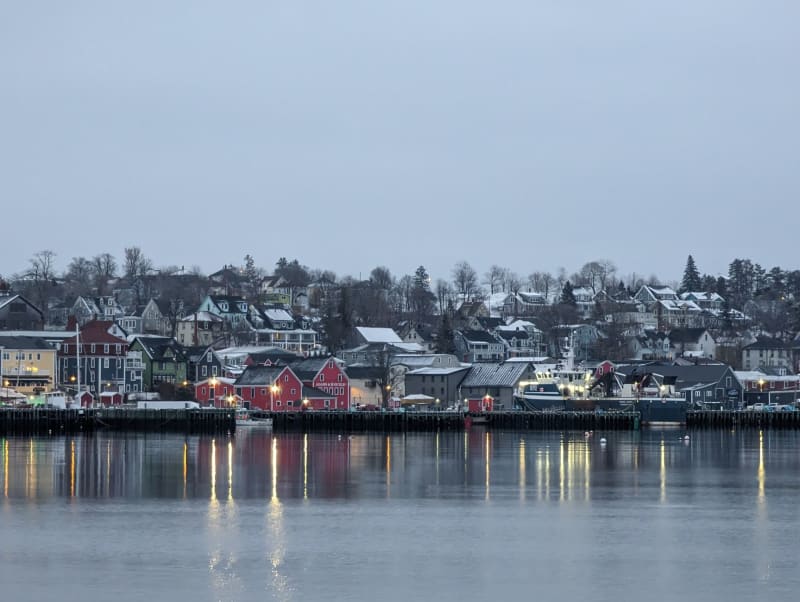 nova-scotia
 Digby
Gateway to the Bay of Fundy's impossible tides, where the world's sweetest scallops come straight off the boat.
Explore nova-scotia
 Grand Pré
A windswept UNESCO landscape of reclaimed marshland and a memorial church where I felt Acadian history under my feet.
Explore nova-scotia
 Halifax
A working harbour city where craft beer, lobster, and two centuries of military history arrive in the same afternoon.
Explore nova-scotia
 Kejimkujik
Nova Scotia's inland wilderness: dark-sky lakes, Mi'kmaw petroglyphs in slate, and an absolute silence that starts to feel loud.
Explore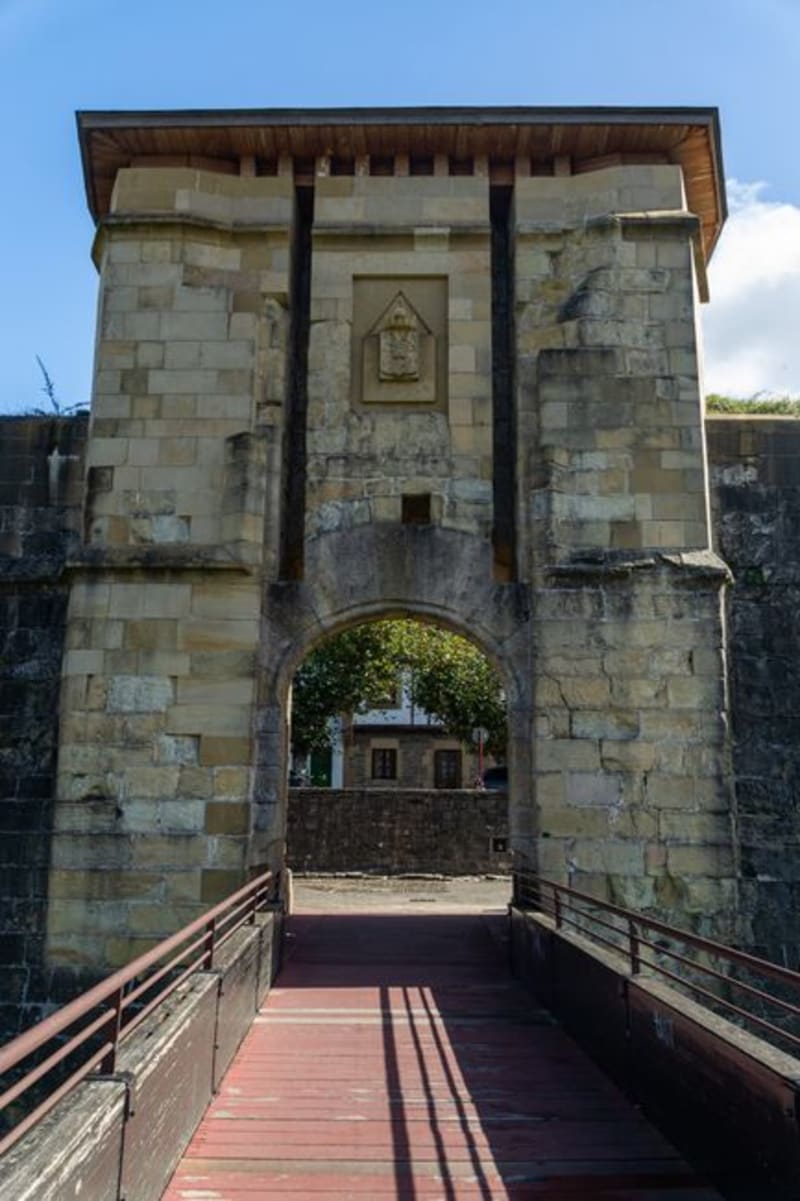 nova-scotia
 Fortress of Louisbourg
A rebuilt 18th-century French fortress town on Cape Breton, where costumed interpreters make colonial life feel startlingly present.
Explore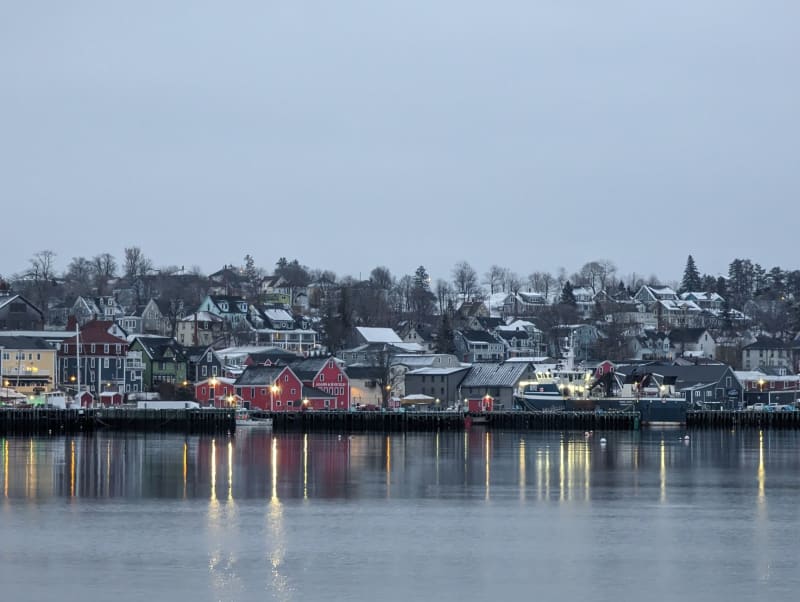 nova-scotia
 Lunenburg
A UNESCO fishing town of improbable colours where German settler architecture meets the Grand Banks schooner tradition.
Explore