
Cape Breton Highlands
"I sat on the Skyline headland for an hour watching whale spouts in the Gulf below. The patience required was no effort at all."
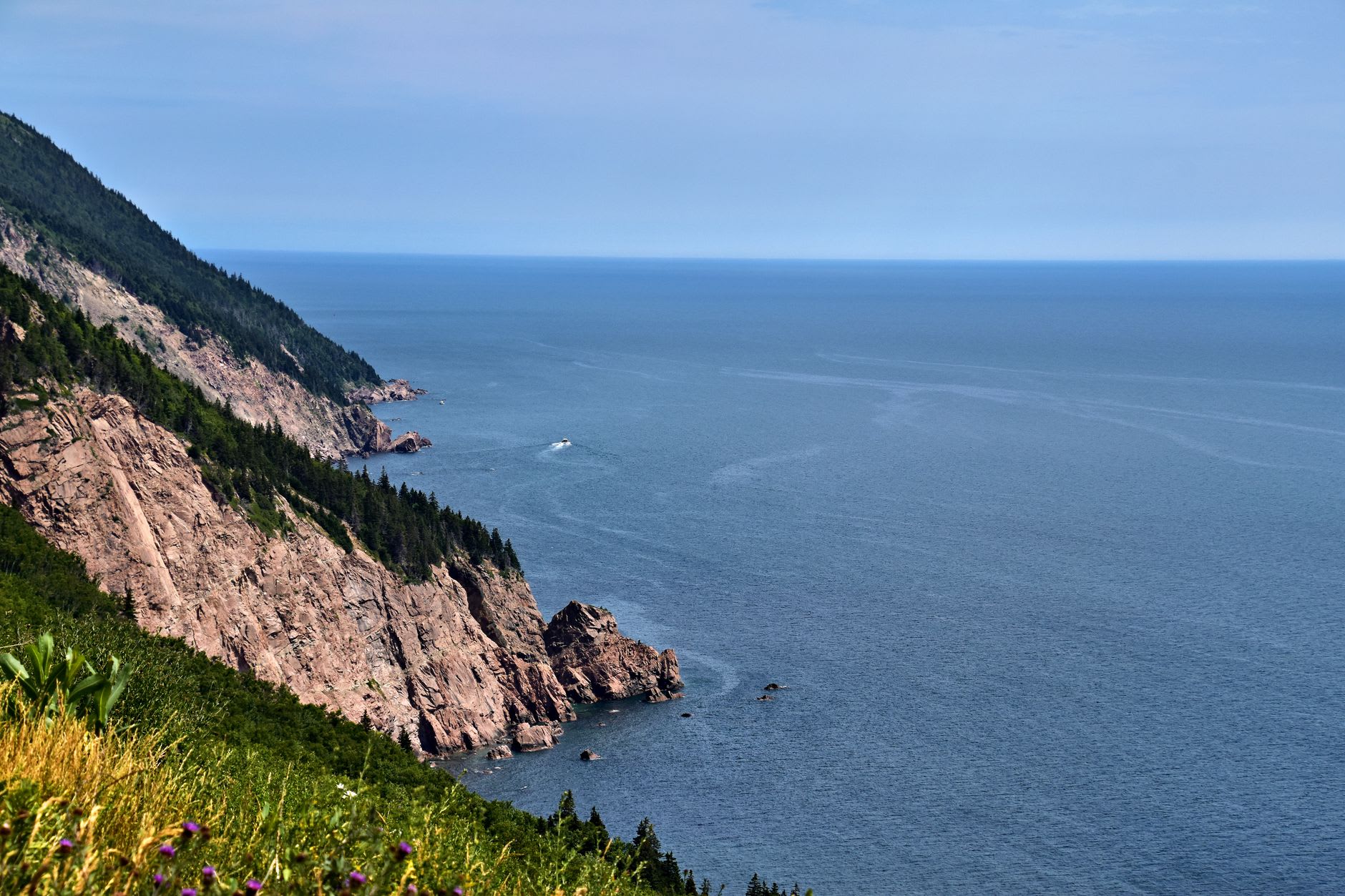
The road crested over the ridge and the Gulf of St. Lawrence appeared — vast, pewter-grey, enormous — and I pulled over before I’d made a conscious decision to do so. The shoulder was narrow and my rental car was half in the ditch and I didn’t care at all, because the view in front of me was the kind that reorganizes your understanding of the word “dramatic.” The Cabot Trail had delivered on its reputation in approximately four minutes.
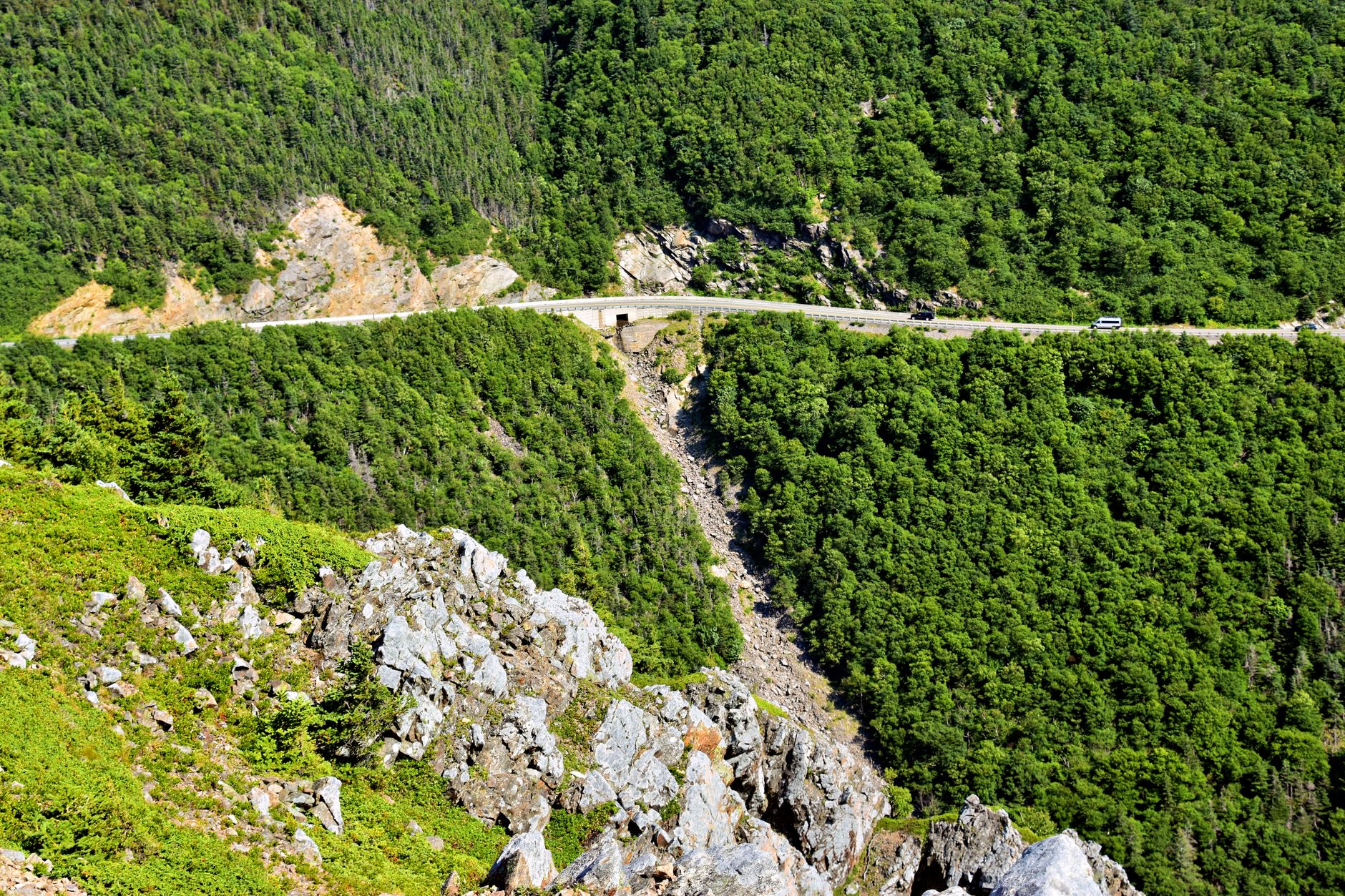
The 298-kilometre loop around Cape Breton’s northern tip is one of those driving experiences that simply cannot be translated into photographs, though everyone tries and some come close. The road clings to cliff faces above the Gulf of St. Lawrence on the western coast, climbing to plateau and descending to sea repeatedly, with the highlands rolling inland in shades of spruce green and grey rock. The speed limit is generous and irrelevant — you will drive slower than the signs suggest, not because the road demands it but because your eyes keep finding new reasons to brake. In July, whale backs break the surface below the headlands: fin whales, pilot whales, the occasional blue. The park pulls you out of the car constantly, and this is by design.
The Skyline Trail is the walk to do if you do only one. The nine-kilometre loop leads out along a headland above the Gulf, through boreal forest where the moose stand in the clearings in the late afternoon with the complete indifference of animals that know they are the apex herbivores in their landscape. At the headland’s end, a series of boardwalk platforms jut over the cliff edge. I sat there for an hour watching the light change on the water below and counting the whale spouts in the distance. Three finbacks in thirty minutes. The patience required was no effort at all.
The Celtic cultural layer on top of Cape Breton’s landscape is less expected but equally compelling. Scottish Gaelic was spoken here as a living language until recently, and the fiddle tradition that emigrated with the Scots in the eighteenth and nineteenth centuries has evolved into something distinctly Cape Bretonian — faster and more rhythmic than its Scottish counterpart, driven by the step dancing that happens at kitchen ceilidhs in villages like Mabou and Inverness. On summer weekends, the Legion halls and pub back rooms fill with musicians who play until midnight, and the quality is startlingly high. I wandered into a session in Inverness with no expectations and came out two hours later feeling like I had accidentally witnessed something precious.
When to go: September and early October are when the highlands ignite in fall colour — the maples turn first, then the birches, and the combination against the Gulf’s steel-blue water is genuinely magnificent. July and August offer the best whale watching and the warmest days, but share the road with more traffic. If you go in summer, start driving at 7am before the RVs and tour buses claim the pull-offs.