
Downhill Demesne and Mussenden Temple
"Lia said it looked like someone had airlifted a piece of Rome and forgotten it on a cliff in Ireland."
A domed library balanced on an Atlantic cliff edge, and the ghost of a bishop's mansion crumbling into the grass behind it.
We got to Downhill on a morning that couldn’t decide what it wanted to be — sun for ten minutes, then a curtain of mist rolling in off the Atlantic, then sun again. I’d read that Mussenden Temple was built in 1785 as a library for Frederick Hervey, the Earl-Bishop of Derry, modeled on the Temple of Vesta in Tivoli, and I’ll admit I expected something smaller. It isn’t. It’s a full circular rotunda with a proper dome, sitting right at the edge of the cliff like it’s daring the sea to take it. Lia stood there for a good minute before saying anything, and when she did it was just: this man built himself a library over a hundred-foot drop just because he could.
That’s the thing about Hervey that got me the whole visit — the sheer scale of the ambition. This wasn’t just a folly. It was one building in a whole estate, and once you walk past the temple and into the grounds proper, you start to understand what Downhill House must have been. The mansion burned in 1851, was rebuilt, then gutted by fire again, and now it’s just walls — window frames with nothing behind them, doorways leading into open sky. We wandered through the walled garden first, where someone from the National Trust had clearly been fighting a losing but determined battle against the wind, then found our way to the ice house and the old dovecote, both half-swallowed by grass.
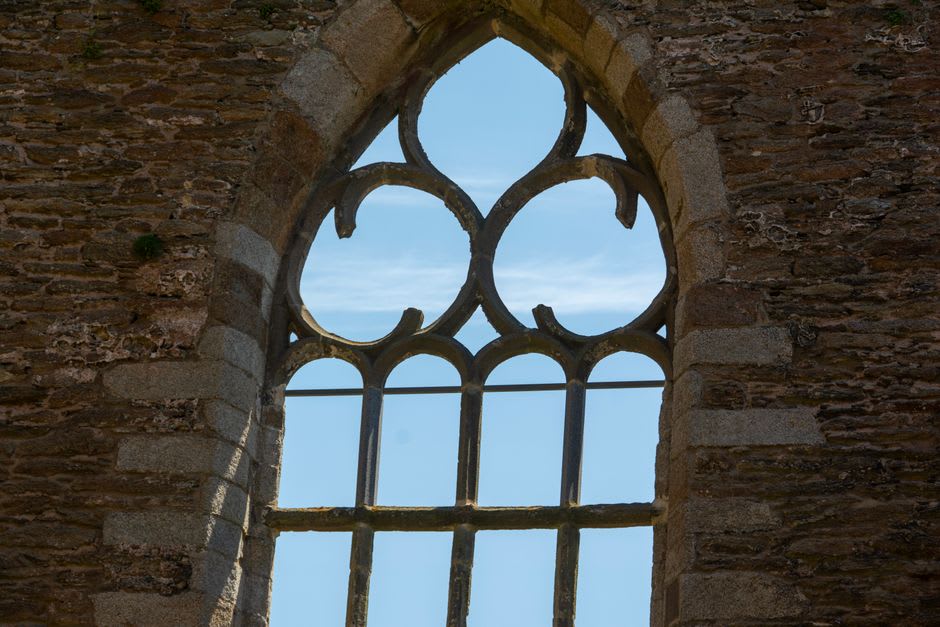
I’m not usually one for ruins — I find them a bit static, a bit “look but don’t touch” — but Downhill got under my skin in a way I didn’t expect. Maybe it was the wind doing all the work, howling through empty rooms that once had chandeliers and a bishop’s library of the classics. Maybe it was knowing that Game of Thrones had filmed here, and trying to spot the angle they’d used, only to realize the whole point is that the place needs no dressing up. We ate sandwiches sitting on a low wall with our backs to the ruin, facing the temple and the grey sweep of the coast toward Castlerock, and for a while neither of us said much.
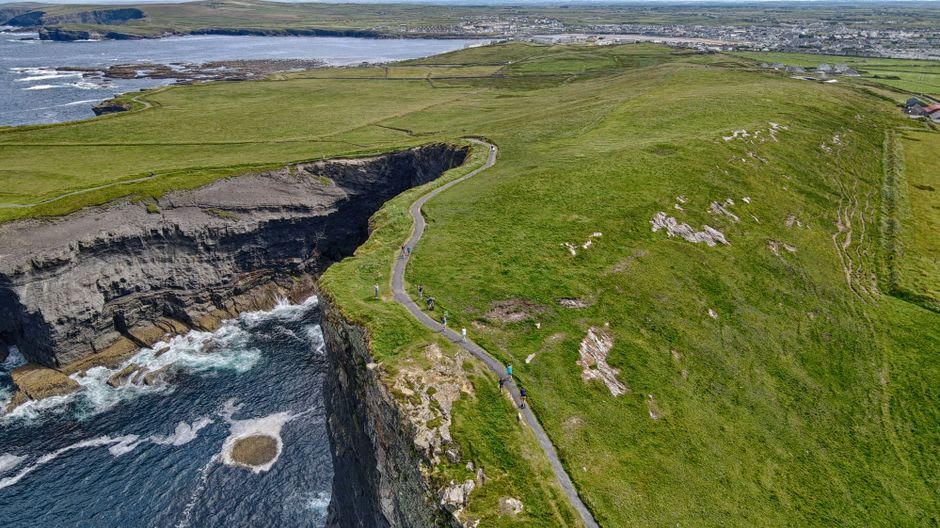
What stayed with me driving away was the contrast — this perfect, still, domed thing on the edge, and behind it, a house that couldn’t survive its own fires. Two versions of the same man’s appetite, one intact and one not. I keep thinking about that whenever someone asks me what Northern Ireland actually feels like.
When to go: Come between spring and early autumn, when the walled garden is in bloom and the coastal views past Mussenden Temple actually stay clear long enough to enjoy — winter storms here roll in fast and hard, and you’ll want more than ten dry minutes at a time.
Keep exploring
More from Northern Ireland
 northern-ireland
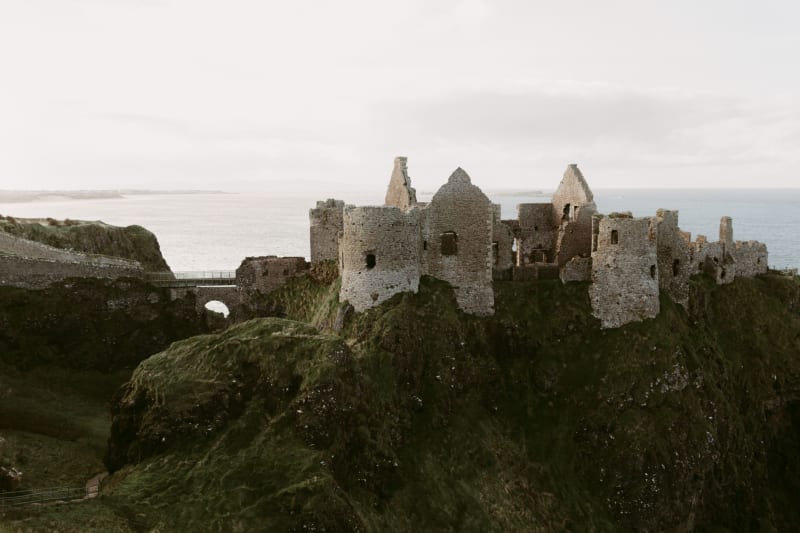
 Dunluce Castle
A medieval stronghold balanced on a basalt sea-stack above crashing surf — ruins that look more dramatic than most intact castles.
Explore northern-ireland
 Giant's Causeway
Forty thousand hexagonal basalt columns descending into the Atlantic — geology so precise it looks like deliberate construction.
Explore northern-ireland
 Glens of Antrim
Nine river valleys cut from the Antrim plateau to the sea, dripping with waterfalls and almost completely overlooked by the tour coaches.
Explore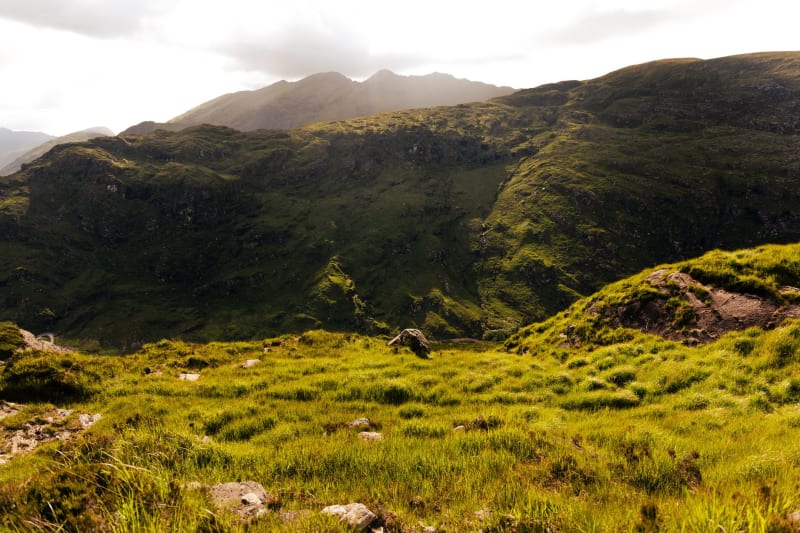 northern-ireland
 Mourne Mountains
Granite peaks rising from the sea in County Down — the mountains that C.S. Lewis said 'taught him longing' and still do that to people.
Explore northern-ireland
 Rathlin Island
Northern Ireland's only inhabited island — a boomerang of basalt five miles off the Antrim coast where puffins outnumber people by a thousand to one.
Explore northern-ireland
 Strangford Lough
A sea inlet so tidal and alive with seals and wading birds that it operates at a rhythm entirely independent of the mainland around it.
Explore