Cushendun
"Lia said it looked like Cornwall got lost and washed up in Antrim. She wasn't wrong."
A handful of whitewashed Cornish cottages, red sandstone caves, and a river mouth where the Glens of Antrim meet the sea.
We came into Cushendun at the end of a long day on the Antrim Coast Road, the one Charles Lanyon carved along the cliffs in the 1830s, and I remember slowing the car without meaning to. After an hour of dramatic headlands and glens spilling down to the water, the village itself is almost a joke in its smallness — a curl of whitewashed cottages around the mouth of the River Dun, looking for all the world like they’d been airlifted in from Cornwall. Which, in a way, they had. Ronald McNeill, Lord Cushendun, commissioned the architect Clough Williams-Ellis to build them in the 1920s and 30s, and the effect is strange and lovely: this very Antrim landscape wearing a very un-Antrim outfit.
We parked by the square and just wandered for a while, Lia photographing doorways while I tried to figure out where the river actually met the sea. It’s a short walk, maybe ten minutes, but the light kept changing on us — one minute grey and flat, the next this low gold that made the cottages glow. I ate a bad but perfect ham sandwich sitting on the harbour wall and watched a couple of dogs chase each other along the sand while their owners ignored them completely.
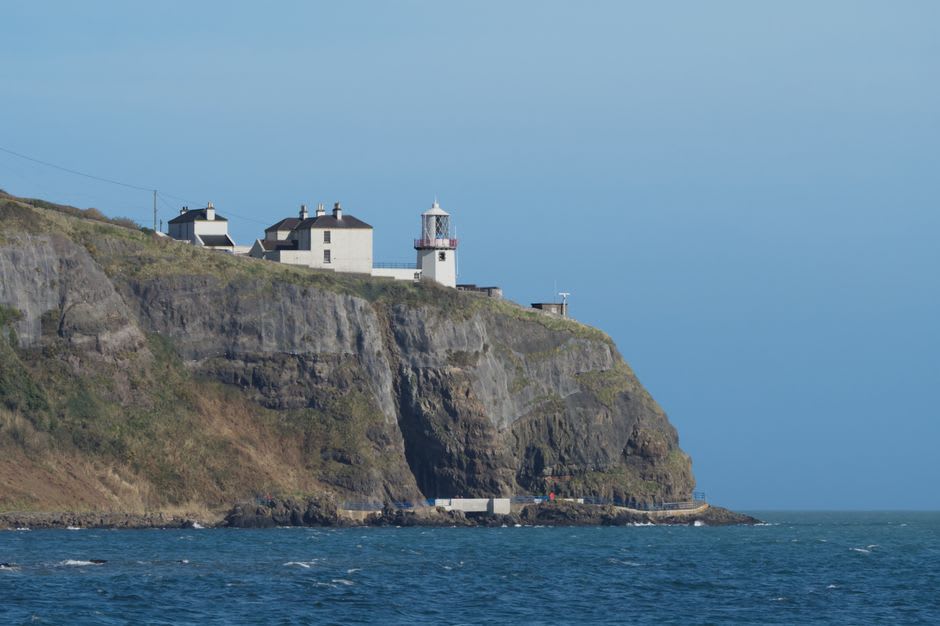
The caves are what pulled us out of the village proper. They’re carved into red sandstone by the sea, just along the shore, and the whole site — village, caves, coastline — belongs to the National Trust now, which probably explains why nothing here feels over-developed. I’d read that HBO shot scenes for Game of Thrones inside these caves, and I half expected some kind of gift-shop circus around them. There wasn’t one. Just damp red rock, the sound of water somewhere behind us, and Lia ducking her head under a low arch to see how far back it went.
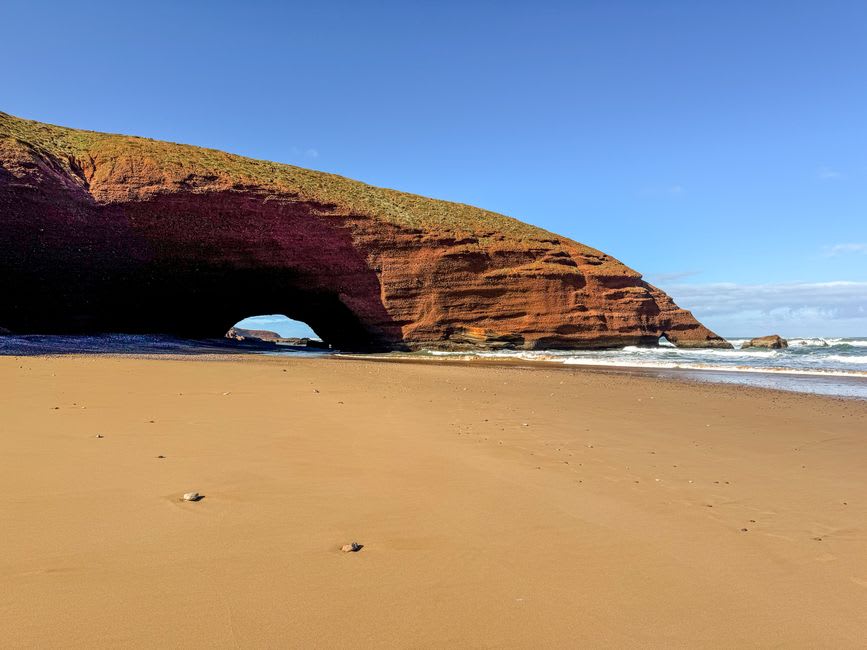
We didn’t stay long — Cushendun isn’t a place that asks for a long stay, more a place you pass through and remember disproportionately well. Standing at the northern end of the Glens of Antrim road, it felt like a full stop at the end of a very good sentence.
When to go: We got lucky with a clear afternoon in early summer, and I’d say that’s the trick — aim for late spring through early autumn, when the weather settles down enough to actually enjoy the harbour and the light does something worthwhile with the caves.
Keep exploring
More from Northern Ireland
 northern-ireland
 The Dark Hedges
An avenue of beech trees in County Antrim planted by a vain eighteenth-century family that has, through no fault of its own, become the most photographed road in Ireland.
Explore northern-ireland
 Derry
A walled city where even the name is contested — and that tension, held lightly by its people, is what makes it unforgettable.
Explore northern-ireland
 Downhill Demesne and Mussenden Temple
A domed library balanced on an Atlantic cliff edge, and the ghost of a bishop's mansion crumbling into the grass behind it.
Explore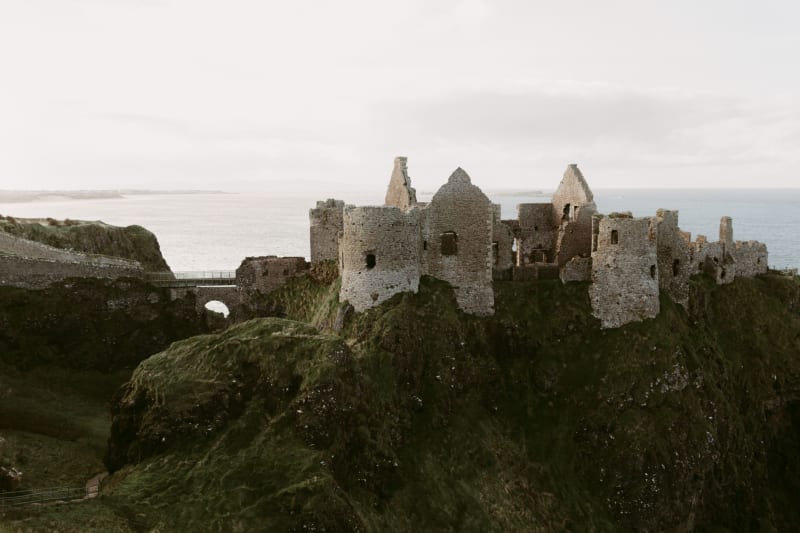 northern-ireland
 Dunluce Castle
A medieval stronghold balanced on a basalt sea-stack above crashing surf — ruins that look more dramatic than most intact castles.
Explore northern-ireland
 Giant's Causeway
Forty thousand hexagonal basalt columns descending into the Atlantic — geology so precise it looks like deliberate construction.
Explore northern-ireland
 Glens of Antrim
Nine river valleys cut from the Antrim plateau to the sea, dripping with waterfalls and almost completely overlooked by the tour coaches.
Explore