
Mau Son
"We drove up into the clouds and came out somewhere that didn't feel like Vietnam at all."
A misty mountain massif above Lang Son where ruined French villas, tea terraces and rare winter frost meet.
We left Lang Son City in the early morning, the road climbing steadily for what felt like forever, the air through the window growing sharper with every switchback. By the time we’d covered the thirty-some kilometers to Mau Son, Lia had her jacket zipped to the chin and I was genuinely surprised to feel my breath fog for the first time since we’d moved to Mexico. The massif tops out at 1,541 meters, and even without snow that day, the cold felt like a small miracle after months of lowland heat.
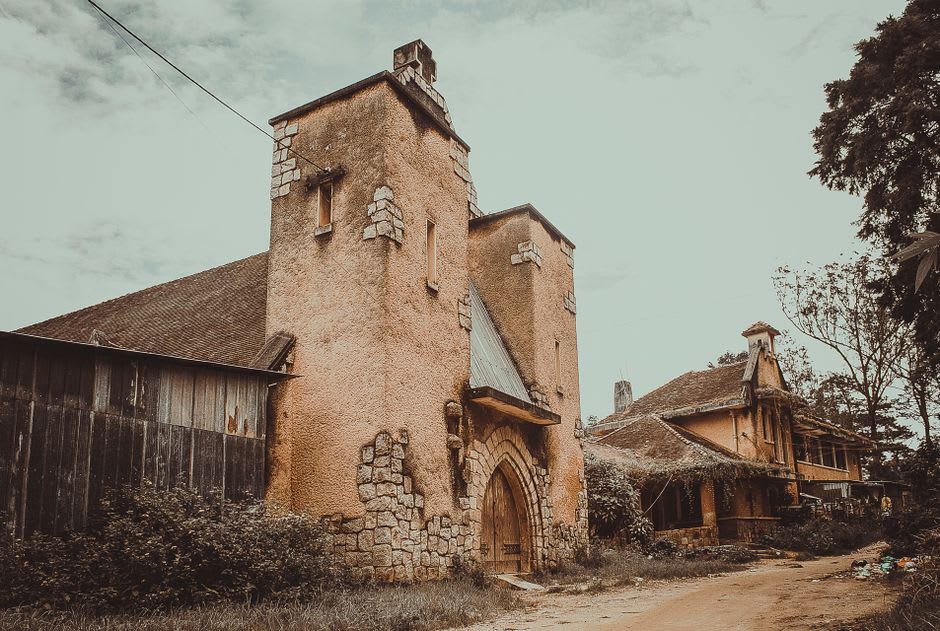
What got me most, though, wasn’t the temperature — it was the ruins. Scattered across the slopes are the remains of villas the French built here in the early twentieth century, when this was a hill station and military outpost carved out of Dao territory. We scrambled up to one crumbling shell with a fig tree growing straight through where a living room must have been, and stood there a long while, not saying much. It’s strange being French in a place like that, tracing the outline of a colonial retreat that displaced the people who’d been farming these hills long before anyone came up from the coast to escape the heat.
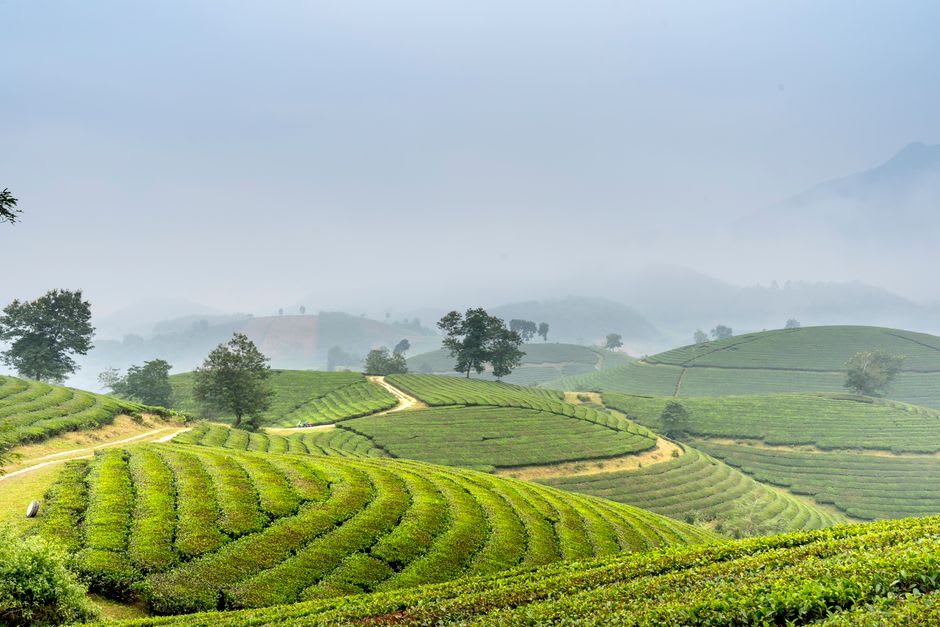
Further down, the mountain felt entirely different — alive, terraced, working. We stopped at a roadside stall run by a Dao woman selling Mau Son plums, small and tart, and I ate a handful right out of the bag while Lia bargained for a bag of the local tea to take home. She still brews it most mornings back in Mexico, and every time the kettle goes on I think about the Tay and Nung families we passed tending those steep green terraces, the fog rolling through them in slow waves.
We didn’t get the snow — that’s a December-January lottery, and we were there in October, more out of curiosity than planning. But honestly I think that suited the place better: no crowds chasing a novelty, just us, the tea pickers, and the ghosts of those old villas in the mist. When to go: aim for December to January if you want a shot at frost or the rare snowfall that makes headlines across the country, or come between April and October like we did for a cooler, quieter escape from the heat below.
Keep exploring
More from Northeast Vietnam
 northeast-vietnam
 Mèo Vạc
A canyon market town at the bottom of the world's edge, where the Nho Quế River runs jade green and Sunday is the only day that counts.
Explore northeast-vietnam
 Quản Bạ
The first dramatic stop on the Hà Giang loop, where a mountain pass called Heaven's Gate opens onto a valley and a pair of perfectly rounded hills the locals call the Fairy's Bosom.
Explore northeast-vietnam
 Sapa
A hill town swathed in mist where rice terraces cascade down cliff faces and Hmong women outpace every tourist on the mountain paths.
Explore northeast-vietnam
 Ba Be Lake
Vietnam's largest natural lake, cupped in limestone karst, where Tay stilt-house villages still meet the water by wooden boat.
Explore northeast-vietnam
 Bắc Hà
A Sunday market so vivid and unhurried that the Flower Hmong women who run it seem to dress not for commerce but for the sheer pleasure of colour.
Explore northeast-vietnam
 Bản Giốc Waterfall
A waterfall so wide it straddles two countries, thundering into a turquoise pool while bamboo rafts drift below and the border passes invisibly through the mist.
Explore