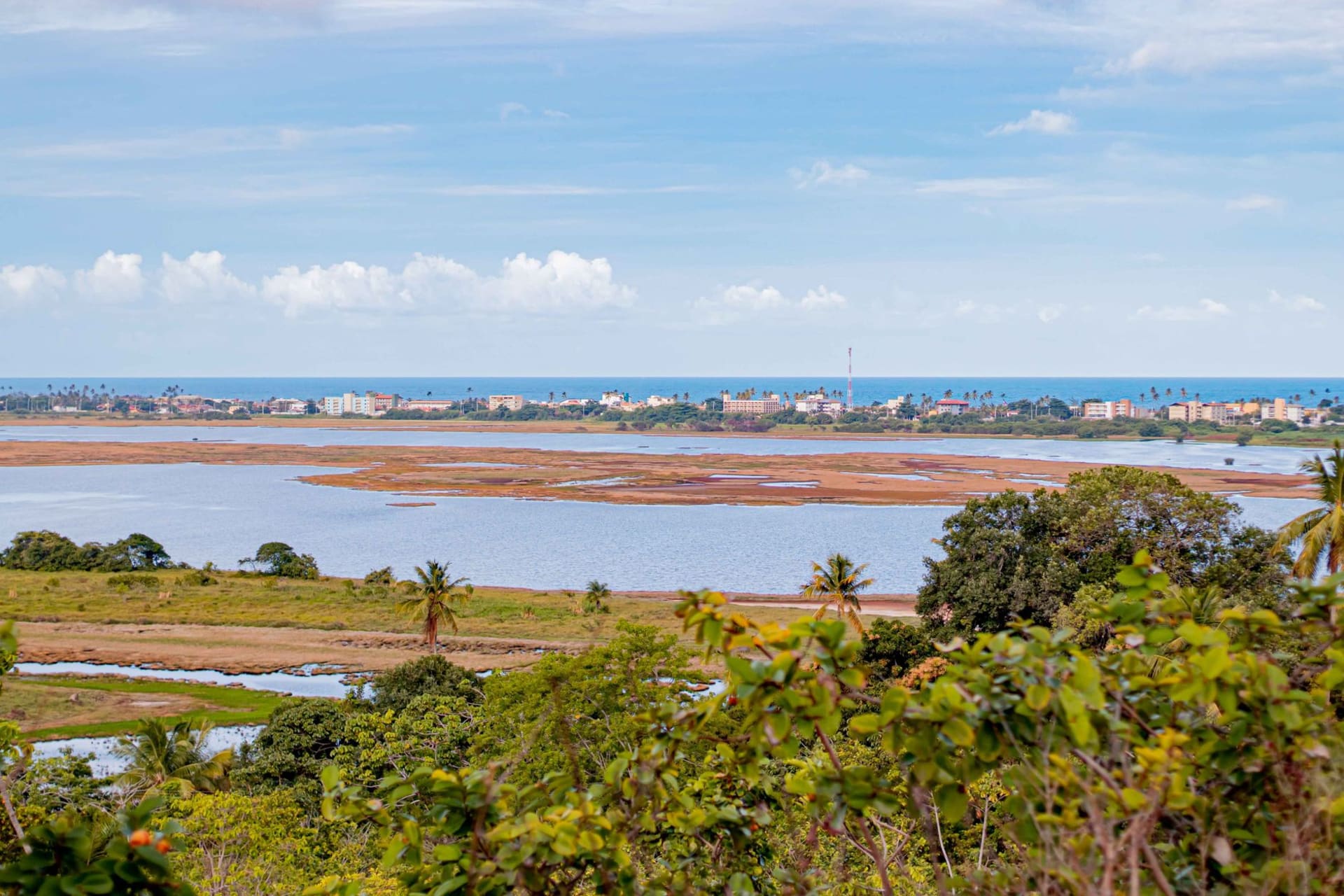
Porto de Galinhas
"I stood waist-deep a kilometre from shore and small fish were eating crumbs out of my hand."
Porto de Galinhas has a name that means “port of chickens”, which is one of the more uncomfortable bits of history on this coast — it was a code used during the period when the slave trade was officially banned and enslaved people were smuggled in hidden among crates marked as poultry. The town does not hide this; there is a quiet acknowledgement of it in the local museum, and it sits oddly against the relentless prettiness of the beaches. I think it is worth knowing before you go, because the postcard version of this place — and it is very much a postcard — comes with a heavier story underneath.
That said, the beaches deserve their reputation. Porto de Galinhas sits about an hour south of Recife on the Pernambuco coast, and what makes it different from the dozens of other northeastern beach towns is the reef. A line of coral runs parallel to the shore, and at low tide it traps the sea into a chain of warm, clear natural pools — the piscinas naturais — that are calm enough to stand in and full enough of fish to feel like an aquarium.
The natural pools and the jangadas
You reach the pools on a jangada, the traditional flat sailing raft of the northeast, and this is half the experience. The rafts gather at the main beach in the morning, and when the tide is right a small fleet of them carries visitors out to the reef under triangular sails. Lia and I went out on one crewed by two men who had clearly done this thousands of times and still seemed to enjoy it, and they anchored us over a pool maybe a kilometre offshore where the water was waist-deep and so clear you could count the grains of sand.

I am of two minds about the fish-feeding. The crews hand you a bit of bread and within seconds you are surrounded by sergeant-majors and small wrasse nibbling at your fingers, which is undeniably delightful and almost certainly not great for the reef. I did it once, felt the small thrill of it, and then mostly just floated and watched. The water was the temperature of a bath. A turtle drifted past at one point, entirely unbothered, and that single unprompted moment was worth more than all the bread.
The town and the long beaches
Back on land, Porto de Galinhas itself is a compact, walkable town that has clearly grown fast around tourism — a pedestrian centre full of restaurants, ice-cream shops, and stalls selling the wooden painted chickens that are the town’s slightly defiant mascot. It is busy, and in high season it is very busy, but the food is good: I ate grilled fish and a plate of casquinha de siri (stuffed crab) at a beachfront barraca and watched the tide go out over the reef.
What saved the place for me was walking. Head south along the sand and the crowds thin fast. Within an hour on foot you reach Praia de Maracaípe, a long open beach where the surfers go and the river meets the sea, and beyond it the Pontal de Maracaípe, a sandbar at a river mouth where, in season, you can see seahorses in the mangrove shallows. The contrast is striking — the engineered, packed pools of the main beach and then, twenty minutes’ walk away, an empty river mouth with nothing but mangroves and birds.

When to go
The pools only form at low tide, so check the tide tables before you commit to a day — the jangadas only run when the water is low enough, and a high-tide visit to the pools is just deep cloudy sea. The dry season (September to March) gives the best weather and clearest water; April to July is the rainy season and the sea is murkier. Avoid Brazilian school holidays in January and July if you can, when the town fills past comfort. Go early in the morning to beat both the crowds and the heat.