Americas
Northeast Brazil
"I came for the dunes. I stayed because nothing else had prepared me for this."
I arrived in São Luís at two in the morning, in the thick heat that the northeast never really loses, and the city already felt different from any Brazil I had visited before. The colonial azulejo tiles on the crumbling facades, the smell of babaçu oil and dried shrimp drifting from somewhere unseen, the music that was neither samba nor axé but something older and more insistent — forró, roots forró, not the polished festival version. That was my introduction to the Nordeste, and it never really let up.
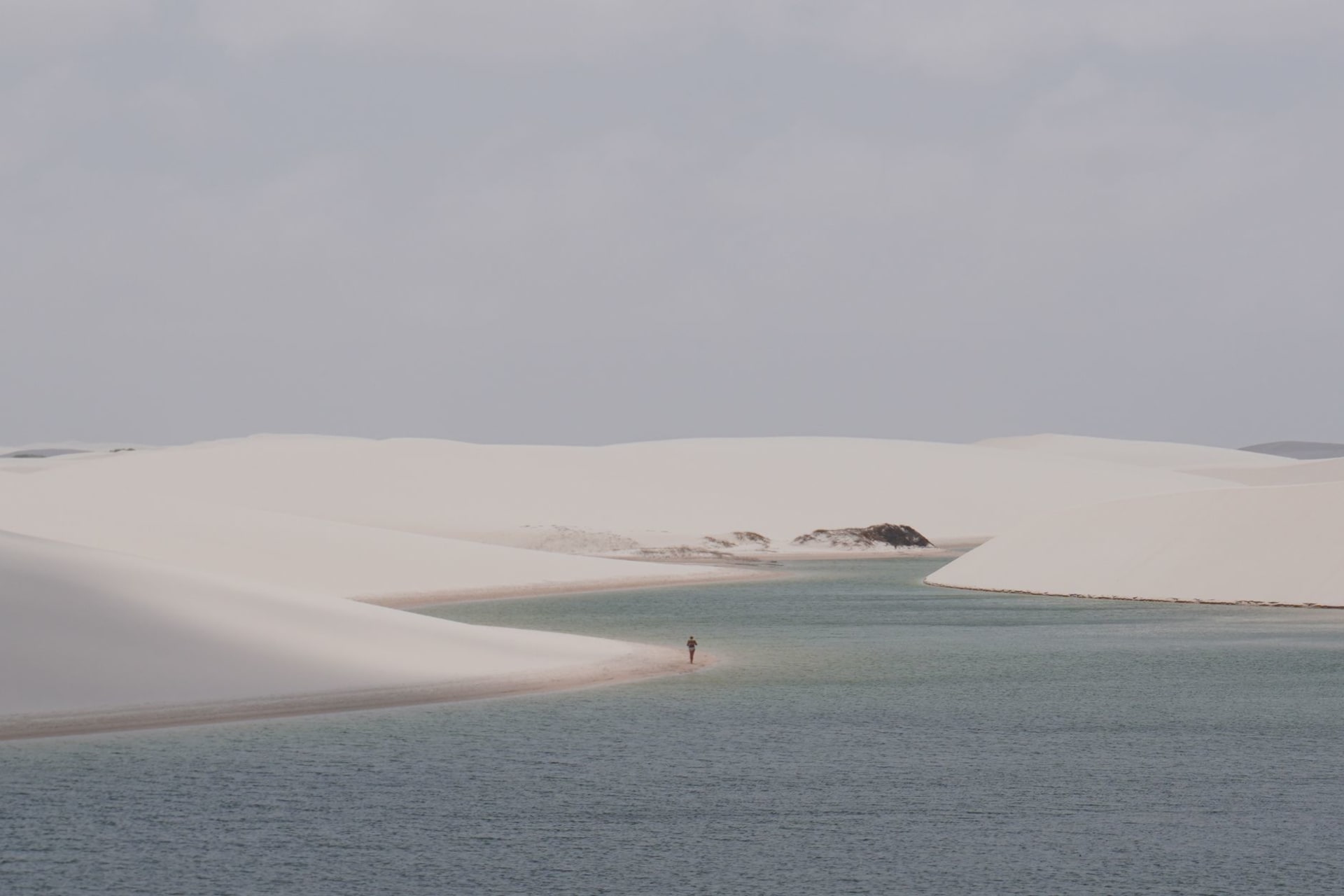
Lençóis Maranhenses is the image that travels — and it deserves every frame. Between July and September, rainwater fills the valleys between the dunes and creates hundreds of freshwater lagoons suspended in a sea of white quartz. Swimming in Lagoa Azul while the dunes slope away in every direction, with no visible infrastructure and no sound except the wind, is one of those experiences that refuses to compress into a photograph. You have to be there for the scale to make sense. The access point from Barreirinhas is straightforward enough; the 4x4 ride across the sand is its own spectacle. I went twice in four days.
Further up the coast, Jericoacoara is the beach town that backpackers found thirty years ago and never fully surrendered to resort developers. The streets are still sand. Sunsets over the dune above the village gather the whole town without any organizing authority. Canoa Quebrada and Morro Branco have their own particular drama — red cliffs, wind-sculpted formations, fishermen leaving before dawn in jangada rafts with triangle sails. Ceará’s coastline is long enough that you can move through it without ever feeling like you’re repeating yourself. Fortaleza is the anchor: loud, urban, unbeautiful in the way that honest port cities usually are, with street food — caldo de sururu, tapioca stuffed with sun-dried beef and coalho cheese — that is worth crossing the continent for.
When to go: July through September for the lagoons in Lençóis Maranhenses — the rains fill them between January and June, and they peak in color around August. Jericoacoara and the Ceará coast are best from July to December, when the trade winds come and the kitesurfers arrive. Avoid the Nordeste in March and April if you want sunshine.
What most guides get wrong: They treat Lençóis Maranhenses as a day trip from São Luís and move on. You need at least three nights in the park itself — based in Atins or Caburé — to catch the light at different hours, walk further into the dune field, and understand that this is not a scenic detour. It is the whole point.