
Lençóis Maranhenses
"The scale of it takes about two days to absorb. The photographs never told me it was this big."
The 4x4 left Barreirinhas before dawn and by the time the sun came up we were already deep inside the dunes, the vehicle tilting on slopes of white quartz that squeaked beneath the tires like compressed snow. I had seen the photographs. I had read the descriptions. None of it had prepared me for the scale — the way the dune fields stretched in every direction without interruption, without any visible edge, without a single structure or tree or landmark to give the eye a place to rest. It is one of those landscapes that the brain keeps trying to categorize and failing. Desert? Coast? Something between them that doesn’t have a name.
Lençóis Maranhenses is technically a coastal desert, though it receives far more rain than that classification implies. Between January and June, the rains fall and the water collects in the valleys between the dunes — the sand is compacted enough that it doesn’t drain, so the lagoons simply sit there, filling and deepening, reaching their maximum saturation around July and August. By October the smaller ones have evaporated back. The blue of the water against the white of the sand is so extreme that the first time you see it you suspect your eyes are overcorrecting. Then you walk over the ridge of a dune and the lagoon spreads out fifty meters below you and the blue is real and you have to go in.
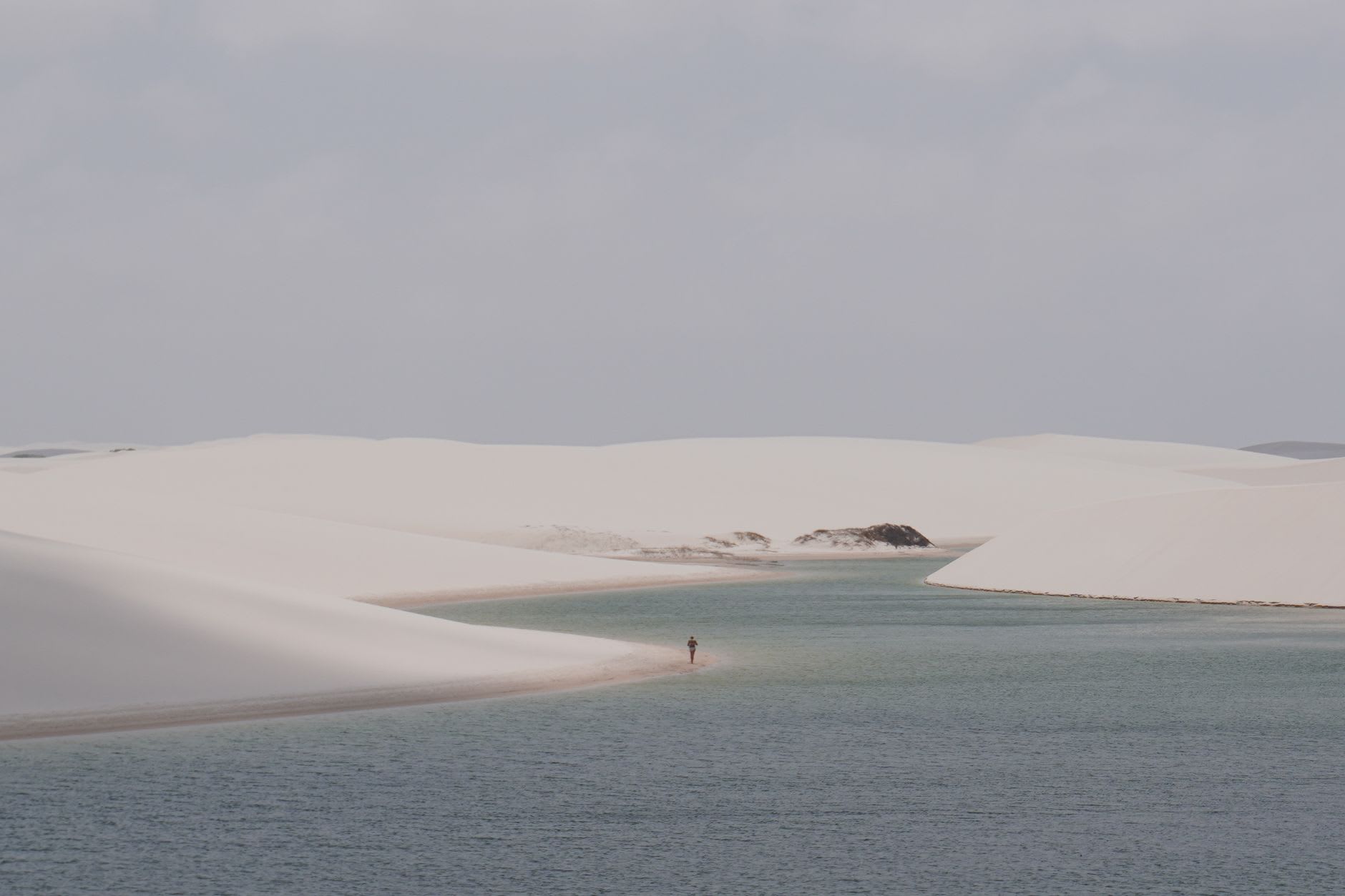
Lagoa Azul is the famous one — easy enough to reach from the main 4x4 route — and it deserves the attention, but the park extends far beyond what most visitors see. Walking east from Lagoa Bonita toward the village of Caburé, or west from Atins into the interior, puts you into a part of the dune field where you can walk for hours without meeting another person. The lagoons out there have no names on the maps and no visitors, and the silence is so complete that it registers as a presence. At midday the light is ferocious and flat. At dawn and dusk the shadows the dunes throw across each other create topography that seems to constantly shift.
The scale requires time. One day is not enough — the 4x4 tours from Barreirinhas cover the accessible circuit and get you back by afternoon, and that is better than nothing, but it compresses the experience into something transactional. The version that stays with you is the one where you sleep inside the park, in Atins or Caburé, and walk out into the dunes before the tour groups arrive, and stay until the light goes golden and the sand turns from white to amber and something about the whole enormous landscape softens.
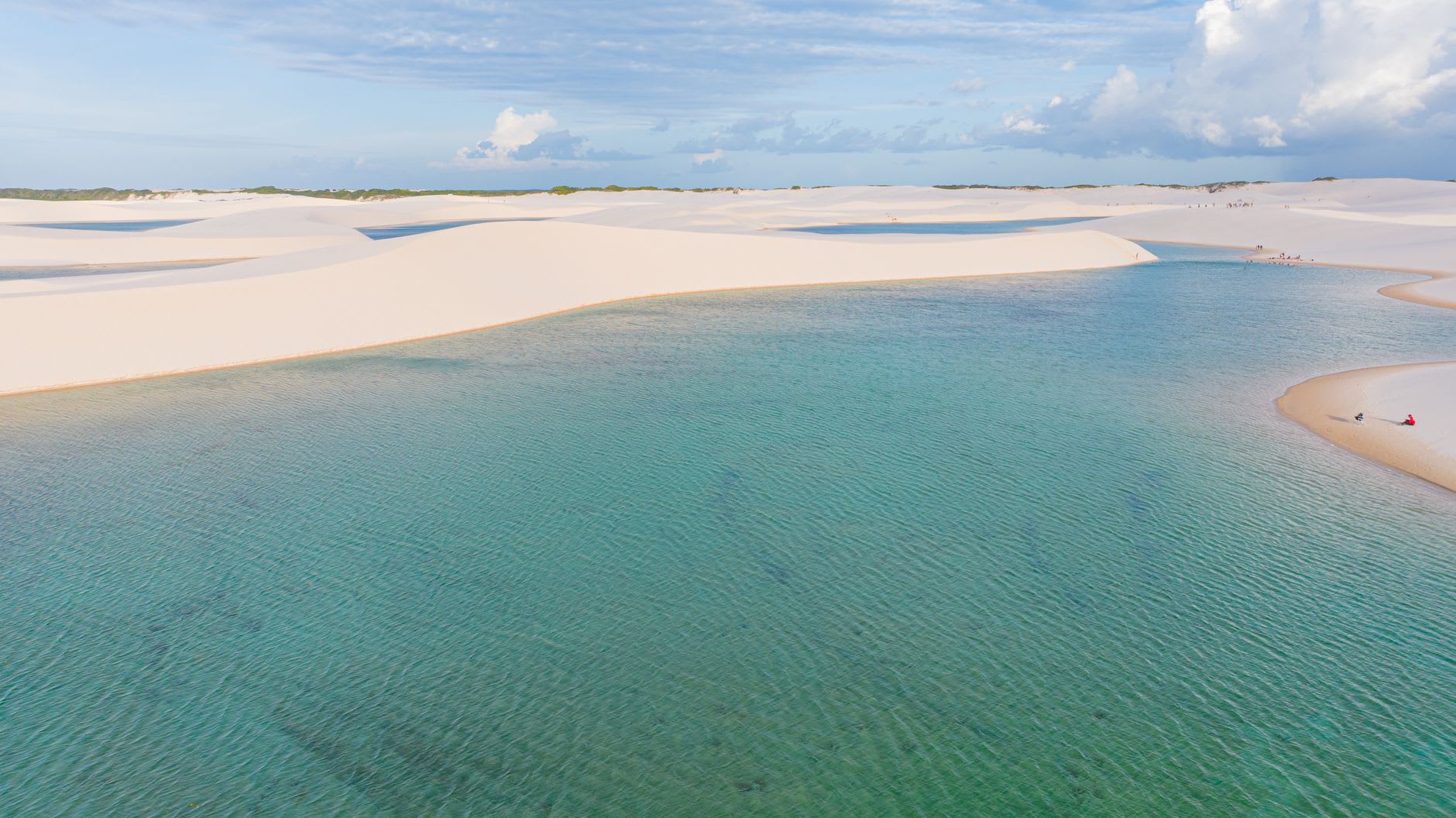
There is almost no infrastructure inside the park itself. No paved roads, no electricity in most of the interior. The villages of Atins and Caburé have simple pousadas with generators that run from six to ten in the evening. You eat what the cook makes — fish pulled from the estuary, rice, fried banana, a plate of something assembled with whatever the weekly boat brought. None of it matters. What matters is walking out to the dunes in the dark with a flashlight and lying down on the warm sand and looking at the sky, which out here is extravagantly full of stars.
When to go: July through September for the fullest lagoons and the most intense blue-green color. The rains fill the valleys between January and June, peaking in April-May, so some lagoons appear as early as March. By October the smaller ones shrink considerably and some disappear by December. Avoid January through April if you want to travel easily by vehicle — the roads in flood season become impassable.