
Matka Canyon
"Skopje was an hour ago. Matka felt like it had been waiting for centuries."
Nobody believes you when you tell them Matka Canyon is twenty minutes from the centre of Skopje. The canyon belongs to the category of places that feel so complete in themselves — so obviously remote, so obviously ancient — that their proximity to a capital city seems like a geographical error. I took a taxi from my hotel in the Čaršija and we passed through suburbs and then a quarry and then a road that began climbing alongside a river, and suddenly the limestone walls were rising on both sides and the light was coming in at a steep angle that made everything look carved rather than formed.
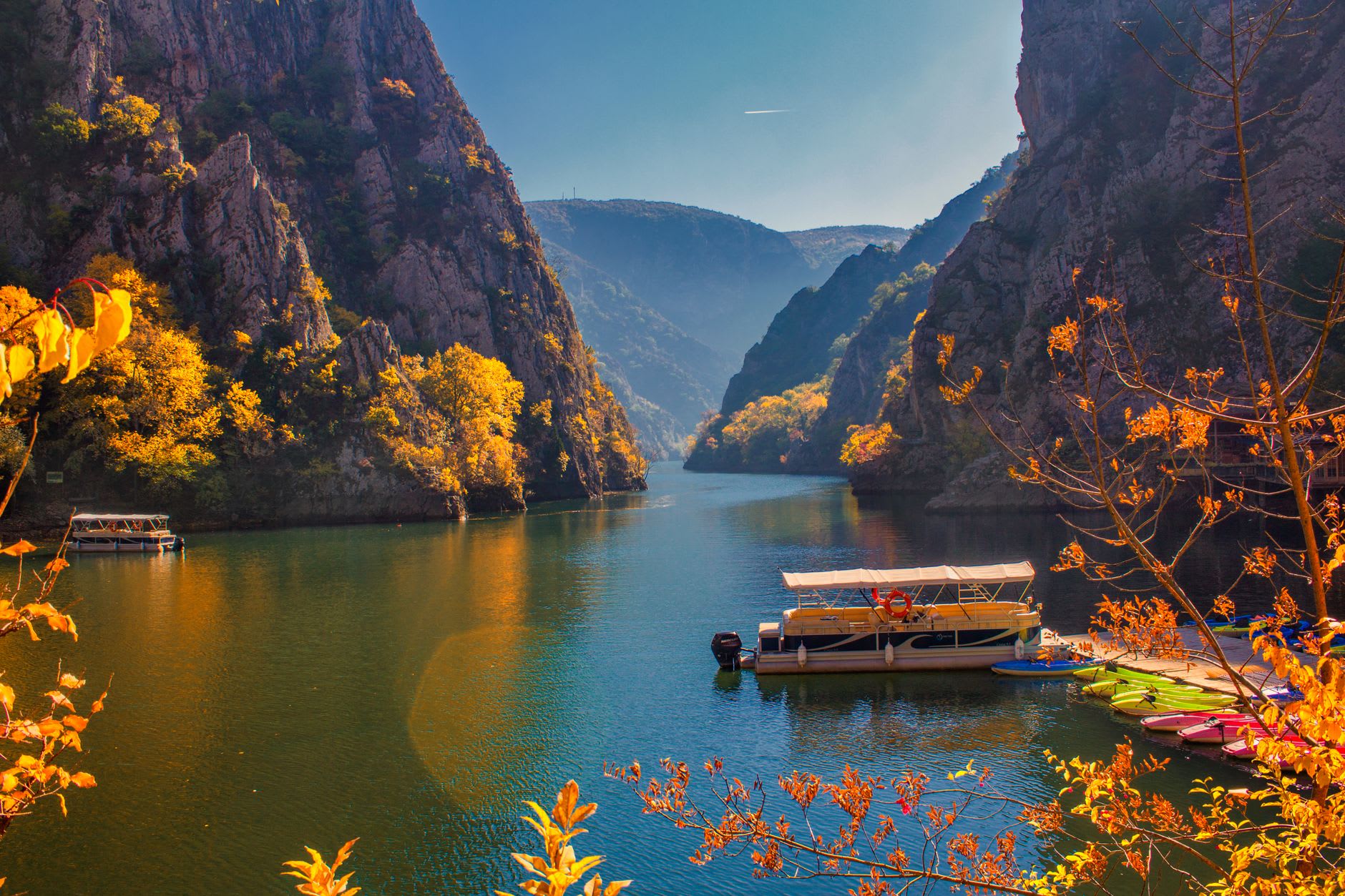
The canyon follows the Treska River for several kilometres, and you move through it either on foot along the narrow ledge-path that clings to the right bank, or by boat — little wooden flat-bottomed craft that the boatmen paddle with a long pole, since the canyon is too narrow in places to use oars. I rented a kayak instead, which was the right choice. The paddling is easy — the water barely moves in the canyon’s depths — and it gives you freedom to stop and look up at the cliffs without worrying about blocking the main boat path. The walls are riddled with caves; the boatman pointed out the entrance to Vrelo Cave, one of the deepest underwater caves in the world, its mouth just at the waterline and dark enough to make you understand why people once believed water came from the underworld.
The canyon’s most startling inhabitants are its monasteries. Carved into the limestone walls at intervals along the gorge, some accessible only by rope and ledge, these small Orthodox sanctuaries date from the thirteenth and fourteenth centuries. The most accessible is the Monastery of Saint Andrew, perched just above the water where the canyon briefly widens. I climbed to it on steps cut into the rock and sat inside the tiny frescoed chapel for a while — the figures on the walls faded to ghost images but still readable, still compositionally confident — and outside the window the canyon wall opposite was close enough to touch and covered in small ferns that grew from every crack. The sound of water below and nothing else.
There is a small restaurant at the canyon entrance that serves fresh trout from the river — the same species of endemic Macedonian trout as Lake Ohrid — and I ate there at a table on a wooden deck over the water, watching a family of mallards navigate the restaurant’s own small jetty with proprietary confidence. The fish was grilled simply, with lemon and herbs, and it tasted of cold clear water, which is exactly what it should taste of. Afterwards I walked back into the canyon and stayed until the light on the limestone walls went orange and then pink, watching the cliffs change colour in the early evening the way a face changes when someone finally relaxes.
When to go: April through October is the full season, with the restaurant and boat rentals operating. Spring and autumn are ideal — the river runs higher in spring and the walls are draped in new ferns. Summer weekends bring Skopje locals in numbers; midweek visits in June or September offer the canyon almost to yourself.