Europe
North Macedonia
"I came for a lake. I left having reordered my map of Europe."
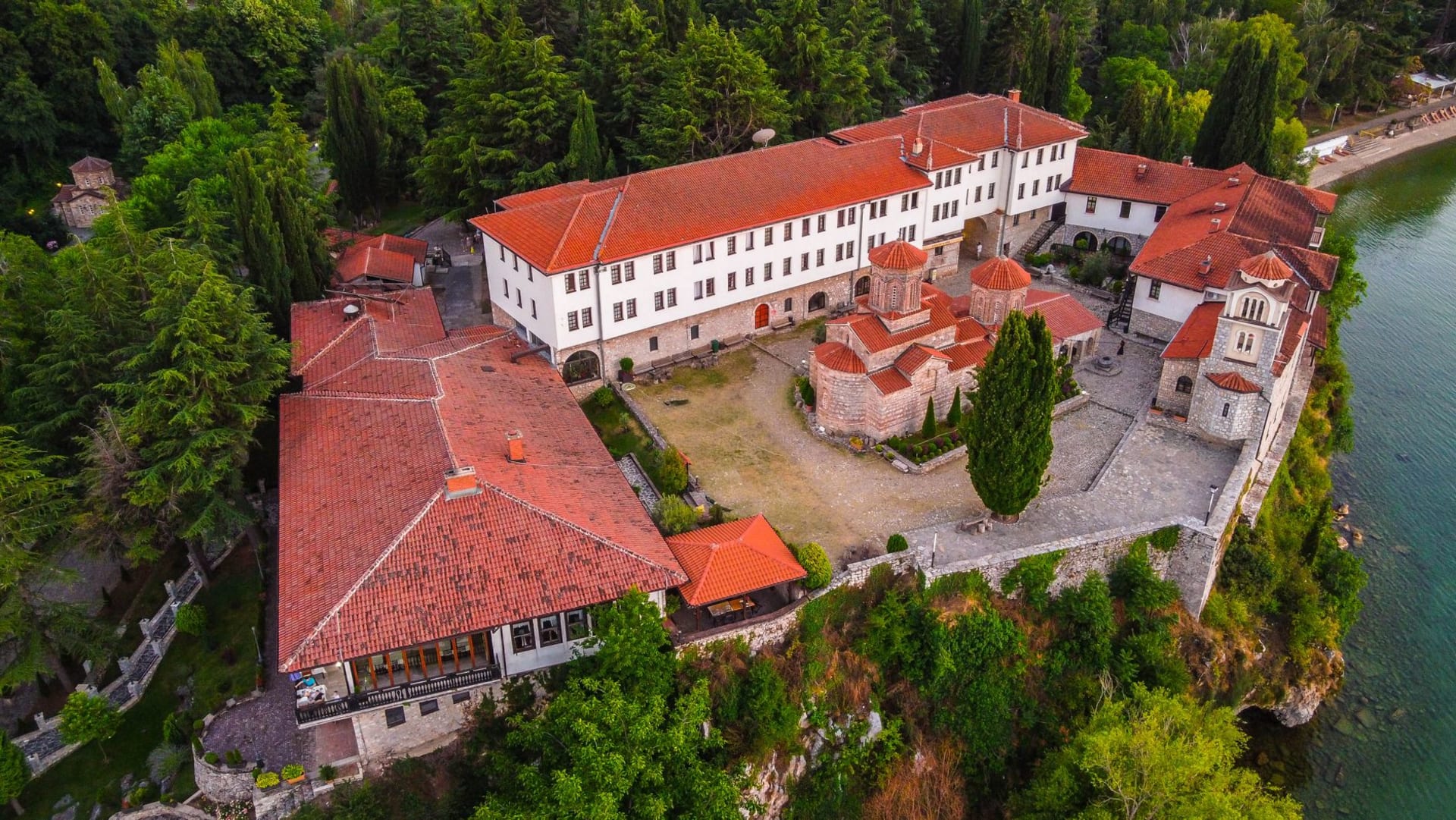
The bus from Skopje drops you in Ohrid in the early evening, and for a moment the light does something that should be illegal — it turns the lake into hammered copper, and the Byzantine church of Saint John Kaneo, balanced on its rocky promontory above the water, looks less like a building than like something the landscape simply grew. I had heard of Ohrid before, in passing, the way you hear of places that haven’t quite broken through yet. I was not prepared for how immediately it rearranged my sense of what a European town could feel like.
Ohrid is one of those rare places with genuine layers — Neolithic settlements, Roman amphitheatre, 365 churches built so that worshippers could attend a different one each day of the year, Ottoman-era houses with carved wooden balconies overhanging cobblestone lanes. The lake itself is roughly four million years old, one of the oldest on earth, and it shows in the water: a clarity so extreme you can see to fifteen metres down, an ecosystem so isolated it has developed species found nowhere else. I spent a morning with a mask and fins drifting over rocks that seemed to belong to another era. In the afternoon I ate grilled Ohrid trout in a restaurant with plastic chairs pushed right to the waterline, where the bill came to less than a coffee in Paris.
The capital, Skopje, gets a rougher deal than it deserves. The grotesque neoclassical statuary dumped along the riverfront in the 2010s — the so-called Skopje 2014 project — is genuinely awful, a fake Disneyland history bolted onto a city that already had a real one. But the Old Bazaar across the Stone Bridge is the real Skopje: Ottoman hans, copper workshops, tea houses where men play backgammon as though there is no particular reason to stop. It smells of roasting chestnuts and grilled meat and spiced tea, and it is entirely genuine. The National Museum, the Daut Pasha Hammam, the Mustafa Pasha Mosque — none of this was invented.
When to go: May, June, or September. July and August bring crowds to Ohrid that the town barely absorbs, and the heat at midday is punishing. Late May is extraordinary — the wildflowers are still out, the lake temperature is swimmable by afternoon, and you will have the monastery trail above Saint Naum almost to yourself.
What most guides get wrong: They treat North Macedonia as a footnote between Greece and Serbia, a place to pass through. The itineraries are always too short — Ohrid listed as a day trip, Skopje as a transit hub. But Ohrid alone deserves three days minimum, and the villages of the Galičica National Park above the lake, where shepherds still bring flocks down the old mountain paths, are the kind of slow travel that doesn’t compress into afternoon hikes. This is a country that rewards arriving without a schedule.