
Galičica National Park
"From the Galičica ridge you see both lakes at once. It takes a moment for your brain to accept this."
The ridge of Galičica Mountain runs between Lake Ohrid and Lake Prespa like a spine, and the great thing about climbing it is that at some point near the top you arrive at a place where you can see both lakes simultaneously — Ohrid below to the west, its colour somewhere between sapphire and hammered tin depending on the light, and Prespa to the east, wider and shallower and a different shade entirely. I stood at that point for longer than I will admit, just turning my head left and right and trying to absorb the fact that two ancient lakes are separated by a ridge that a person can walk in an afternoon.
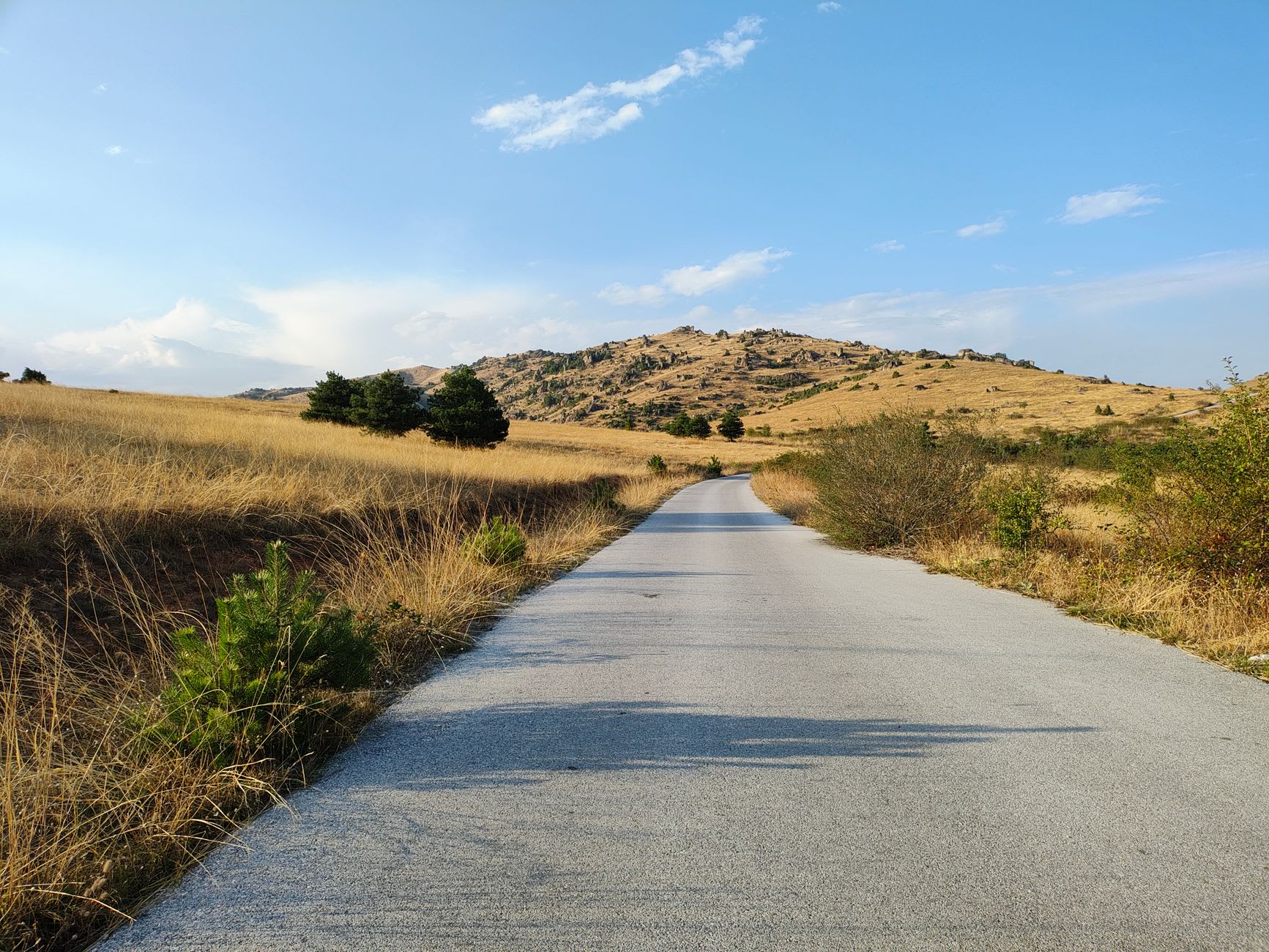
The park covers the entire ridge and its flanks, and the landscape shifts as you move through altitude bands with a clarity that feels almost diagrammatic. The lower slopes above Ohrid are dense oak and beech forest, cool and dark, threaded with paths that the local shepherds use. Higher up the trees give way to open limestone grassland — the kind of thin-soiled Alpine meadow that produces wildflowers in July with an intensity that seems almost competitive, as if each species is trying to make the most of the short season. I walked through that meadow zone in late June and found myself stopping every twenty metres to look at something new: yellow gentians, purple orchids, white star-shaped flowers I couldn’t name. Above the meadows, bare limestone karst takes over, and the walking becomes more technical — route-finding across pale grey rock, keeping an eye on the weather coming in from Albania.
The mountain villages on the Ohrid slope of the park are among the least-changed in the country. Trpejca is the one most people know: a small settlement of stone houses perched directly above the lake, with a narrow road in and a single restaurant that serves grilled fish from a terrace that is basically a ledge above the water. I ate there twice, both times in silence except for the sound of the lake below and the occasional goat bell from further up the slope. The older women in Trpejca still wear traditional Macedonian dress — the embroidered aprons and headscarves of the region — not as performance for tourists but because they have always done so.
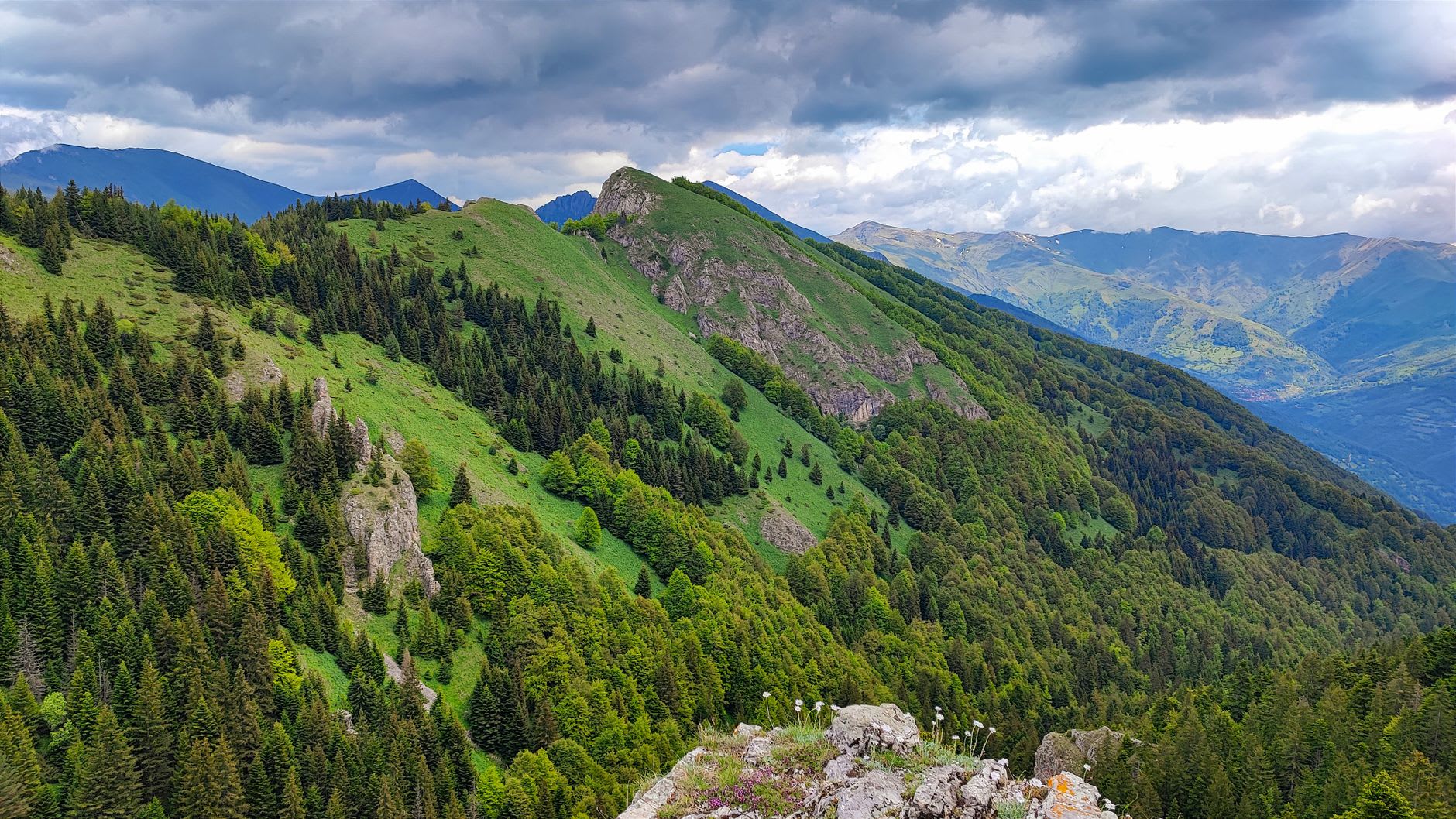
The wolves are real. Not mythological, not historical — actual wolves, documented in the park, occasionally heard by hikers on the upper ridge. The park ranger I spoke to at the Konjski pass told me with the matter-of-fact tone of someone reporting a weather pattern that there are likely fifteen or twenty individuals active in the territory. The bears are rarer. I didn’t see either, but knowing they were there changed the character of walking in the upper park in a way that I found clarifying — that particular alertness that comes from being genuinely not at the top of the food chain.
When to go: June and July for the wildflowers, which are extraordinary on the upper meadows. September for clear views and cooler walking temperatures. The ridge road is impassable in winter and the upper trails can carry snow into May. The village of Trpejca can be visited by boat from Ohrid year-round.