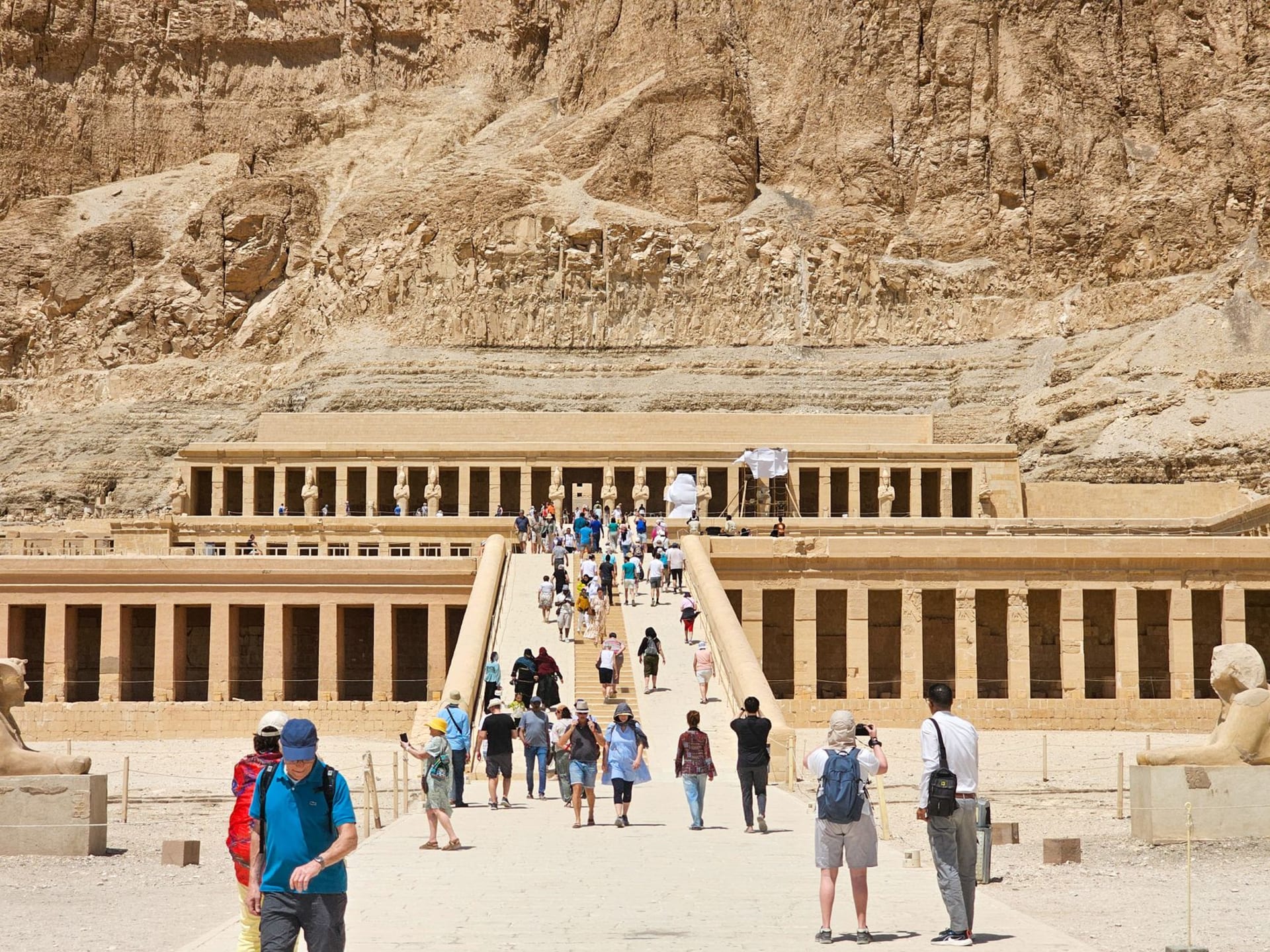
Valley of the Kings
"The colours underground have lasted longer than most things built yesterday."
I crossed the West Bank by bicycle before seven in the morning — the only sensible time — and reached the Valley of the Kings when the ticket booth was just opening and the guard was still eating breakfast. The valley is smaller than you expect. A wadi of pale limestone hemmed in by buff-coloured cliffs, with no vegetation, no shade, and a silence so total it creates a slight pressure in the ears. In summer this place is an oven. In January, at seven in the morning, it was as close to comfortable as desert gets, and I had forty minutes before the tour buses arrived to stand in it alone.
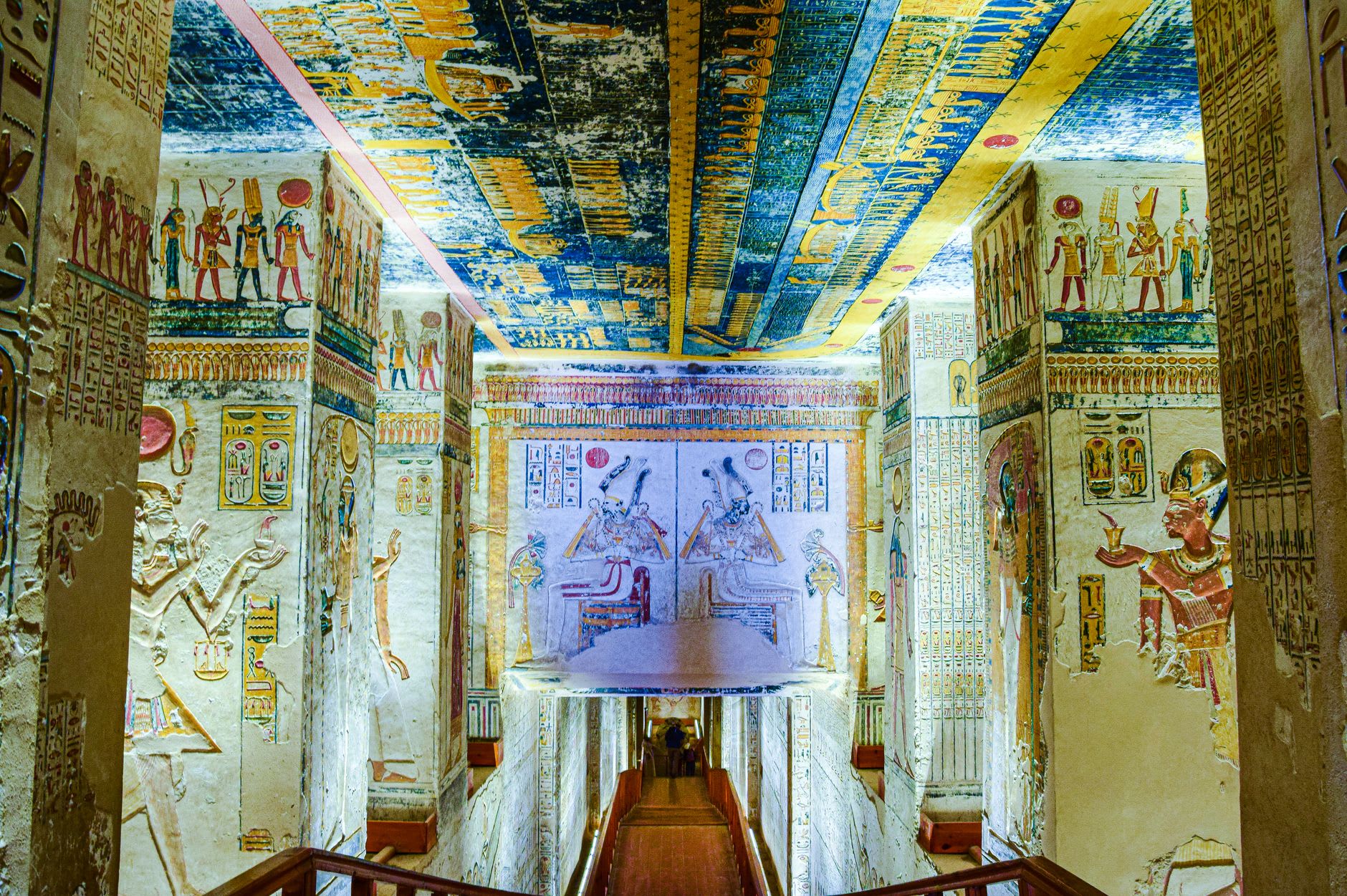
Your ticket admits you to three tombs. The choice matters. KV62, Tutankhamun’s, draws crowds for reasons of fame that exceed its contents — his is a modest tomb, the gold long since removed to Cairo. I went instead to Ramesses III, Merenptah, and Horemheb. Ramesses III’s corridors stretch a hundred metres into the cliff, the walls so covered in images that you lose track of time trying to follow the narrative — scenes of the king in his solar barque crossing the underworld, gods with the heads of jackals and falcons conducting proceedings that seem simultaneously solemn and bureaucratic. The pigments are extraordinary: blues made from ground lapis, yellows from orpiment, a white so dense it still looks wet. The desert heat that makes the valley unbearable by ten in the morning also desiccated everything perfectly, killing the micro-organisms that would otherwise have consumed the paint over millennia.
Underground, the air is cooler and still and carries a faint smell I could not identify — not earth, not rock, something drier. A smell older than anything I had encountered before. I kept finding myself stopping mid-corridor simply to stand still, which the guard appreciated less than I did.
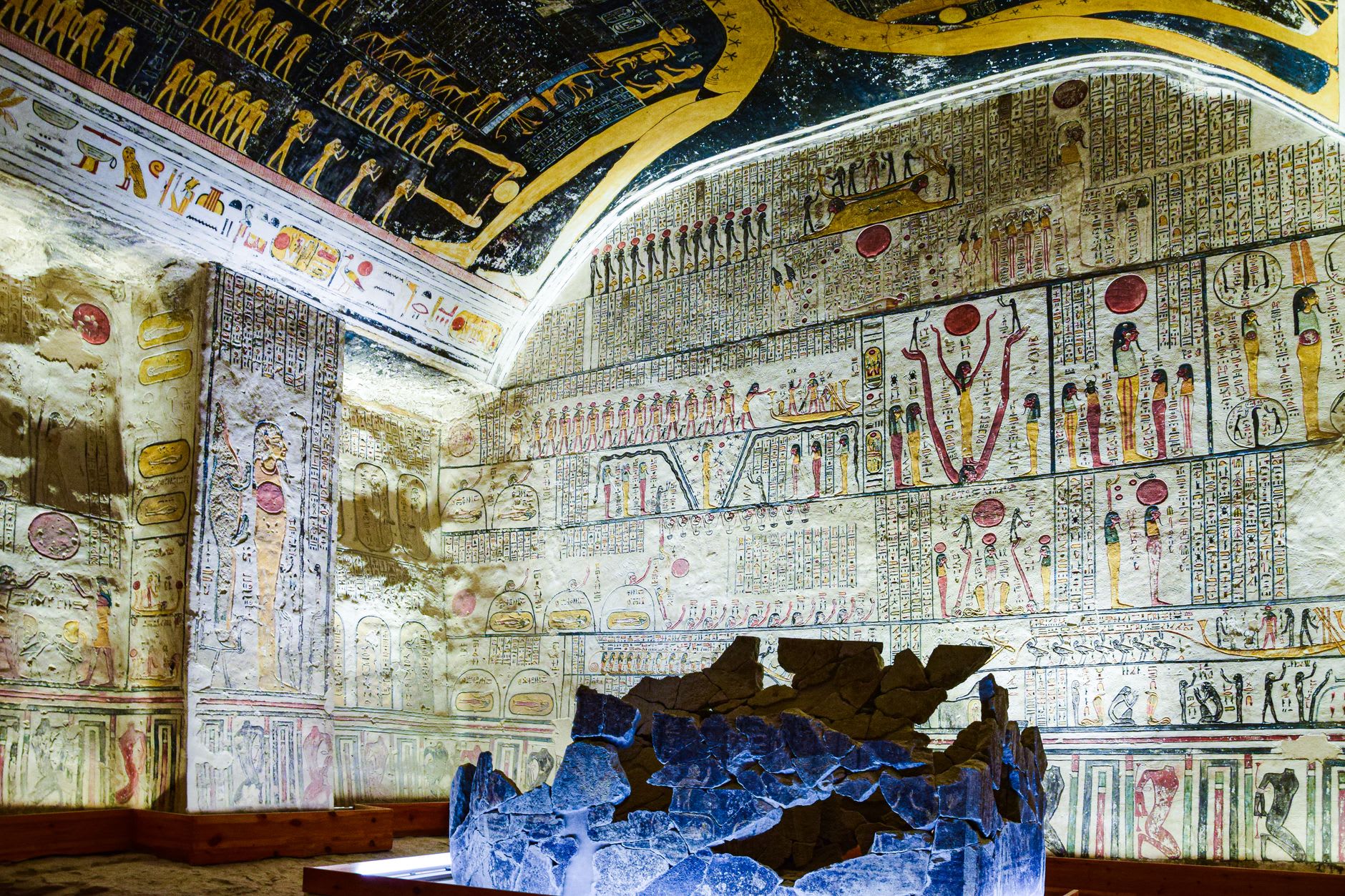
Across the ridge from the Valley of the Kings, reached by a short footpath, the Valley of the Queens holds Nefertari’s tomb — technically requiring a separate ticket at fifty dollars that most visitors skip. I paid it. Her tomb is the finest thing I have seen underground anywhere: a vaulted chamber where the plaster was so carefully preserved that the images float on the walls with a quality closer to painting than carving, every star in the ceiling individually rendered.
When to go: October through February, and always first thing in the morning — doors open at six. By ten, the valley floor is crowded and the heat intensifies rapidly. Hire a bicycle from the East Bank ferry landing rather than joining a tour bus; the ride through the sugar cane fields on the West Bank is worth the extra thirty minutes.