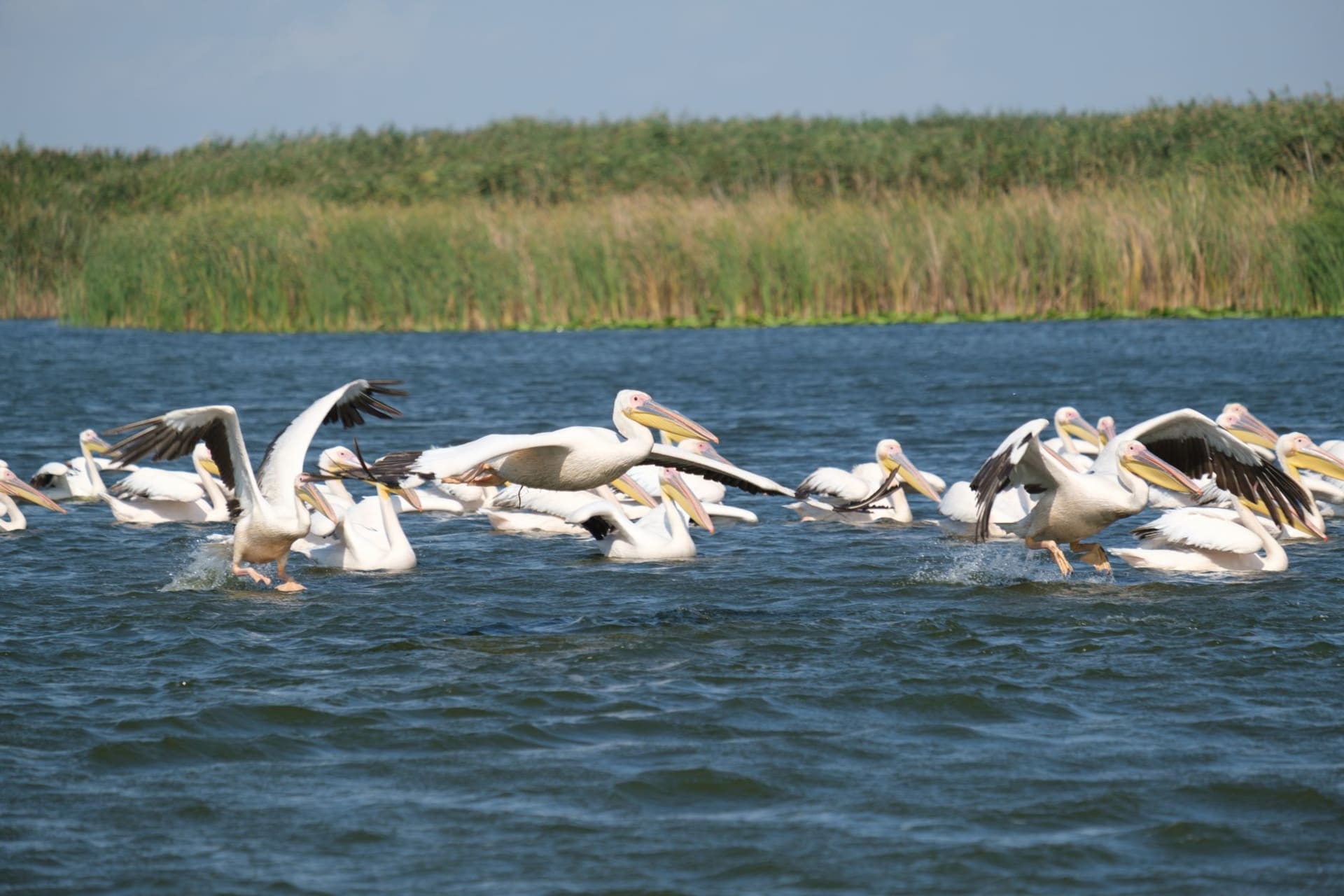
Lake Manzala
"The lake doesn't have edges in the usual sense — it has gradations, from land to marsh to open water, with a different bird on every threshold."
I reached Lake Manzala by taking a shared taxi from the edge of Damietta south along a road that ran between the lake and the sea, with the Mediterranean visible as a hard blue line on one side and the lake spreading brown and enormous on the other. The road was barely wider than the taxi, and twice we pulled over to let trucks pass with their loads of dried fish wrapped in blue plastic. The lake is not a lake in any clean sense — it is a brackish lagoon, roughly 70 kilometers long, separated from the Mediterranean by a narrow strip of land and connected to the Nile by several channels. It is one of the most important wetlands in the Middle East for migratory birds, and on the morning I arrived — October, the migration in full swing — the sky over the northern shore was doing things with birds that I have no adequate language for.
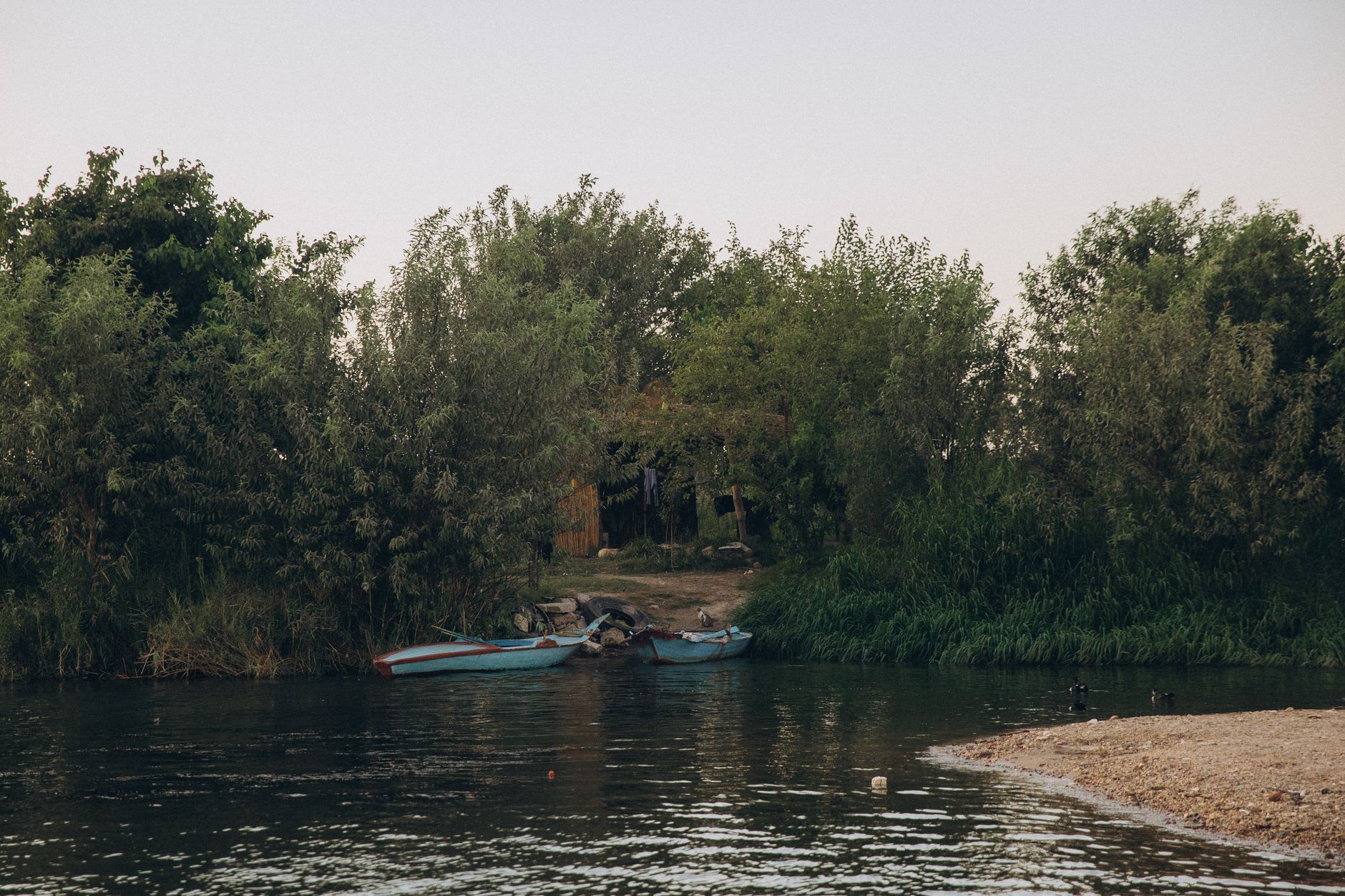
The flamingos were the first thing I could name. They stood in the shallows in groups of thirty or forty, absurdly pink against the grey-brown water, feeding with their upside-down bills in the methodical, slightly deranged manner flamingos have. Further out, cormorants sat on stakes driven into the lake bed with their wings spread to dry, holding the posture of heraldic animals. Egrets moved through the reed beds. Herons stood like grey statues. Thousands of terns wheeled overhead, diving occasionally with a precision that seemed almost mechanical. I sat on the road bank for two hours and simply watched. My notebook stayed in my bag. Some things resist being written about in the moment they are happening.
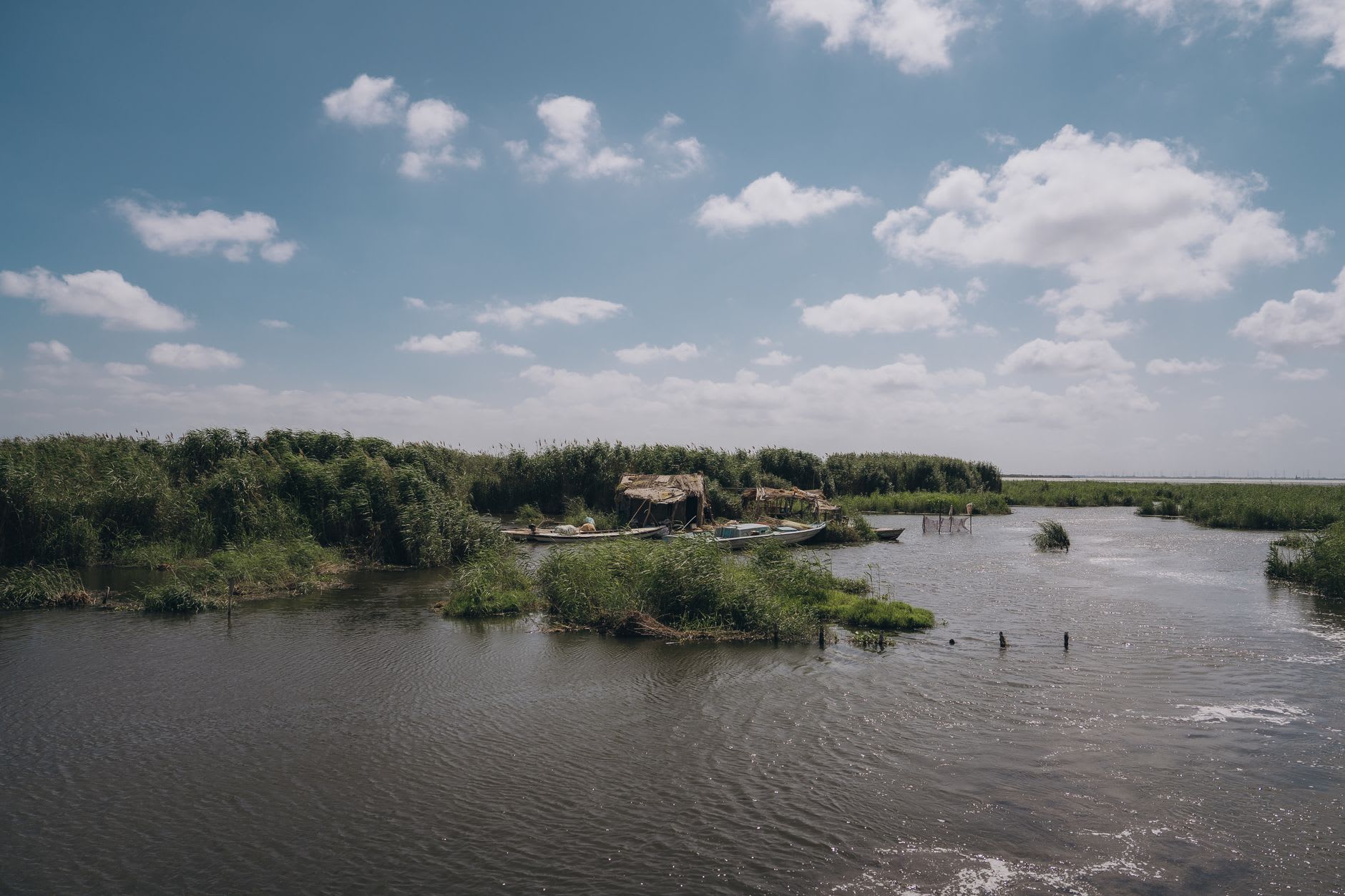
The fishing villages along the southern shore are reached by small motorboats from the lakeside market towns. The largest is El-Matariyya, a working port where the catch is landed and sold and processed by women who sit in circles on the dock gutting fish with a speed that suggests they have never done anything else. The houses in the village spill down to the water’s edge and some of the smallest settlements sit on islands made of compacted reed, rising perhaps half a meter above the lake surface — inhabited since the time of the pharaohs, their residents moving between island and mainland by the same flat-bottomed boats their great-grandparents used.
The fish from Manzala — bouri, tilapia, mullet, eel — is sold throughout the Delta and considered among the best in Egypt. The local preparation is simple: grilled or fried, with salted rice and a salad of tomato and cucumber dressed with lemon. I ate at a small restaurant in El-Matariyya where the tables were plastic and the fish came from the boat that morning, and it was one of the best meals I had in Egypt. The tea afterward was sweet enough to qualify as dessert. The owner brought extra bread without being asked, and looked pleased that I ate all of it.
When to go: October and November are the prime months for migratory birds — the lake becomes a kind of living atlas of the Mediterranean’s bird populations. March and April bring a second, smaller migration wave. Summer is brutal and the lake’s brackish smell intensifies with the heat. Winter (December–February) is good for wading birds and the flamingos often remain through January.