Africa
Nile Delta
"The Delta swallowed me whole before I'd even found my footing."
I arrived in Damietta by bus from Cairo at six in the morning, and the first thing that hit me was the smell — fish drying in the early sun, diesel from the feluccas idling on the river, something sweet and half-rotted from the citrus groves lining the road into town. Nobody in Mexico had asked me about the Nile Delta. They asked about the pyramids, about Luxor, about diving in Sharm el-Sheikh. But the Delta — this vast green triangle where the Nile finally gives up and spreads itself thin across the Mediterranean lowlands — felt like Egypt’s best-kept secret, the part that still belongs to Egyptians.
The landscape defies everything you think you know about Egypt. There is no desert here. In place of sand you get rice paddies, cotton fields, papyrus stands along irrigation canals, water buffalo moving slowly through the late afternoon haze. The cities — Tanta, Mansoura, Zagazig, Damietta — are working cities, loud and commercial and almost entirely free of tour groups. I spent a week moving between them on minibuses and river taxis, eating kushari from street stalls and fresh mullet pulled straight from Lake Manzala. In Rosetta (Rashid in Arabic), I sat in the shade of an Ottoman merchant house and thought about how a stone found in that very town cracked open the entire ancient world — and how almost no one comes to see the house, or the town, or the river bending silver past it.
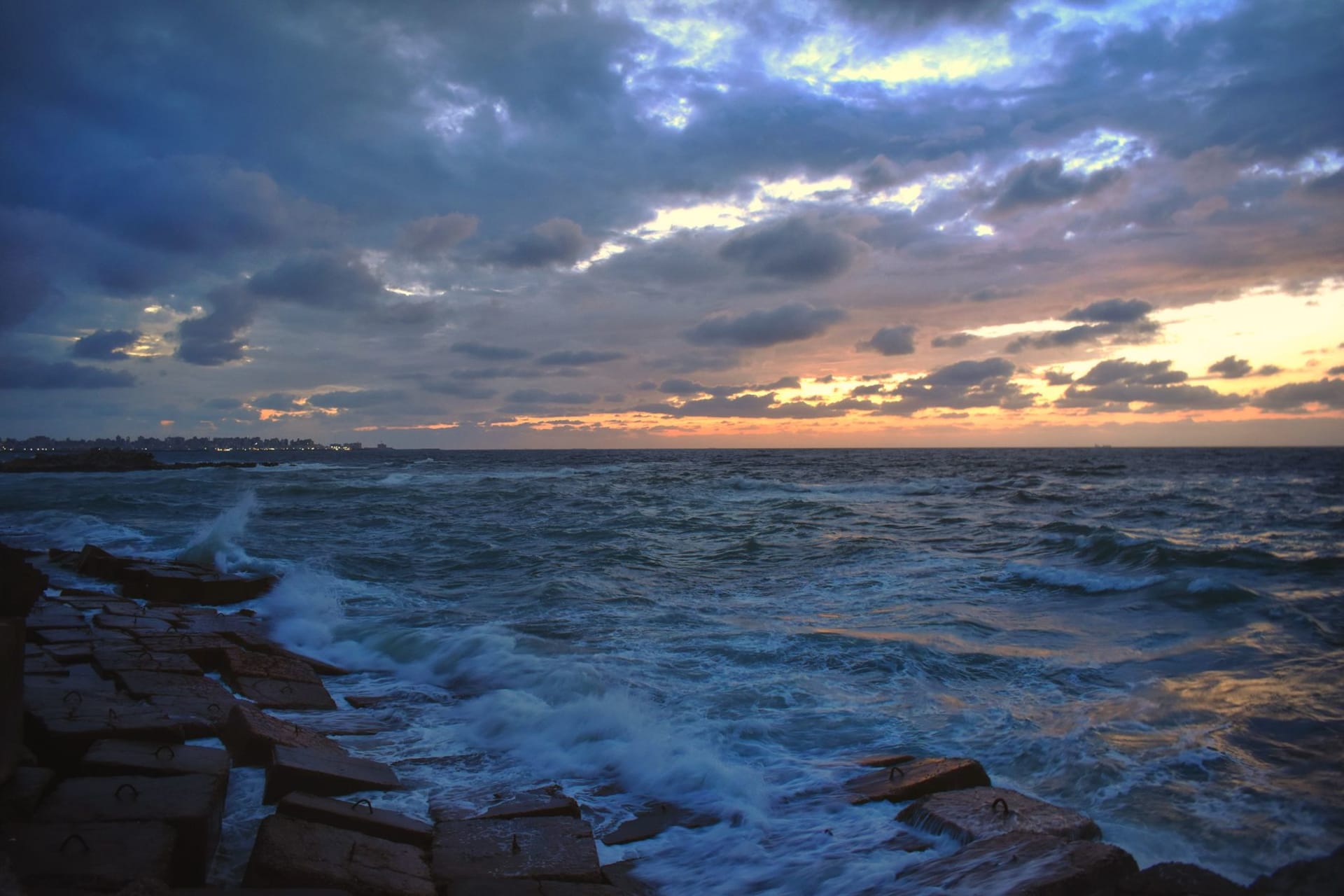
Alexandria earns its own trip, and I will not pretend it didn’t undo me. I walked the Corniche at dusk with the Mediterranean thrashing against the seawall, sky going orange and purple, and felt the particular melancholy of a great city that has been many things and knows it. The seafood at the old restaurants along the harbor — sayadiya rice, grilled sea bass, fried calamari with lemon — is some of the best I’ve eaten anywhere. The coffee at the old Souk el-Attarine cafés is dark and cardamom-forward. The catacombs at Kom el-Shoqafa are genuinely strange and wonderful. But it’s the feeling of Alexandria — that bittersweet, cosmopolitan ghost-town energy — that stays with you.
When to go: October through March. Summers are brutal and humid along the coast, and the cities inland turn into furnaces. Spring (March–April) is beautiful but brief. October and November are the sweet spot: comfortable heat, clear skies, the cotton harvest filling the roads with tractors.
What most guides get wrong: They treat the Delta as a transit zone between Cairo and Alexandria, not a destination in itself. The cities of the interior — Mansoura, Tanta, Damietta — are genuinely fascinating places with strong local food cultures, Ottoman and colonial architecture, and almost no infrastructure for foreign visitors (which is, frankly, half the appeal). Rosetta in particular deserves two or three days, not a day trip. Slow down. The Delta rewards patience.