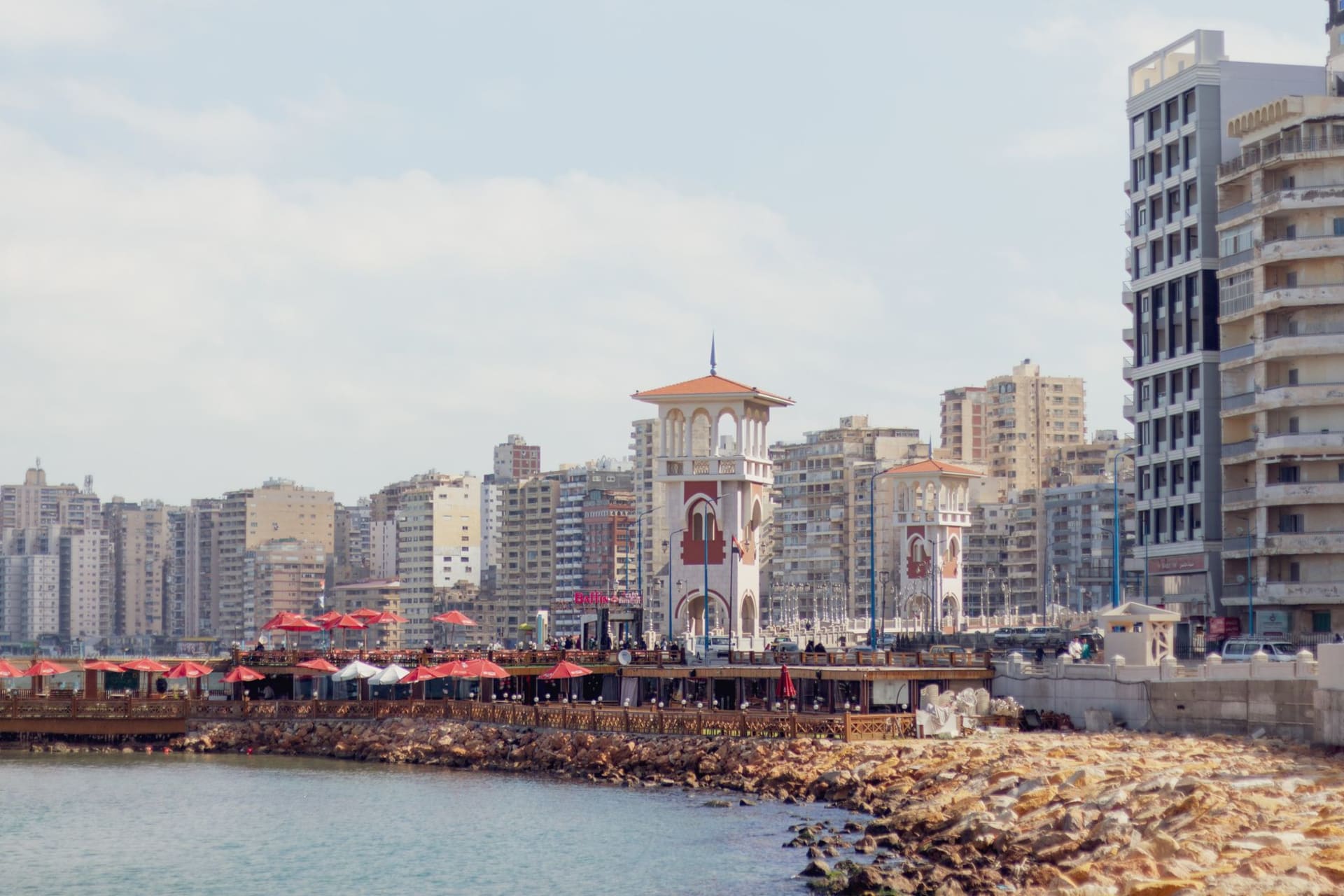
Alexandria
"Alexandria broke my heart the moment I arrived, and I haven't stopped thinking about it since."
I came into Alexandria by train from Cairo just before sunset, and by the time I walked down from Misr station and caught my first smell of the sea — salt and diesel and something faintly floral, jasmine maybe, sold by boys at the traffic lights — I already understood why everyone who has ever written about this city writes about it with a specific kind of grief. Alexandria is a city that has been so many things it can no longer be any one of them entirely. Greek, Roman, Arab, Ottoman, cosmopolitan, revolutionary — all of that history sits in the stones and the light and the way old men hold their backgammon pieces at the waterfront cafés.
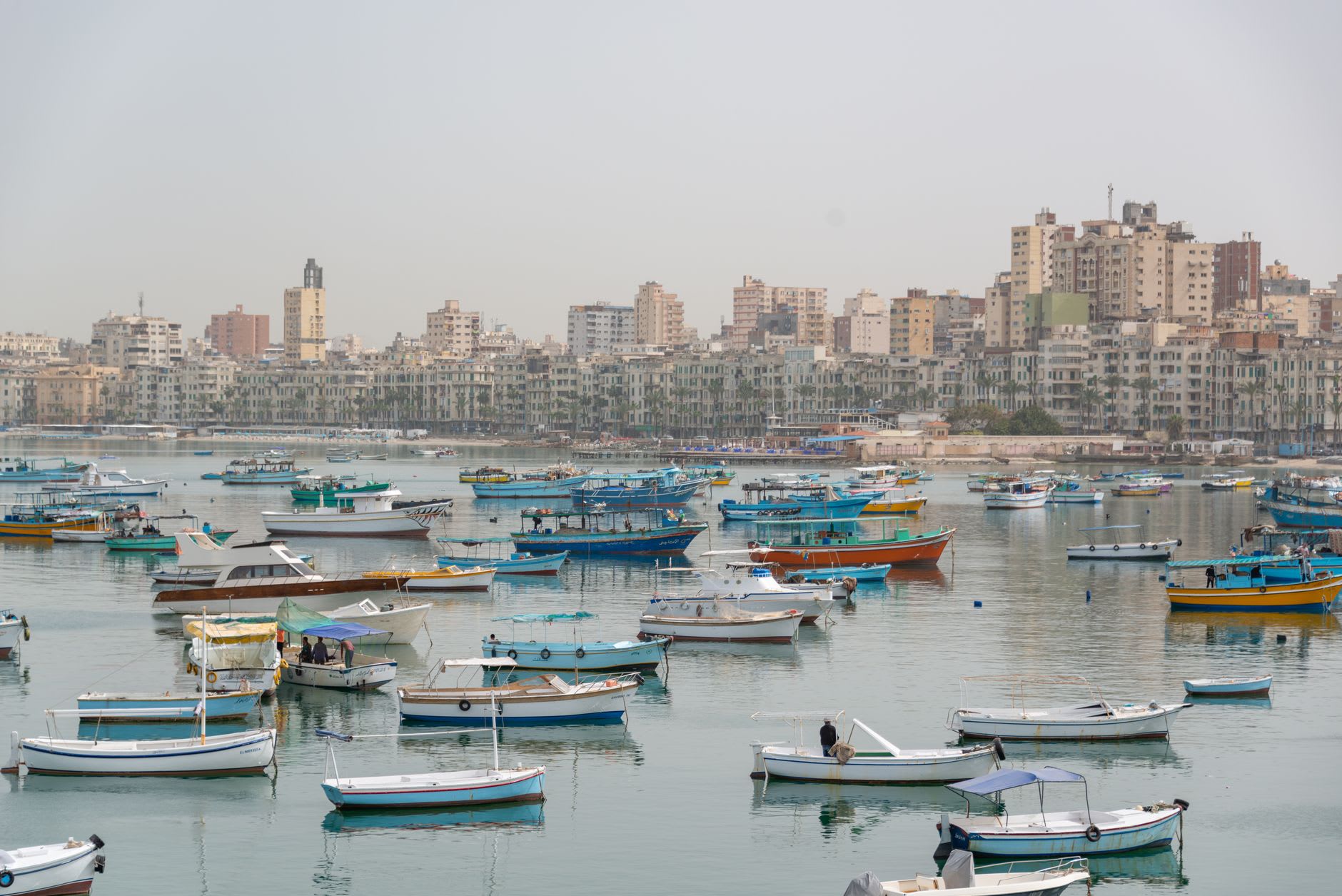
The Corniche is where you start, because you cannot help it. That long seafront boulevard stretches for what feels like forever, the Mediterranean on one side going dark and green, the buildings on the other a layered archive of the twentieth century — art nouveau apartment blocks with rusted balconies, mid-century hotels that still carry the names of their Egyptian owners’ fathers, little kiosks selling sugarcane juice and kushari. I walked it at dusk and kept stopping because the light was doing something extraordinary, turning the spray off the seawall into curtains of pink mist. I ate a bag of roasted lupini beans bought from a cart and stood there watching container ships move on the horizon.
The old quarter around Souk el-Attarine smells like ground coffee and aged wood. The cafés here are dark and narrow and completely uninterested in tourists — men play dominoes and watch football on television sets mounted at unlikely angles while the smell of cardamom-heavy coffee drifts through the bead curtains. I found a seat in one and sat for an hour and drank two tiny cups of ahwa sada and felt more relaxed than I had in weeks. On the street outside, a woman was selling sweet potato from a charcoal cart, the smoke mixing with the alley air. These are the details that do not appear in any guidebook.

The Catacombs of Kom el-Shoqafa stopped me cold. Discovered accidentally in 1900 when a donkey fell through the ground, they are not supposed to make you feel what they make you feel — three levels of carved rock, Greco-Egyptian funerary art, a civilization trying to reconcile two sets of gods, two sets of symbols, two ideas of death, and deciding the answer was to simply place them side by side. There is a dining hall down there where mourners used to eat beside the dead. I stood in it for several minutes in the dimness and thought about grief and adaptation and the human impulse to build something permanent against the dark. Then I came back up into the sunlight and had a sea bass sandwich from a stall near the harbor and felt the strange lightness that comes after.
The seafood along the harbor at Fish Market and the old restaurants around the port is some of the most straightforwardly good food I’ve eaten anywhere — sayadiya rice with whole caramelized onions, grilled mullet, fried calamari with a squeeze of lemon and nothing else needed. The portions are enormous and the bread comes in rounds still warm from the oven. There is no pretension here, just excellent fish cooked by people who have been cooking fish their entire lives.
When to go: October through March. The summer heat combined with Mediterranean humidity is genuinely unpleasant, and the city fills with Egyptian vacationers from July to September. October and November are perfect — warm enough to walk the Corniche in shirtsleeves, cool enough at night to eat outside without sweating into your food.