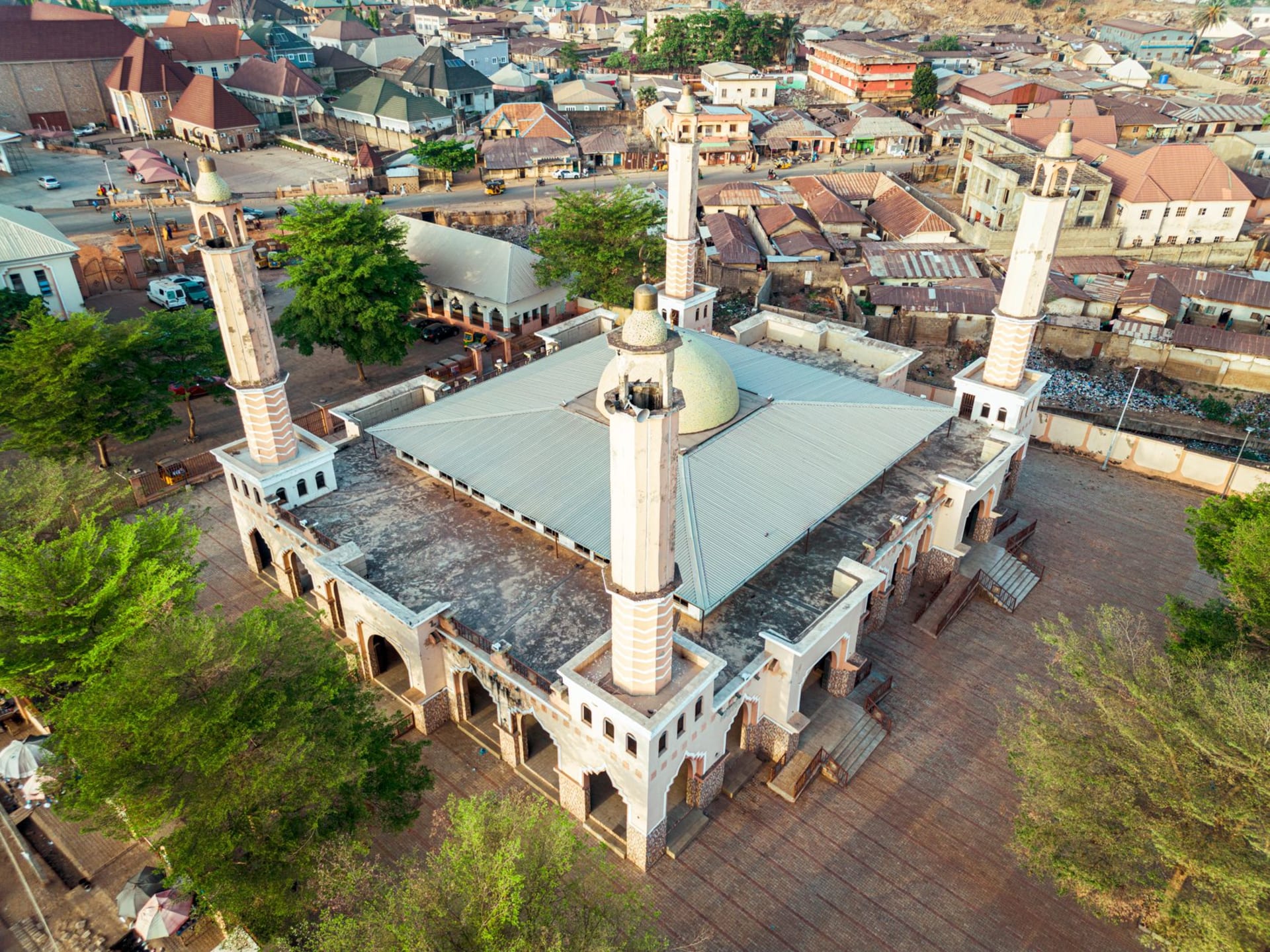
Jos
"Jos feels like Nigeria paused to take a breath. Up here, even the air tastes different."
My first morning in Jos I woke up cold. Not uncomfortably cold, but cold in the way you might wake up in Avignon in October — the kind of cool that makes a blanket necessary and turns the air outside the window slightly visible. For someone who had spent two weeks in the humid south, the sensation was so unexpected that I stood at the open window for several minutes just breathing it, looking out at the granite boulders rising from the red laterite hillside and the morning mist settling in the valley below. Nigeria had pulled off another ambush.
Jos sits at an altitude of roughly 1,200 meters on the Jos Plateau, and the climate is the first thing that marks it as different. The days are warm rather than hot, the nights genuinely cool, and the harmattan season brings a dry cold in December and January that residents address with thick blankets and, occasionally, small fires. The city itself grew substantially during the colonial tin mining era — the plateau sits above rich seams of cassiterite, and British mining operations from the early twentieth century drew labor from across the country — but the mining has largely wound down and what remains is a mid-sized Nigerian city that has retained, perhaps by accident, an unusual quantity of green space and a pace that feels several degrees slower than the country’s larger centers.

The most important thing in Jos, for my purposes, was the museum. The Jos Museum complex on Museum Road is one of the largest museum compounds in West Africa, and at its core sits a collection of Nok terracotta figurines that represents one of the most significant archaeological discoveries made on the African continent in the twentieth century. The Nok culture flourished on the Jos Plateau between roughly 500 BC and 200 AD — a period that predates both the Roman Empire and the common era of Christianity — and produced a tradition of figurative terracotta sculpture of remarkable sophistication. The faces are stylized but specific: cylindrical eyes, pierced pupils, carefully worked hairstyles, postures that suggest either narrative or ritual or both. Looking at them in the museum cases, I kept thinking about the gap — that these were made here, on this specific plateau, by people who had found a way to represent the human face in fired clay, and that the civilization that produced them has no name beyond the town where the objects were first found.
Outside the museum, the Shere Hills rise southeast of the city — a granite massif draped in dry forest that turns greenish-gold in the early morning light. The landscape around Jos is extraordinary in a way that is hard to pin down: the combination of the granite outcrops, the red soil, the thin Harmattan-season grass, and the occasional acacia gives it a quality more like parts of the Sahel than like the lush south. Walking out from Riyom Rock, an area of dramatic granite formations about 25 kilometers south of the city, the silence is of a different quality than anything you encounter at sea level.

The food in Jos reflects its position as a cultural crossroads — Hausa suya and tuwo alongside southern Nigerian soups, the Birom community’s own dishes made with fura (fermented millet balls and milk) that you find sold from calabash bowls at the market edges. The Terminus Market downtown is chaotic and specific, and the evening light there, filtering through the dust onto the piled yams and smoked meats and towers of tin pots, has the quality of a Flemish painting that somehow ended up on the plateau.
When to go: October through February is when the Jos Plateau shows its best self — the harmattan haze produces extraordinary light effects over the granite landscape, and the cool nights are a genuine relief after any time in the south. December and January bring the coldest temperatures Nigeria experiences anywhere, which is worth timing a visit around if you have been traveling in the heat. Avoid July and August at peak rainy season when roads around the plateau become difficult.