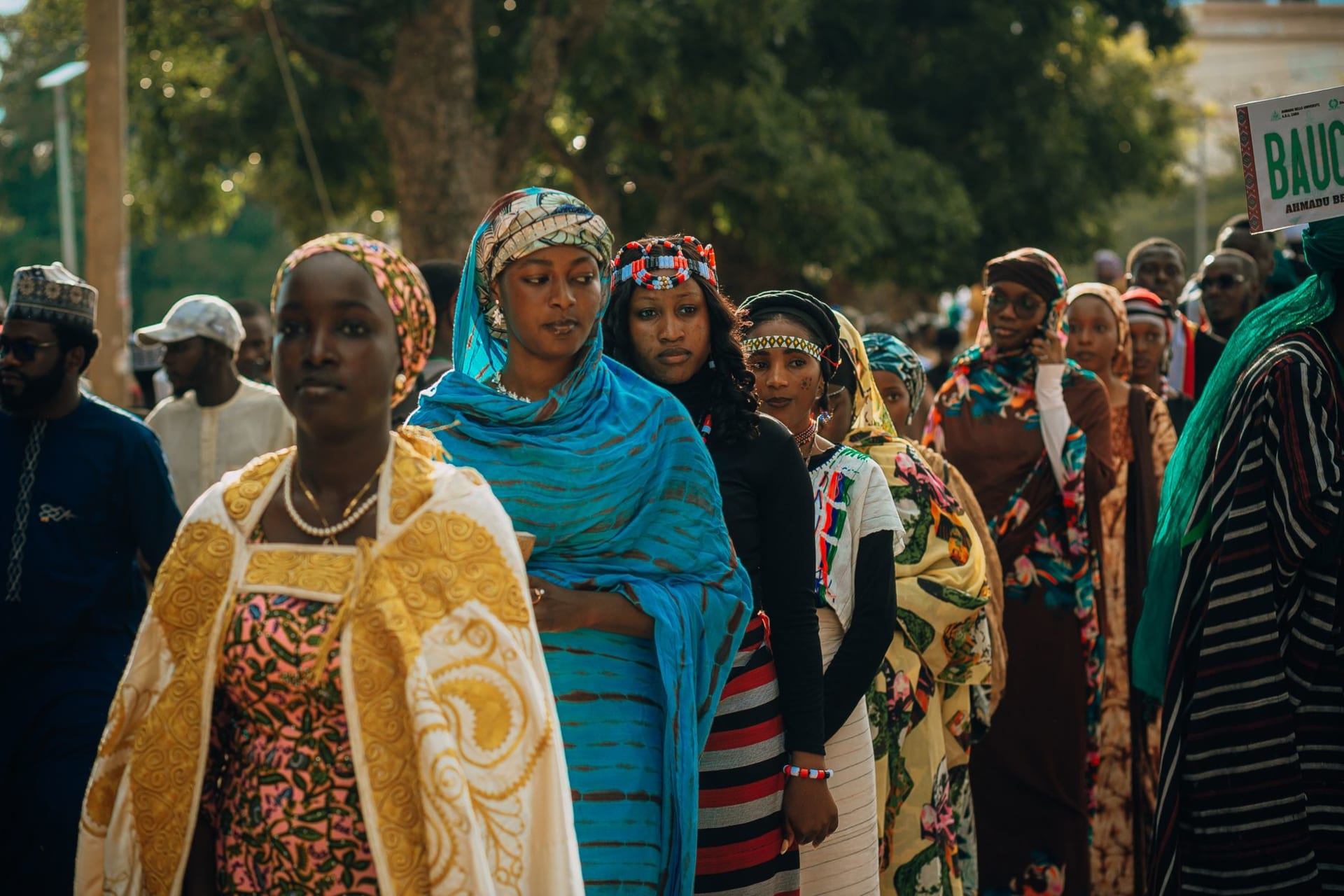
Benin City
"The bronzes in the British Museum left a specific silence here. You can feel its shape in the city."
The street of bronze casters — Igun Street — is not a reconstruction. It is the same street where the same craft has been practiced under the same family guild system for seven centuries, a continuity so extraordinary that UNESCO recognized it on the Intangible Cultural Heritage list. I walked along it in the morning, when the workshops are open and the air carries the smell of hot metal and charcoal, and I watched a man I guessed to be in his fifties pour molten bronze from a clay crucible into a mold pressed from the earth, the metal catching the light in the dim interior and briefly looking like something that has no business being liquid. His son stood nearby, not watching exactly, but present — absorbing by proximity the knowledge that will not be fully his for another decade.
The context of this craft is inseparable from what happened in 1897. British forces sacked Benin City in the Punitive Expedition, burned the palace, removed the Oba, and carried away thousands of bronze and ivory objects that had been made for the royal court over centuries. Those objects — the Benin Bronzes — are now distributed across museums in London, Berlin, Vienna, Chicago, and dozens of other cities. Repatriation has been long argued and slowly, partially, beginning to happen, but the absence is still present here. At the Benin National Museum on Ring Road, the collection is genuinely impressive and the documentation is careful, but there are also labeled gaps on the walls, places where the descriptions name objects that are not here, that are somewhere else.
The Oba’s Palace occupies a large compound in the center of the city, its gate decorated with painted bronze pythons that wind upward along the pillars — the python is one of the Oba’s sacred animals, a symbol of Olokun, the god of the sea and wealth. The palace is still an active royal seat; the current Oba, Ewuare II, ascended in 2016, and the institution maintains its spiritual and ceremonial role for the Edo people with a persistence that colonialism did not manage to dissolve. Visiting requires some formality — you remove your shoes before the inner courtyards, and there are areas that remain closed — but the experience of being in a space that has been continuously royal for six hundred years is unlike anything I have encountered in Nigeria or elsewhere.
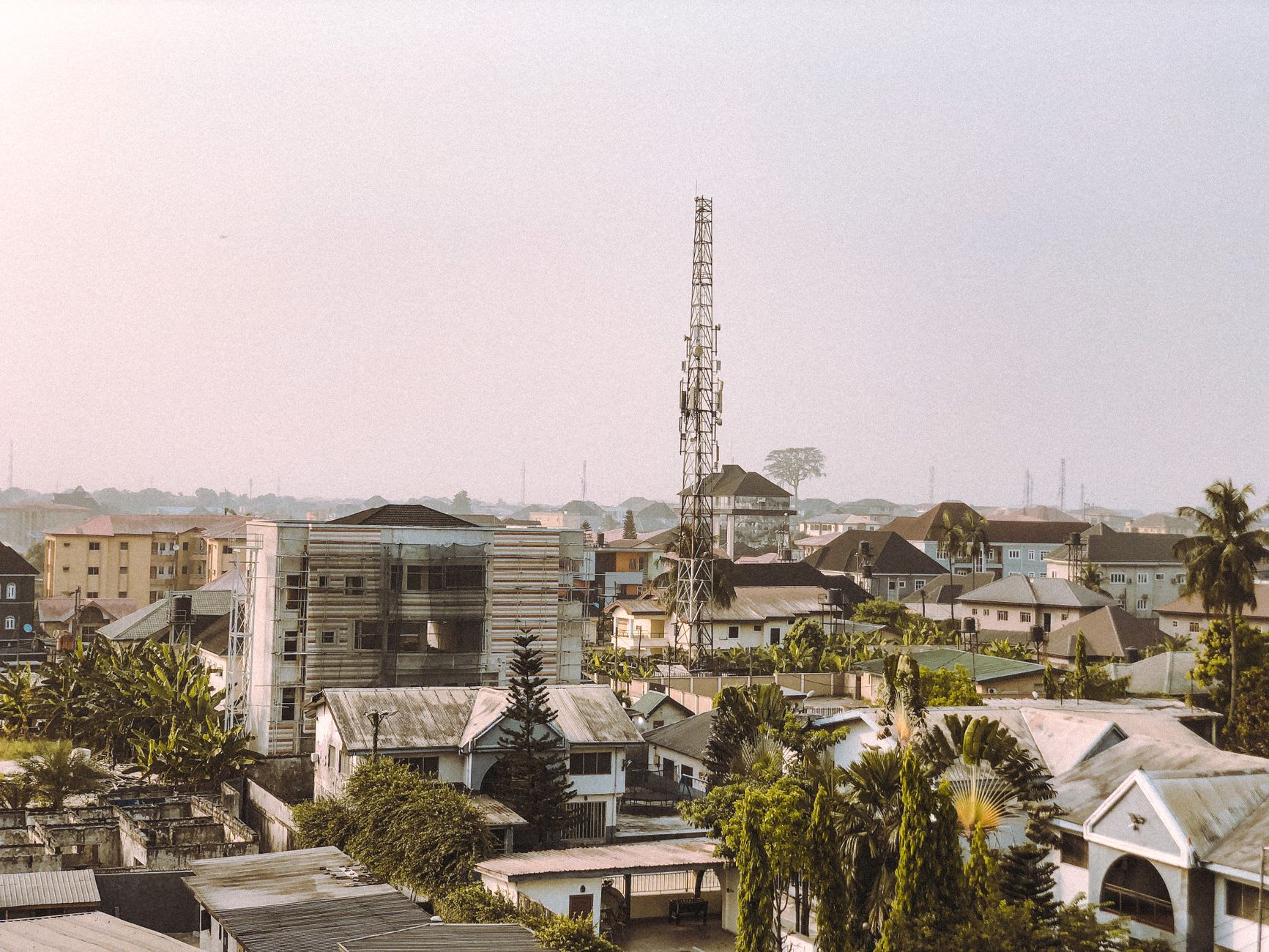
The city outside the palace has the specific energy of a place that knows it is more important than its current infrastructure would suggest. The red laterite dust that coats everything after a dry-season wind, the smell of smoked catfish from the market stalls, the particular amber quality of late afternoon light filtered through harmattan haze — these are the textures of a city that has not finished with history, even if history has been rough with it.
The Benin moat — Iya — is what remains of what was, at the time of its construction in the thirteenth to fifteenth centuries, the largest earthwork in the world. Most of it has been absorbed by urban growth, but sections survive on the outskirts of the city, and standing at the edge of the remaining embankment, looking at the scale of what was dug by hand over centuries, you understand something about the civilization that built it that no museum collection can fully convey.
When to go: November to March is the dry season, the best time to navigate the city and its surroundings comfortably. The Igue Festival, held in December, is the most significant royal ceremony in the Benin calendar — a week of rituals, masquerades, and celebrations that brings the Oba into public view and fills the city with returned members of the diaspora. If you are interested specifically in the craft of bronze casting, the Igun Street workshops are open year-round and welcome visitors.