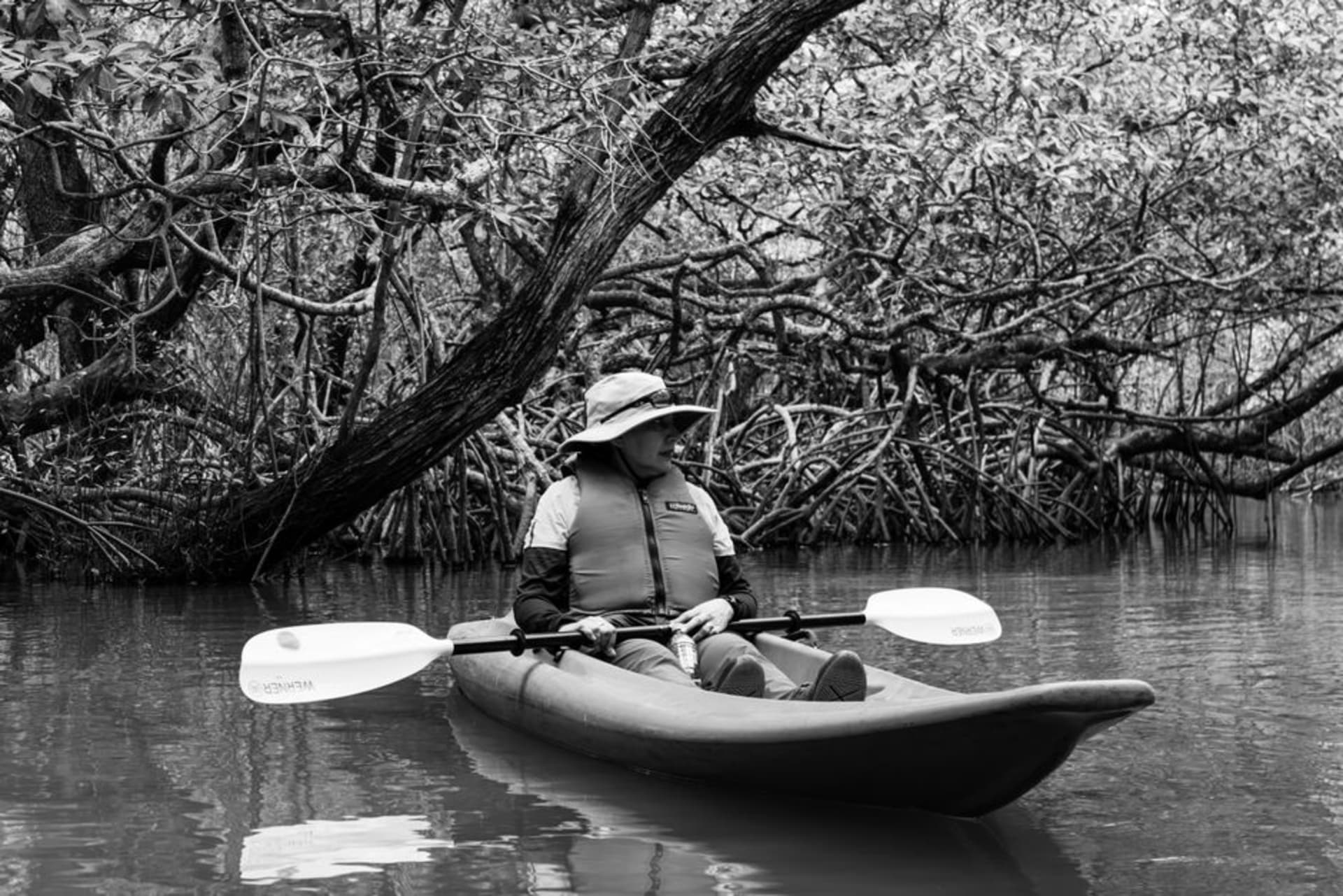
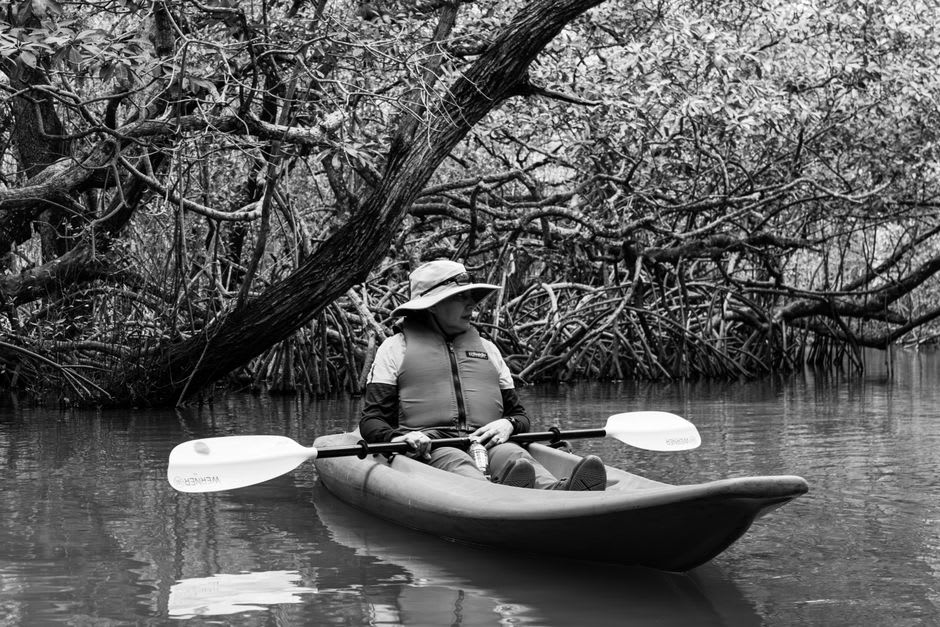
Padre Ramos Estuary
"I've kayaked a lot of mangroves. Padre Ramos is the first one that made me stop paddling just to listen."
A protected mangrove reserve on Nicaragua's northern Pacific coast, laced with kayak-quiet channels and backed by beaches where sea turtles still come ashore to nest.
I found Padre Ramos almost by accident, a name mentioned in passing by a surfer I met in Jiquilillo who said the estuary just north of the surf beaches was “worth a paddle if you’ve got a morning to spare.” I had the morning, and it turned out to be one of the quietest, most purely beautiful few hours I spent in Nicaragua. The reserve protects a huge tangle of mangrove estuary on the country’s northern Pacific coast, a landscape of narrow channels, still lagoons, and low green walls of red and black mangrove that close in over your head in places, filtering the light to something almost underwater in color.
Paddling Into the Green
I rented a kayak from a small cooperative near the reserve entrance, run by local families who’ve turned conservation into a modest but real source of income, and set out with a guide named Wilfredo who paddled without seeming to disturb the water at all. The channels twist constantly, and within ten minutes I’d completely lost my sense of direction — every turn looked like the last one, mangrove roots arching over black water, small crabs skittering sideways up the trunks as we passed. Wilfredo cut the silence only to point things out: a kingfisher perched dead still on a low branch, a school of tiny fish flashing silver under the hull, once, a caiman’s eyes catching the light before sliding under. The estuary feels less like a destination and more like a held breath — nobody talks much once you’re inside it.
Where the Turtles Come Ashore
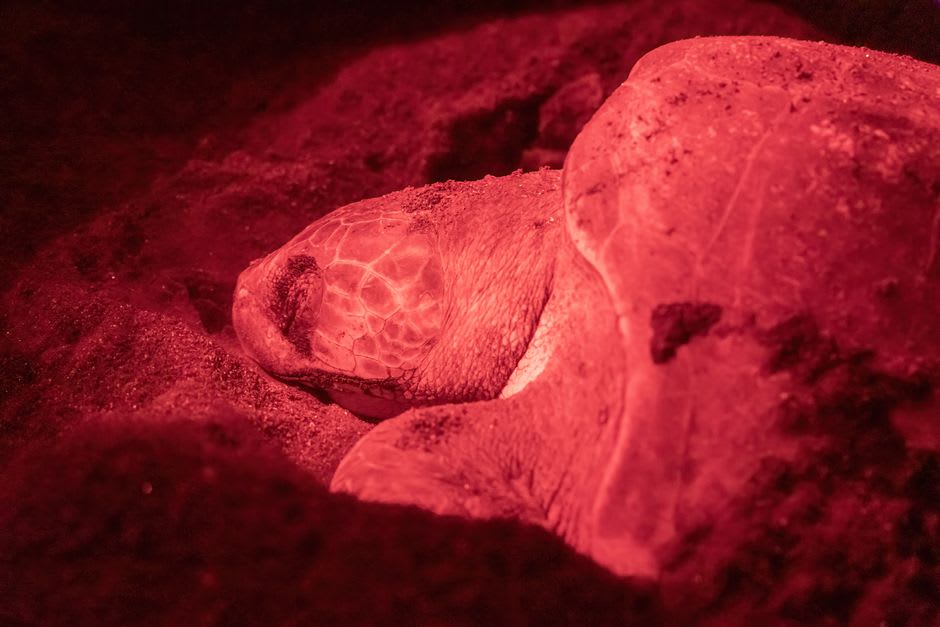
The estuary’s outer beaches are part of what makes this reserve significant beyond its scenery — several nearby stretches of sand are protected nesting sites for olive ridley and, less often, leatherback and hawksbill turtles, and local cooperatives run night patrols during nesting season to protect the eggs from poaching. I joined one such patrol on my second night, walking a dark beach with a flashlight wrapped in red cellophane so as not to disorient any nesting females, and after nearly two hours of nothing, our guide spotted fresh tracks — wide, deliberate drag marks leading up from the tideline. We found her mid-nest, utterly indifferent to our presence, and watched in near silence as she buried a hundred-odd eggs before dragging herself back to the water. It’s the kind of thing that puts a lump in your throat even when you weren’t expecting it to.
When to go: Turtle nesting season runs roughly July through January, peaking August–October — arrange a patrol through a local cooperative rather than showing up independently. For kayaking, go early morning year-round, before the wind picks up and while the light through the mangrove canopy is at its best.