Laguna de Apoyo
"I floated in the middle of an ancient volcano and the water was warmer than the air."
The first time I saw Laguna de Apoyo I was standing on the rim road, looking down into a near-perfect circle of blue water held inside a collapsed volcano. The crater is almost two kilometres across, its walls draped in dry tropical forest, and from the top the whole thing has a stillness that the rest of Nicaragua — loud, hot, busy — does not. I had driven up from Granada on a whim, twenty minutes off the highway, expecting a viewpoint and a photo. I ended up staying the whole day, and then I came back twice more.
The laguna sits between Granada and Masaya, which means most travellers pass within sight of it without ever going down. That is their mistake. The descent into the crater is a single switchbacking road, and at the bottom a string of small lodges and day-use clubs line the shore, each with a dock, a few kayaks, and a hammock or two strung between trees. The water is geothermally warmed — there are vents somewhere below — and it stays at a temperature that makes the idea of getting out genuinely unpleasant.
Swimming inside a volcano
I am not a strong swimmer and I do not particularly like deep water, but Apoyo undid all of that. The lake is one of the cleanest bodies of water in Nicaragua, fed by rain and springs rather than rivers, so there is no silt, no current, nothing. You wade in, the bottom drops away, and the water just holds you. Lia swam out to a floating platform about fifty metres offshore and I followed her more slowly, and we lay on the warm boards watching frigatebirds turn overhead and listening to the howler monkeys complaining in the forest on the far rim. She said it was the first time she had seen me relax in water. She was right.
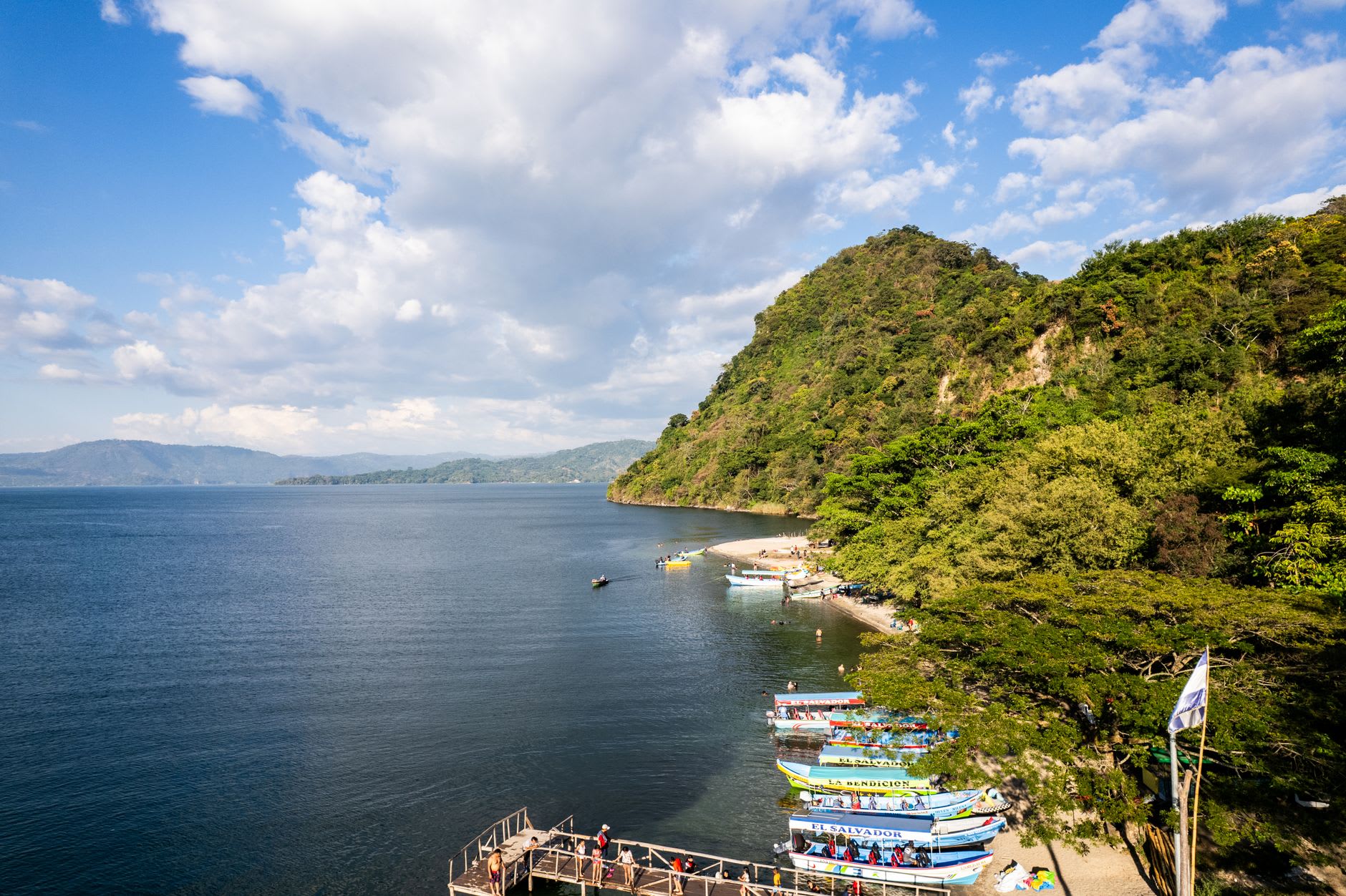
The lodges along the shore mostly operate on a day-pass system: you pay a small fee, and that buys you a lounger, the use of kayaks and inner tubes, and access to a kitchen that will keep bringing you cold Toña beer and plates of fried fish for as long as you can stay conscious. I spent an afternoon paddling a kayak along the shoreline, peering into the clear shallows where the volcanic rock falls away in ledges, and found a tiny endemic fish — the Apoyo cichlid, which exists nowhere else on earth, evolved entirely inside this one crater. There is something humbling about a creature whose whole world is a single flooded volcano.
The rim and the quiet
If you can pull yourself out of the water, the crater rim is worth the climb. The Mirador de Catarina, on the eastern lip, is a small town built around the view — a strip of vivero nurseries selling orchids and bougainvillea, a row of restaurants with terraces hanging over the drop, and marimba players who appear at sunset. From up there you can see the laguna, Lake Nicaragua beyond it, and the cone of Mombacho volcano standing over Granada. It is one of the great views in Central America, and almost nobody outside Nicaragua has heard of it.
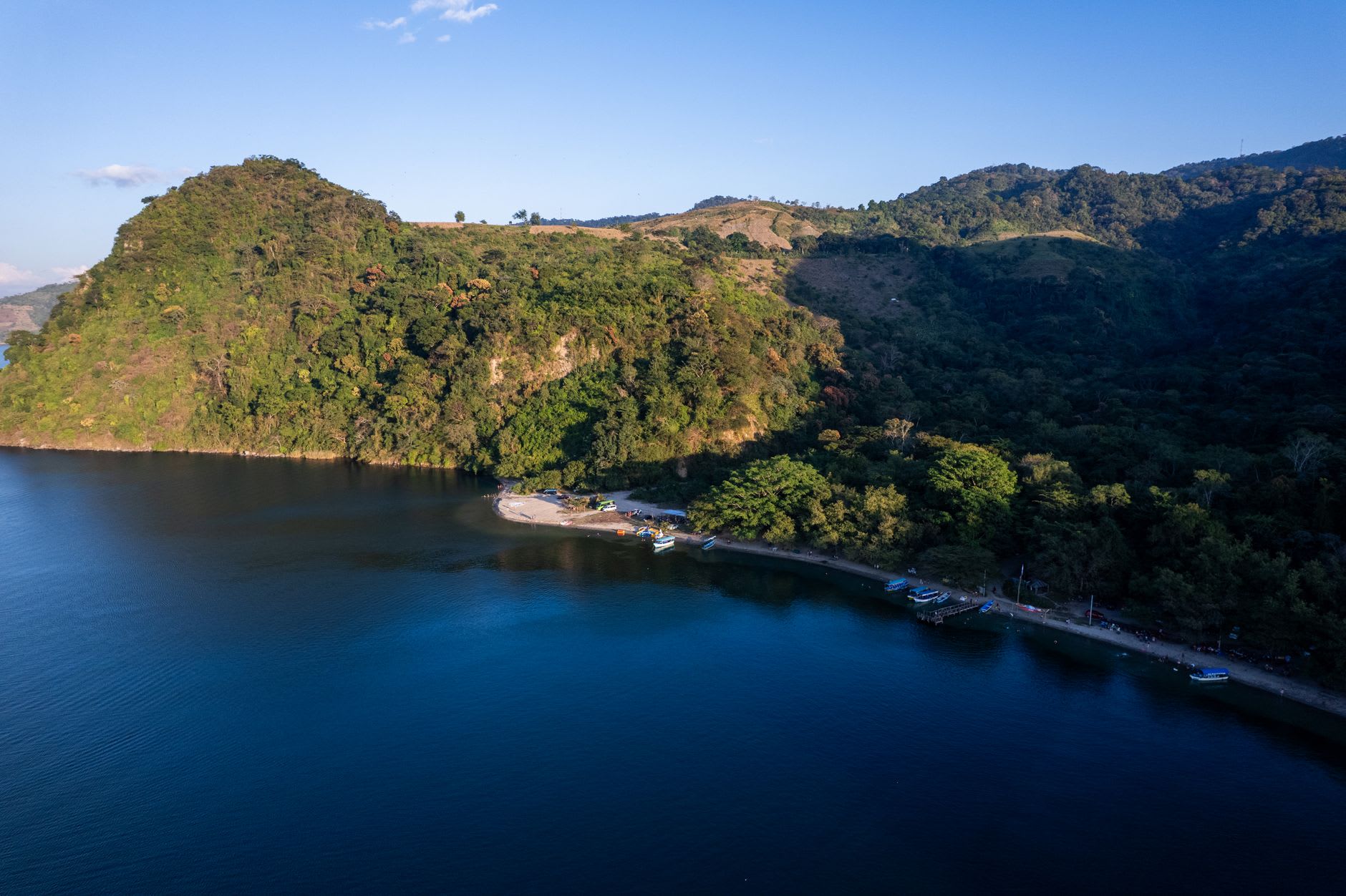
What I loved most was how undeveloped it all still felt. There are no big resorts, no jet skis — motorised boats are banned to protect the water — just kayaks, swimmers, and the occasional dog asleep on a dock. It is the kind of place that could easily be ruined and somehow has not been yet.
When to go
The dry season (December to April) gives the clearest water and the most reliable sun, though the forest is browner then. The green season brings afternoon rain but a lusher crater. Weekends fill up with families from Managua and Granada, so go midweek if you can. Bring cash — most lodges do not take cards — and stay until at least sunset, because the light on the water in the last hour is the whole reason to come.