St. John's
"The jellybean houses aren't kitsch — they're a survival strategy against the grey."
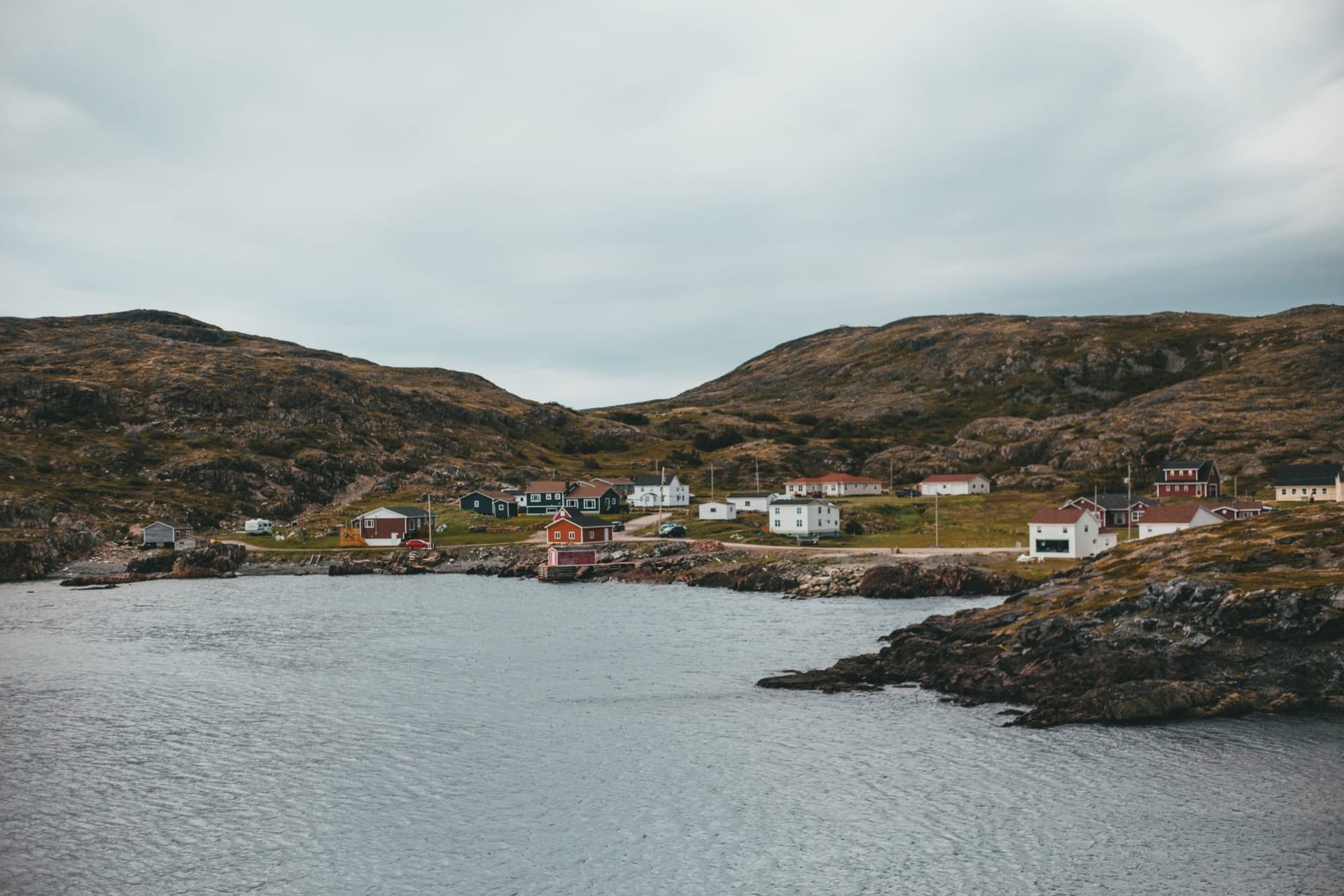
St. John’s ambushes you with colour. I came down over Signal Hill on a morning when the fog had clamped itself to everything — the harbour invisible, the far shore a rumour — and then suddenly the streets below revealed themselves: red, yellow, purple, lime green, terracotta, the houses packed shoulder to shoulder up the hillside like spectators leaning into a parade. I had read about the jellybean row houses, but the photographs don’t capture the logic of them, the way the colour is clearly a civic decision against the grey, a collective refusal to let the weather win.

The harbour is the city’s pulse. Container ships and fishing trawlers share the water below The Narrows — that improbably tight channel between two headlands through which the entire North Atlantic fishery once passed. I spent an afternoon on Signal Hill above the city, where Guglielmo Marconi received the first transatlantic wireless signal in 1901 and where the wind comes in so hard off the ocean that you lean into it just to stand still. From up there the city is an amphitheatre of houses tilting toward the water, and you understand why Newfoundlanders feel the relationship between where they live and where the sea is immediate in a way that doesn’t apply to most places.
George Street, the city’s famous bar strip, is nine hours long on a Saturday. I don’t mean nine hours by volume — I mean that the night starts at nine and ends at six and no one considers this unusual. The pubs are small and warm and the musicians don’t stop. I ate my first fish and brewis here: salt cod soaked overnight, served with crumbled hardtack biscuits and a generous handful of scrunchions — rendered pork fat that crisps and browns and melts into everything. It is a dish of pure necessity made over centuries of hard winters, and it is deeply, unexpectedly delicious.

Away from George Street, the city has a quietly serious cultural life. The Rooms — a striking building on a hilltop that takes its name from the small storage sheds where fishermen processed their catch — houses the provincial museum and art gallery and contains some of the most affecting indigenous and settler history I’ve seen in any regional institution in Canada. The downtown itself, once you walk its steep grid, has the feel of a European port city — intimate, vertical, slightly salt-scoured — that simply ended up on the wrong side of the Atlantic.
When to go: July and August are the warmest months and coincide with iceberg and whale season just offshore. June is possible but fog-heavy. The George Street Festival in August is a week-long outdoor concert series that the whole city attends. December is bleak and beautiful if you like wind-lashed waterfronts with almost no other tourists.