Americas
Newfoundland
"I watched an iceberg the size of a cathedral drift silently past my window."
I arrived in St. John’s on a Tuesday afternoon when the fog was so thick I couldn’t see the harbour from Signal Hill. The taxi driver told me that was normal. “Summer here,” he said, not unkindly, “is more of a suggestion.” By the time I found my way to George Street and ordered my first bowl of fish and brewis — salt cod rehydrated and served with hardtack biscuits and scrunchions, which are rendered pork fat, because this is a place that does not apologize for its food — I understood that Newfoundland operates on its own set of terms entirely.
The island is geologically ancient and scenically unreal. Gros Morne National Park, in the west, contains Precambrian rock that predates plant life on Earth, pushed up into fjords and tablelands that look borrowed from Iceland. Cape St. Mary’s, in the south, hosts one of the most accessible seabird colonies in North America: you walk to the edge of a headland and suddenly a sea stack a few metres away is covered in gannets — hundreds of them, white and shrieking, close enough that you can see their pale blue eyes. At Witless Bay, a short drive from St. John’s, humpback whales surface between icebergs with an indifference to spectacle that I found deeply moving. These are not animals performing for tourists. They simply live here.
The people are the other thing. Newfoundlanders have developed a cultural self-possession that comes from spending centuries at the far edge of a continent, making do, building community out of necessity and humour. The accent is unlike anything else in North America — Irish in its cadence, medieval in some of its vocabulary, entirely its own — and the generosity toward strangers is the kind you don’t encounter often. Sit at a bar in Twillingate or Fogo Island and you will leave knowing people’s names, their family histories, the name of their fishing boat.
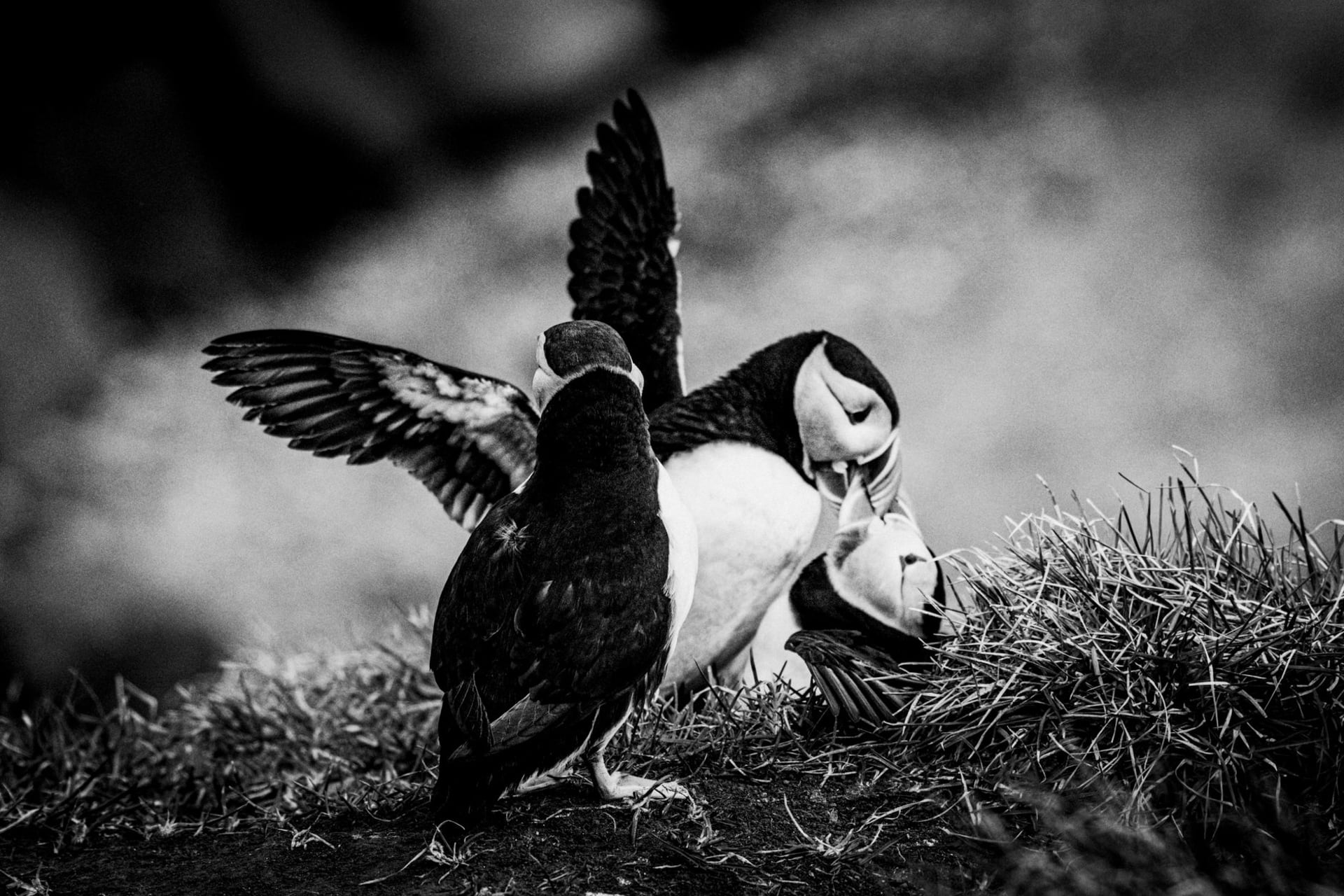
When to go: July and August for iceberg season, puffins, and whales — the window when all three align is narrow but extraordinary. Early September brings crisp weather and emptier roads. Avoid June if you’re chasing clear skies; the fog is relentless and the black flies are merciless.
What most guides get wrong: They treat Newfoundland as a side trip from Halifax or a checkbox on a Maritime provinces itinerary. It isn’t. The island deserves at least ten days and its own flight. The interior — the Bonavista Peninsula, the fishing outports accessible only by boat — is where the real texture of Newfoundland life survives. The tourism infrastructure along the Trans-Canada highway is fine, but it is not the point.