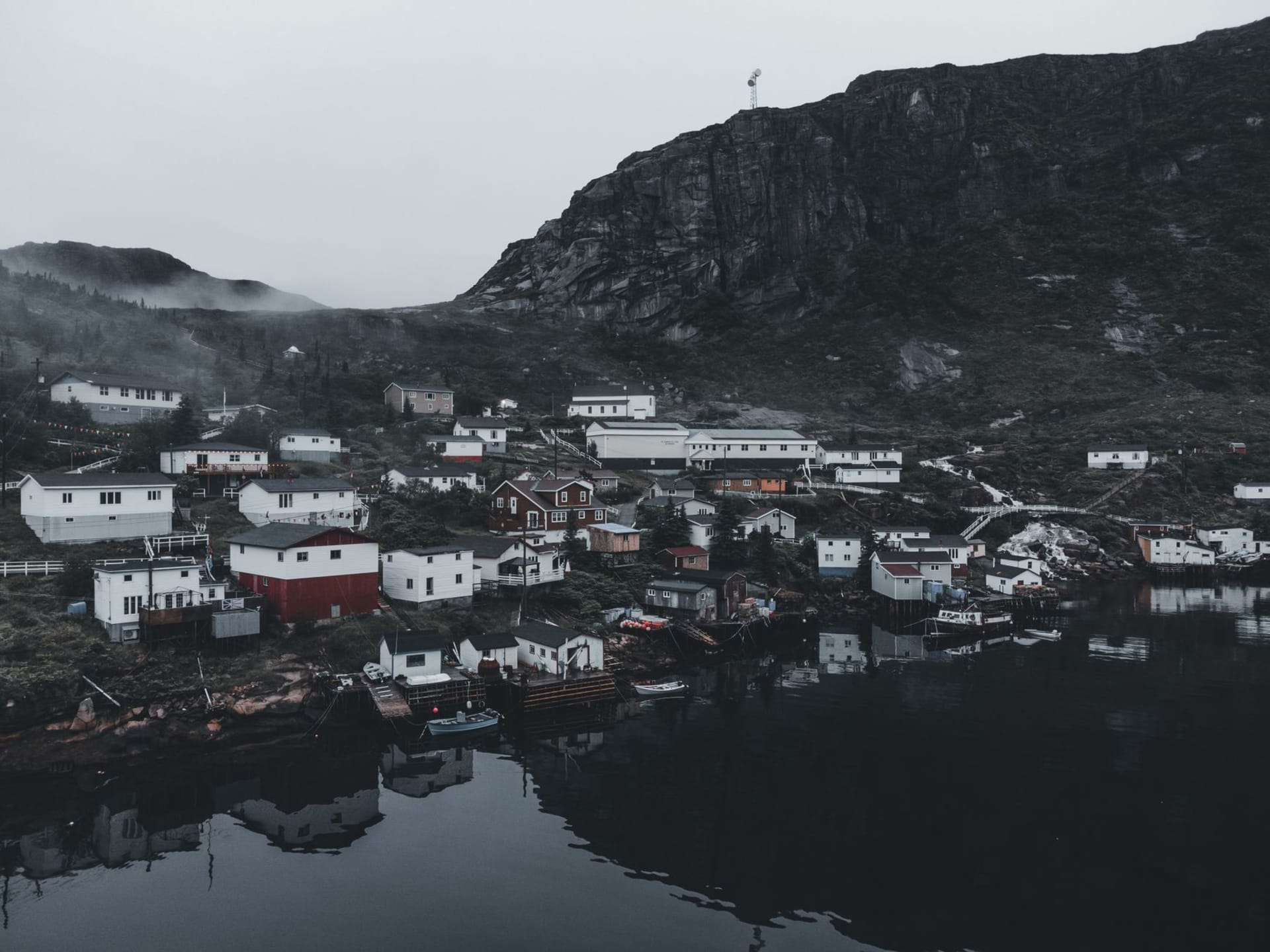
Fogo Island
"Fogo Island doesn't sell you wilderness. It asks you to sit with it for a while."
A remote outport island where a celebrated design hotel and centuries-old fishing culture coexist without either one apologizing for the other.

The ferry from Farewell takes about forty-five minutes and deposits you in Joe Batt’s Arm, which is both a name and a place — a community of a few hundred people clustered around a cove on the north shore of an island that was almost evacuated in the 1960s during the Newfoundland government’s resettlement program. Almost. The people here didn’t leave. They stayed when other outport communities were being emptied and relocated to growth centres, and the particular texture of what survived that decision is what you come to Fogo to feel.

The Fogo Island Inn is one of the most discussed hotels in Canada — a building by architect Todd Saunders that sits on stilts above the rocky shore and looks, from certain angles, like a ship that came ashore. Rooms start at figures that make most people’s eyes water, and the experience inside is deliberately rooted in local culture: the furniture is made on the island by local craftspeople, the food comes from the fishery and the kitchen garden, the guided experiences take you to places that aren’t signposted and involve conversations with people who have lived here their whole lives. The ownership model — founded by Zita Cobb, who grew up on Fogo — funnels revenues back into island social enterprise. It is, in theory, the best version of what tourism could be.
But Fogo Island works even without the Inn. The island has five communities and they are all worth walking. Tilting, on the east side, is a heritage conservation area — a place where the settlement patterns, the fishing rooms, the root cellars cut into the hillside, the little Church of the Sacred Heart on its rise above the cove, have been preserved almost exactly as they were in the early twentieth century. I walked the Eastern Tickle Trail along the coast in a persistent drizzle and passed a man pulling a cod trap by hand from a small boat, and he looked up and nodded as though this was a perfectly normal afternoon, which for him it was.

The geology of Fogo is Precambrian granite, worn smooth by glaciers, covered with boggy barrens where caribou move in small herds. The light here has a particular quality — flat and diffused through oceanic air — that makes the colours of the houses and the boats and the lobster traps look almost theatrical against the grey rock and grey water. Artists have been coming here for decades. The Fogo Island Arts residency brings international artists to work in purpose-built studios scattered across the island, and the work that gets made here has a quality of genuine strangeness.
When to go: June through September. July and August are warmest and the days are long. June can still have sea ice in the tickles. The ferry from Farewell runs year-round but the schedule reduces in winter. Tilting’s Stage Weekend in early August celebrates the traditional fishery and is a vivid, warm community event.
Keep exploring
More from Newfoundland
 newfoundland
Gros Morne National Park
Where Precambrian rock older than complex life on Earth was shoved to the surface and carved into fjords that look borrowed from another planet.
Explore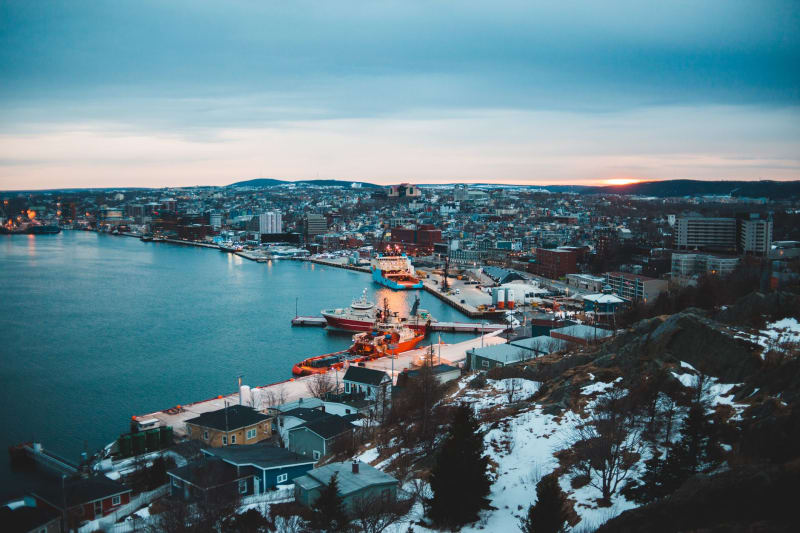 newfoundland
L'Anse aux Meadows
The only confirmed Norse settlement in North America — a thousand-year-old sod-house village at the northern tip of Newfoundland that rewrote the history of exploration.
Explore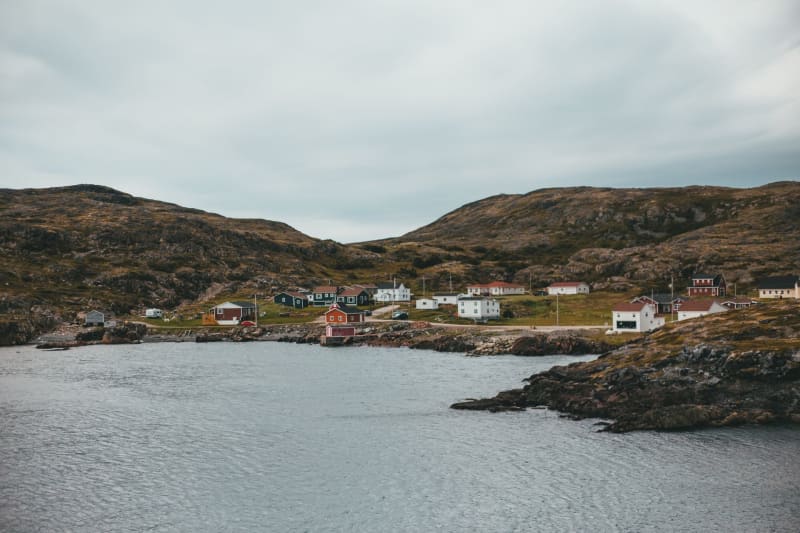 newfoundland
St. John's
A steep harbour city of painted rowhouses and North Atlantic weather where the rum flows warm and the fog never fully leaves.
Explore newfoundland
Terra Nova National Park
Newfoundland's quiet eastern park, where the boreal forest runs down to a maze of sheltered fjords and the loudest thing all day is usually a loon.
Explore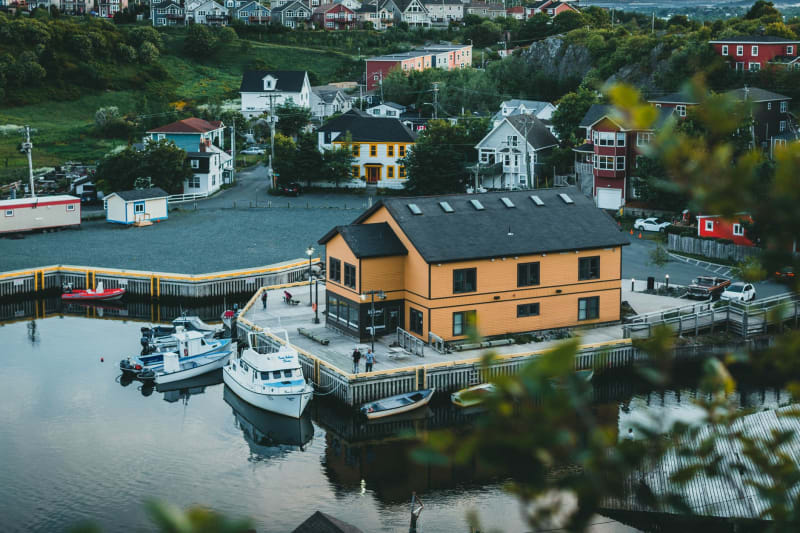 newfoundland
Trinity
A perfectly preserved eighteenth-century outport where humpback whales breach in the bay and the silence is old enough to have its own weight.
Explore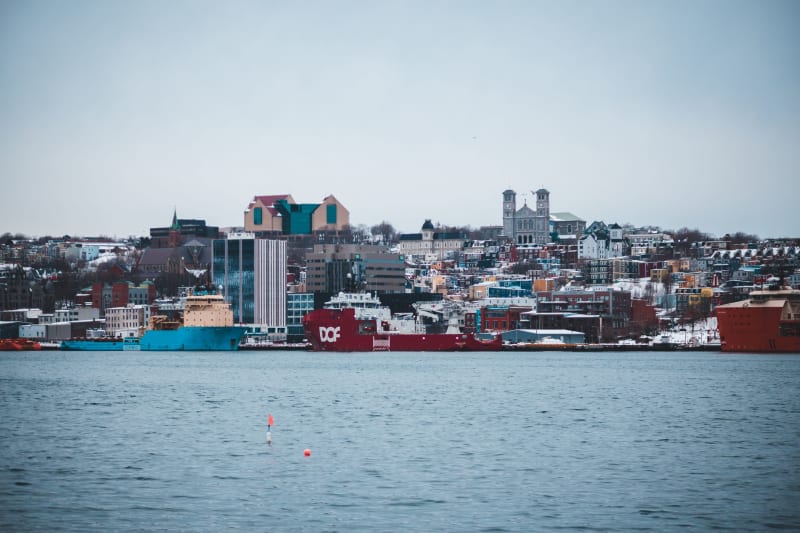 newfoundland
Twillingate
Iceberg Alley's most cinematic outpost — a rocky island town where house-sized bergs drift past kitchen windows in July like slow, blue hallucinations.
Explore