
Elliston
"I came for puffins and left thinking about turnips buried by people I'll never meet."
A cliffside village of root cellars and puffins, where the ground itself seems to remember every winter it has survived.
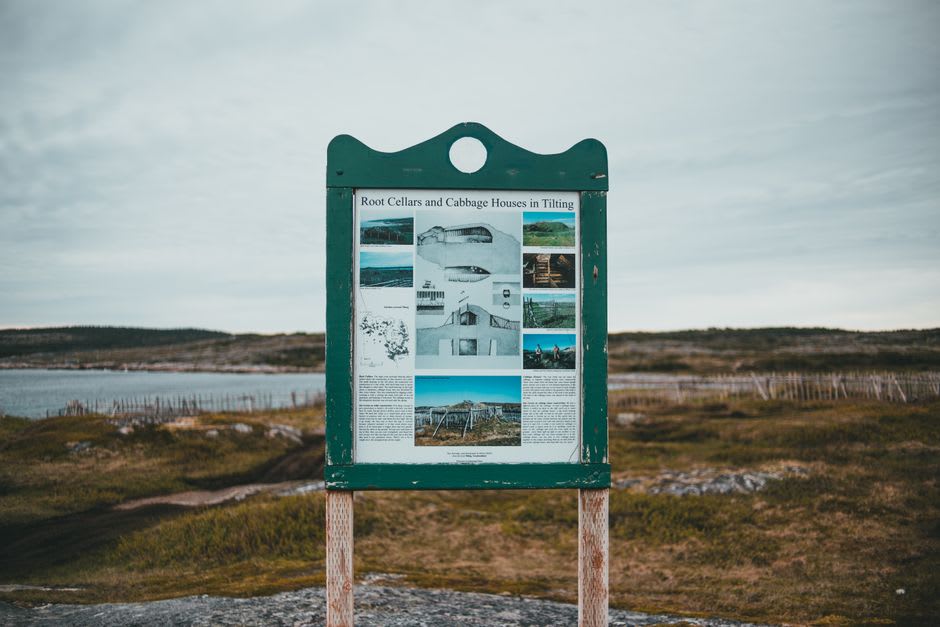
We almost drove past Elliston without stopping. Lia had read something about a “root cellar capital” and I pictured a museum, maybe a gift shop, twenty minutes tops. Instead we spent half a day wandering a village where the hillsides themselves are punctuated with these low grassy mounds and wooden doors, more than 135 of them, some dug by hands that worked this same headland in the 1800s. You open one — carefully, they’re fragile, and locals clearly still take pride in keeping them intact — and it’s just cool, dark earth smell and stone walls built to outlast the person who built them. Lia kept saying it felt less like a tourist stop and more like walking through someone’s memory.
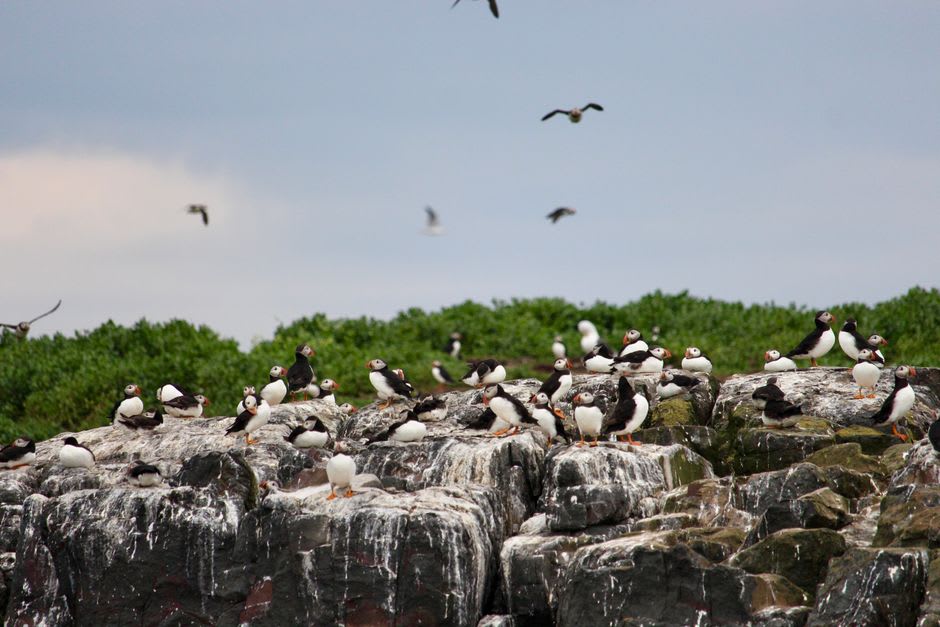
The real reason people find Elliston, though, is what’s just offshore. There’s a small sea stack a short walk from the village, close enough that you don’t need a boat tour or a zoom lens to watch Atlantic puffins coming and going from their burrows. We got there in the early evening, wind cutting straight off the water, and just sat on the grass at the cliff edge while these small orange-beaked birds whirred past at a distance that felt almost unfair — like we hadn’t earned it. I’d seen puffins in photos my whole life. Watching one land badly, tumble, and shake itself off like nothing happened made me laugh out loud.
What stayed with me longest, honestly, wasn’t the puffins — it was learning that Elliston used to be called Bird Island Cove, a name I liked more, before it was renamed in 1904 after a Reverend Elliston. And that the writer Ray Guy grew up here, on this exact stretch of coast, before he became one of the sharpest voices to write about Newfoundland itself. There’s something about that layering — the birds that gave the place its first name, the cellars that kept people alive through hard winters, a writer who turned all of it into words — that made Elliston feel less like a stop on a peninsula loop and more like a place worth sitting still in.
When to go: Aim for June through August — that’s puffin nesting season, when the colony is busiest and the coastal weather is at its mildest for wandering between root cellars.