
Cape St. Mary's
"Standing at Cape St. Mary's is not birdwatching — it's something closer to being visited."
You smell it before you see it. The path from the interpretive centre to the cliff edge is about a kilometre through open bog — sphagnum moss, bog cotton, the occasional pitcher plant — and halfway along, when the wind is from the right direction, it arrives: a thick, ammoniac wave of ten thousand birds living on top of each other. Then you come to the edge of the headland and there is Bird Rock, a massive sea stack perhaps ten metres away across a churning chasm, and it is entirely white. Not white rock — white birds. Northern gannets, stacked from waterline to summit, thousands and thousands of them, calling to each other in a noise that you feel in your chest.
Gannets are spectacular birds. They are white with yellow heads and black wingtips and they have pale blue eyes outlined in blue-grey skin, and if you sit quietly at the edge and let them get used to you, individuals will land on the cliff face a metre away and look at you with the focused, unhurried assessment of a bird that has never learned to fear the human silhouette. They fold into plunge-dives from twenty metres up and hit the water like thrown darts, and the whole colony has this quality of purposeful, continuous activity — nest-building, squabbling, preening, launching and landing — that makes the rock feel less like a location and more like a community.
What makes Cape St. Mary’s unusual among seabird colonies is the proximity. Most nesting sites require boats, permits, maintained distances. Here, the geological accident of Bird Rock being separated from the mainland by ten metres of open water means you stand within conversational distance of one of the largest gannet colonies in North America, with nothing between you and them but air. I crouched at the fence line on a July afternoon when the fog was coming and going and the birds were glowing and then disappearing in it, and I stayed there for two hours without checking my phone once.
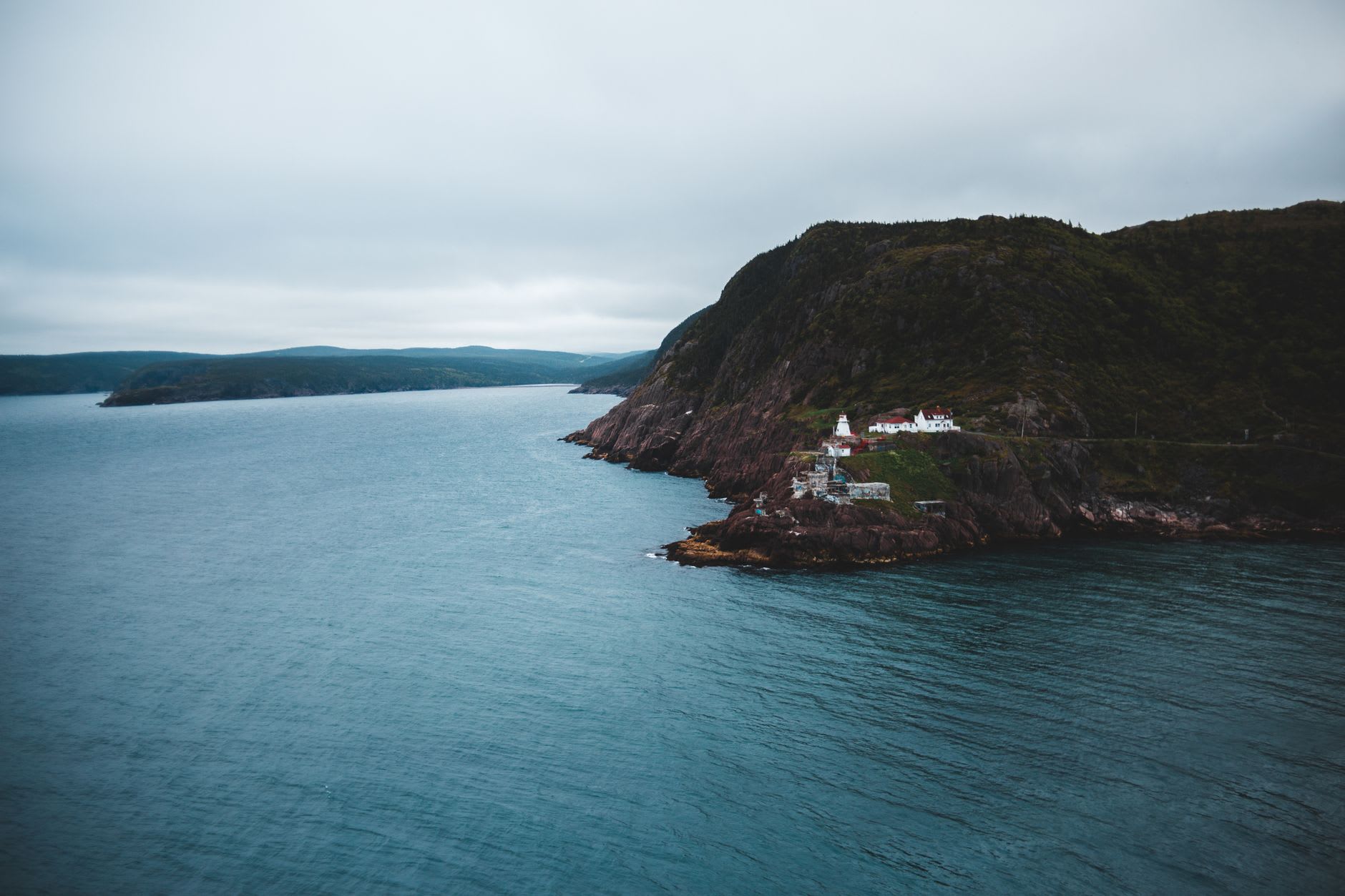
The drive to the cape along the Avalon Peninsula has its own quality — long empty roads across barrens, the occasional glimpse of the sea, small communities where the churches are often larger than seems justified by the population. The interpretive centre at the trailhead is staffed by a biologist who gives a short orientation talk that is genuinely excellent and worth attending even if you’ve read about gannets. The walk back, after the birds, feels oddly quiet.
When to go: Late May through early August. The colony is most active in July when chicks are hatching and adults are constantly arriving with food. The site is open year-round but out of breeding season the rock is empty. Fog is endemic here — don’t be discouraged if you arrive in cloud, as it creates atmospheric conditions and the birds are present regardless. Allow two to three hours for the full experience including the walk.