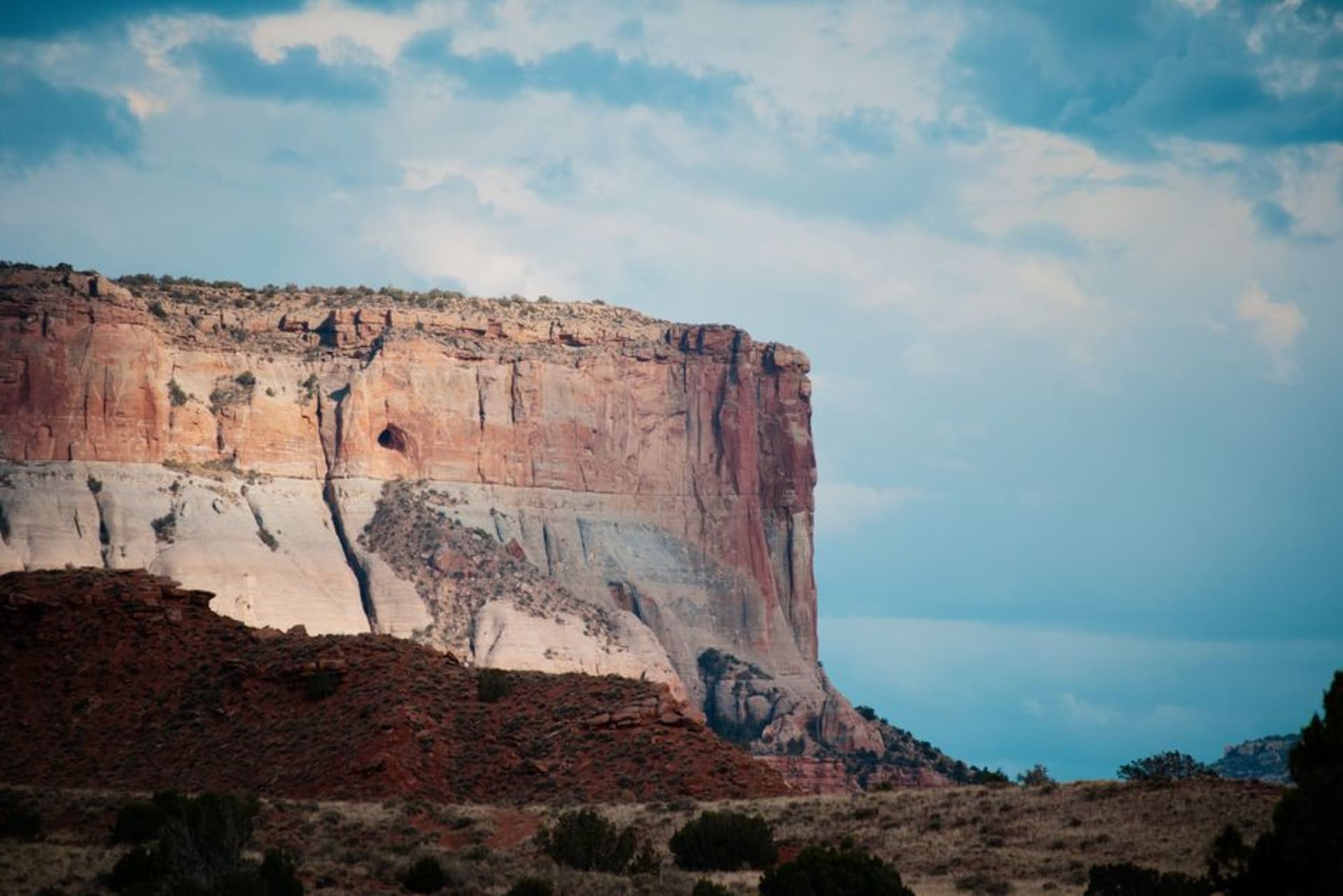
A mesa-top town of quiet pines and buried secrets, where the atomic age was born behind guarded gates.
I’ll admit I almost skipped Los Alamos. Lia and I were road-tripping through northern New Mexico chasing green chile and adobe churches, and a town built for physicists didn’t sound like it fit the itinerary. But we turned off the highway anyway, climbed the switchbacks up onto the Pajarito Plateau, and by the time we parked I understood why this place still feels strange in a way I can’t quite name. You’re at 2,200 meters, pine trees everywhere, canyons dropping away on either side of the mesa — and somewhere under all that ordinary small-town quiet is the fact that this is where the first atomic bombs were designed.
We started at the Bradbury Science Museum, which I went in expecting to be dry and came out from an hour and a half later, rattled. There’s a section with declassified footage and original documents from Project Y, and reading Oppenheimer’s own notes next to photos of the mesa as it looked in 1943 — just scrub pine and a boys’ school — made the whole thing feel disturbingly recent rather than historical.
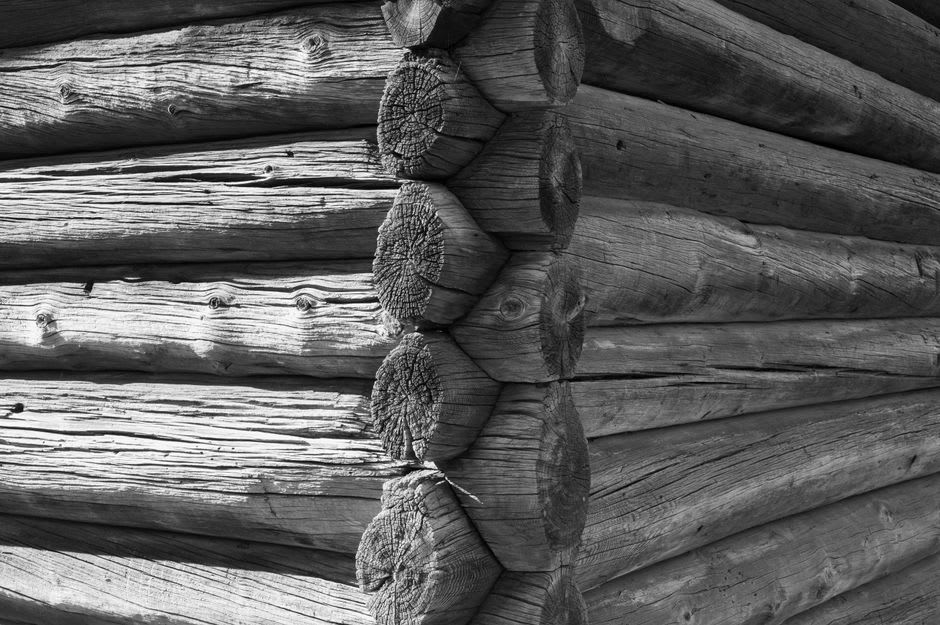
From there we walked Bathtub Row, the string of log-cabin homes left over from the old Los Alamos Ranch School, where the top scientists lived because those were the only houses in town with actual bathtubs. Standing in front of the house where Oppenheimer supposedly lived, I kept thinking about how domestic it all looked — porches, tall pines, kids’ bikes probably once leaning against these same walls — for a neighborhood that was gated and censored and didn’t officially exist until 1957. Lia pointed out that the National Historical Park signage doesn’t try to soften any of it, and I respected that. No spin, just the buildings and the dates.
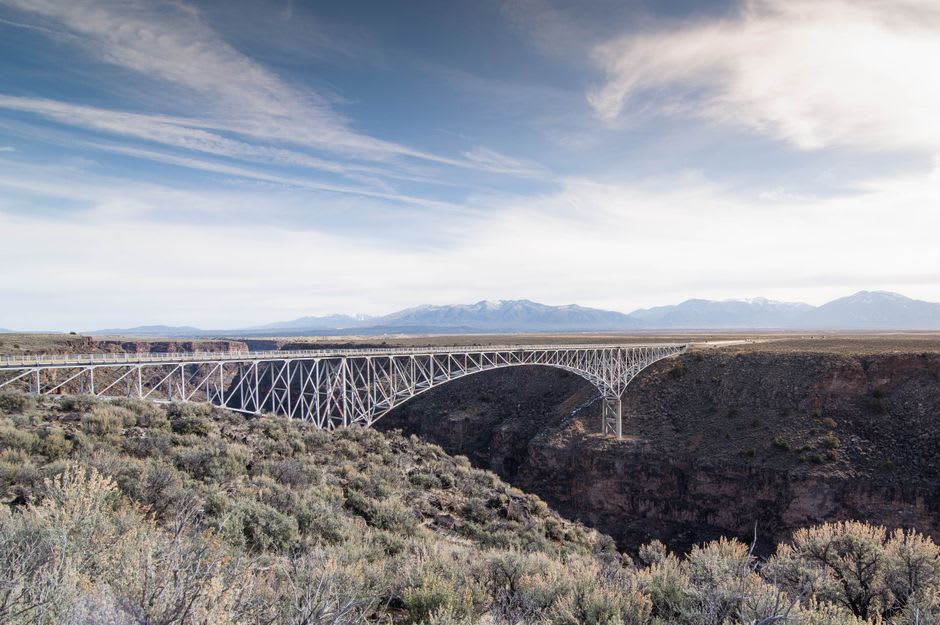
We ended the afternoon at an overlook east of town, coffee in hand, watching the light shift over the Rio Grande valley far below. It’s a genuinely beautiful spot, and for a few minutes it was easy to just be tourists looking at a view. Then I’d remember where I was standing, and the view would mean something else entirely. That tension is, I think, the whole reason to come here.
When to go: Late spring through early fall gives you the mildest weather on the plateau, which matters if you’re planning to walk the historical park sites on foot the way we did.