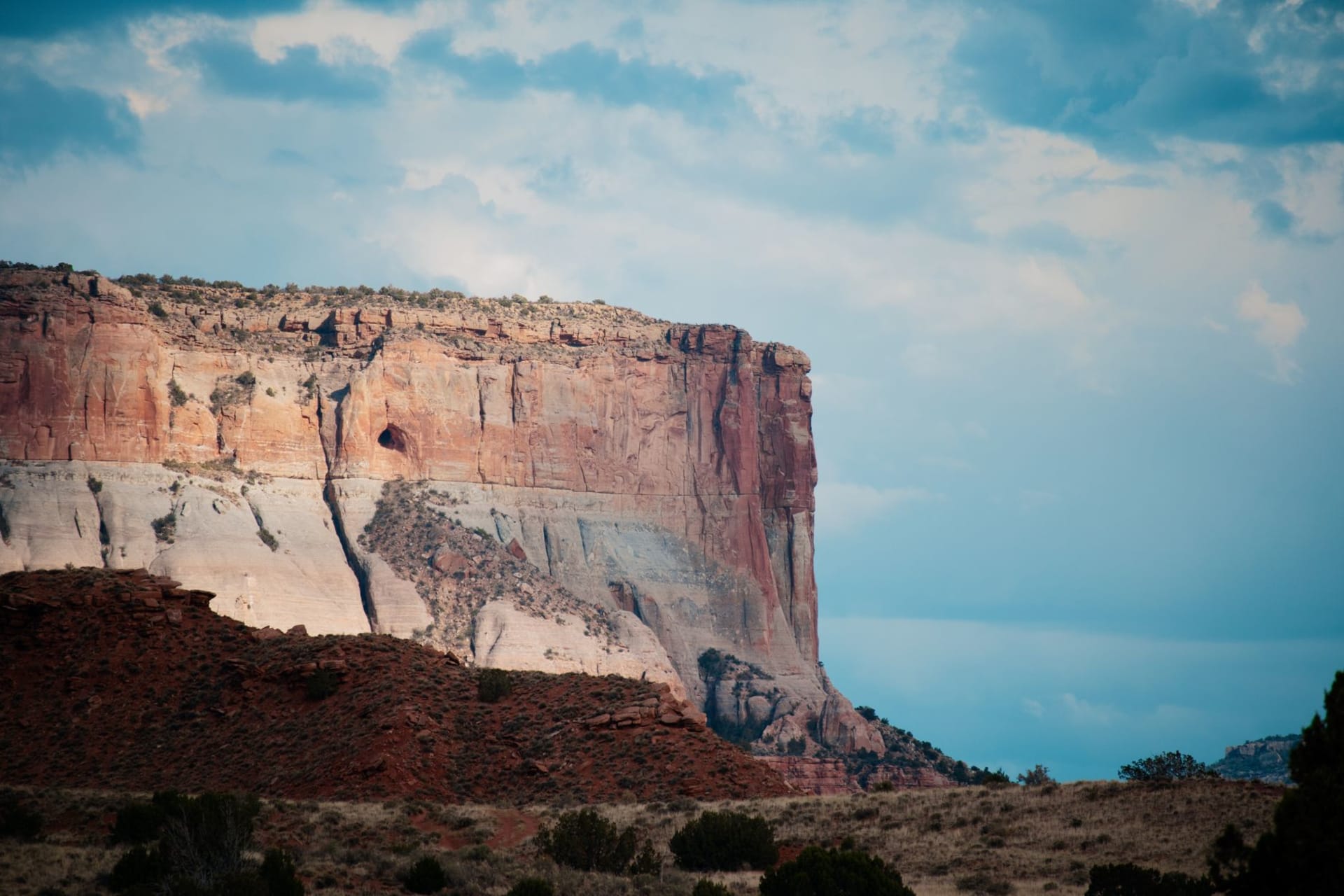
Chaco Canyon
"Chaco made Stonehenge feel recent — and there's no interpretive center telling you what to think about it."
The road into Chaco Canyon is the commitment it requires of you. Twenty-one miles of unpaved road — officially recommended as passable in a regular vehicle in dry conditions, but by the time I got there I was less confident, the truck bouncing through washboard ruts and soft sand, dust billowing behind. It took forty minutes. There is no cell service. The landscape on either side is sagebrush flat, the sky enormous, no buildings anywhere. This remoteness is not incidental. Chaco Culture National Historical Park is hard to reach by design — not by the park service’s design but by the canyon’s — and it filters out the drive-through visitor and leaves behind only the people who actually came for it.
What you find at the end of that road is the architectural center of the ancient Pueblo world. Between 850 and 1150 CE, the inhabitants of Chaco Canyon constructed twelve major buildings — “great houses” in the archaeological terminology — the largest of which, Pueblo Bonito, is a D-shaped complex of 650 rooms rising four and five stories, oriented with astronomical precision to the cardinal directions and to solar and lunar alignments. They built it without metal tools, without draft animals, without the wheel. The stone was quarried from the canyon walls. Timbers for the roof beams were carried from forests 80 kilometers away, individually, by hand.
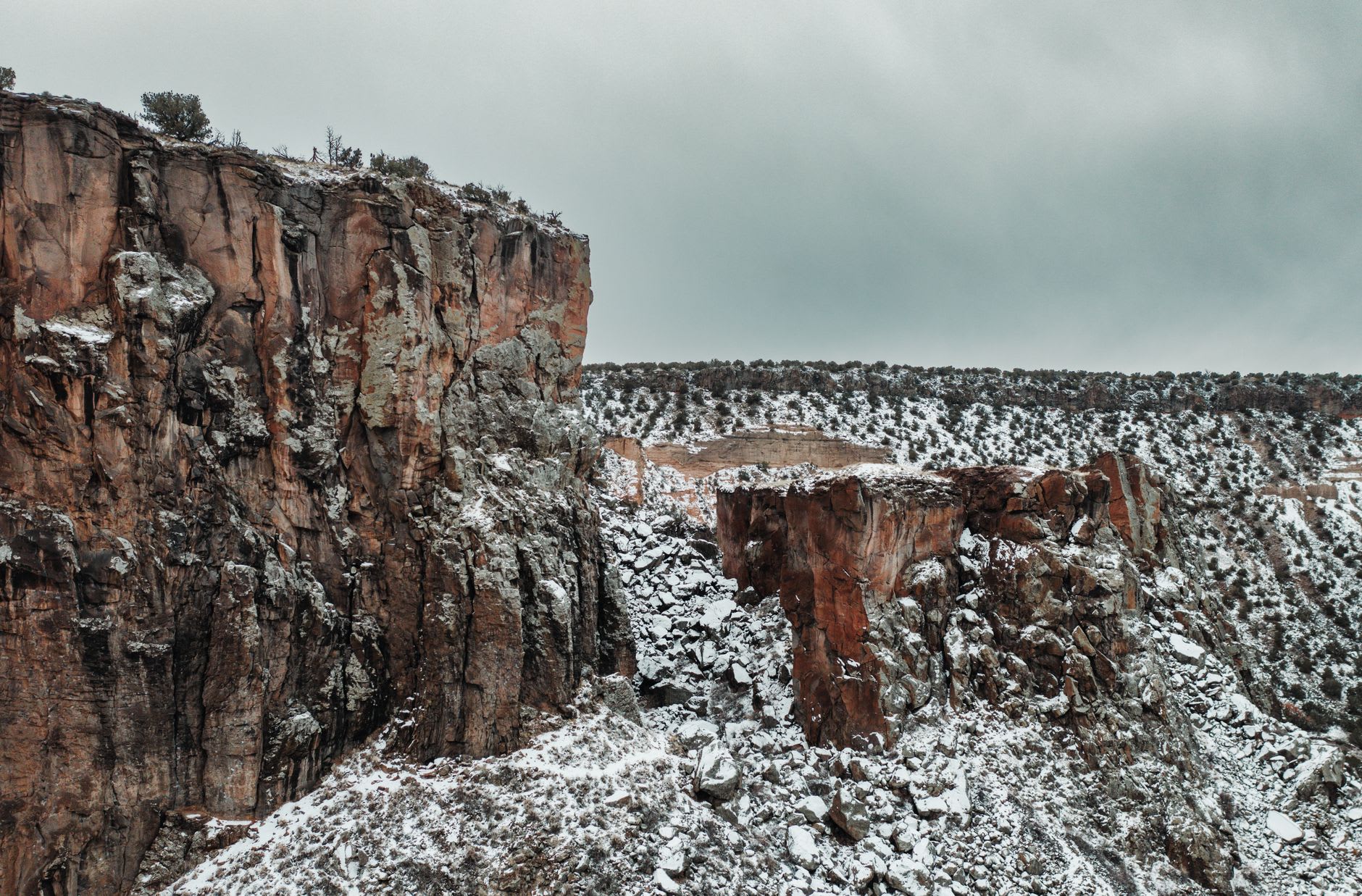
I arrived in the late afternoon and walked Pueblo Bonito in the low light, the canyon walls orange above me, the rooms open to the sky, the kivas — circular ceremonial chambers — sunk into the plazas at regular intervals. The scale keeps resisting comprehension. This is the largest pre-Columbian structure in North America north of Mexico, and it was largely abandoned by 1150 CE, which means it was built, used as a regional ceremonial and trade center, and vacated all within three hundred years. Archaeologists are still arguing about what Chaco was — a city, a ritual pilgrimage site, a palace for an elite class — and the descendants of the people who built it, the modern Pueblo peoples of New Mexico, have their own understanding of the place that is not the same as the archaeological one and not less valid.
What I remember most clearly is the silence. Chaco sits in a bowl of canyon and mesa with no highway audible from anywhere in it, and in the evening after the handful of other visitors had left, I sat in the plaza of Pueblo Bonito in genuine quiet. The kind of quiet that seems to have a texture. The kind that makes you aware of your own heartbeat. The stars that came out after dark were the most numerous I had seen since a camping trip in Patagonia — the park is a designated International Dark Sky Park and the nearest city is two hours away. The Milky Way crossed the canyon directly overhead and for a while I lay on my back on the stone bench of an ancient kiva and looked at it and thought about the people who lay on the same stone a thousand years ago and looked at the same band of light.

The campground inside the park has electric hookups for RVs and tent sites with no hookups, and staying overnight is the single best decision you can make here. The dawn light on the canyon walls, the pre-tourist morning quiet, the ability to walk to Pueblo Bonito before the day-trippers arrive — these are the things that make the drive worth the transmission.
When to go: April through June and September through October, avoiding the July-August monsoon season when the unpaved road can become impassable. The solstice periods are when the astronomical alignments built into the great houses are most visible — a dedicated group of archaeoastronomers leads tours on and around the summer and winter solstices that are worth booking far in advance.