Bisti Badlands
"I walked twenty minutes and the parking lot vanished — I was alone in a landscape that looked like a fever dream someone else was having."
There are no signs for the Bisti Badlands on the highway. You turn off the paved road onto a dirt track that the GPS insists doesn’t exist, bounce for several kilometers past scrubby desert and oil pump jacks, and arrive at a small BLM parking area with a pit toilet and a trailhead marker. Beyond that: nothing. No trail. No map on a post. You walk into the landscape and figure it out, which I was not expecting. The BLM manages this as a wilderness area in the most literal sense — if you don’t bring water, a compass or GPS track, and the willingness to navigate by landmark, you will have a problem. I did not fully understand this before I went and the first twenty minutes were a little unnerving.
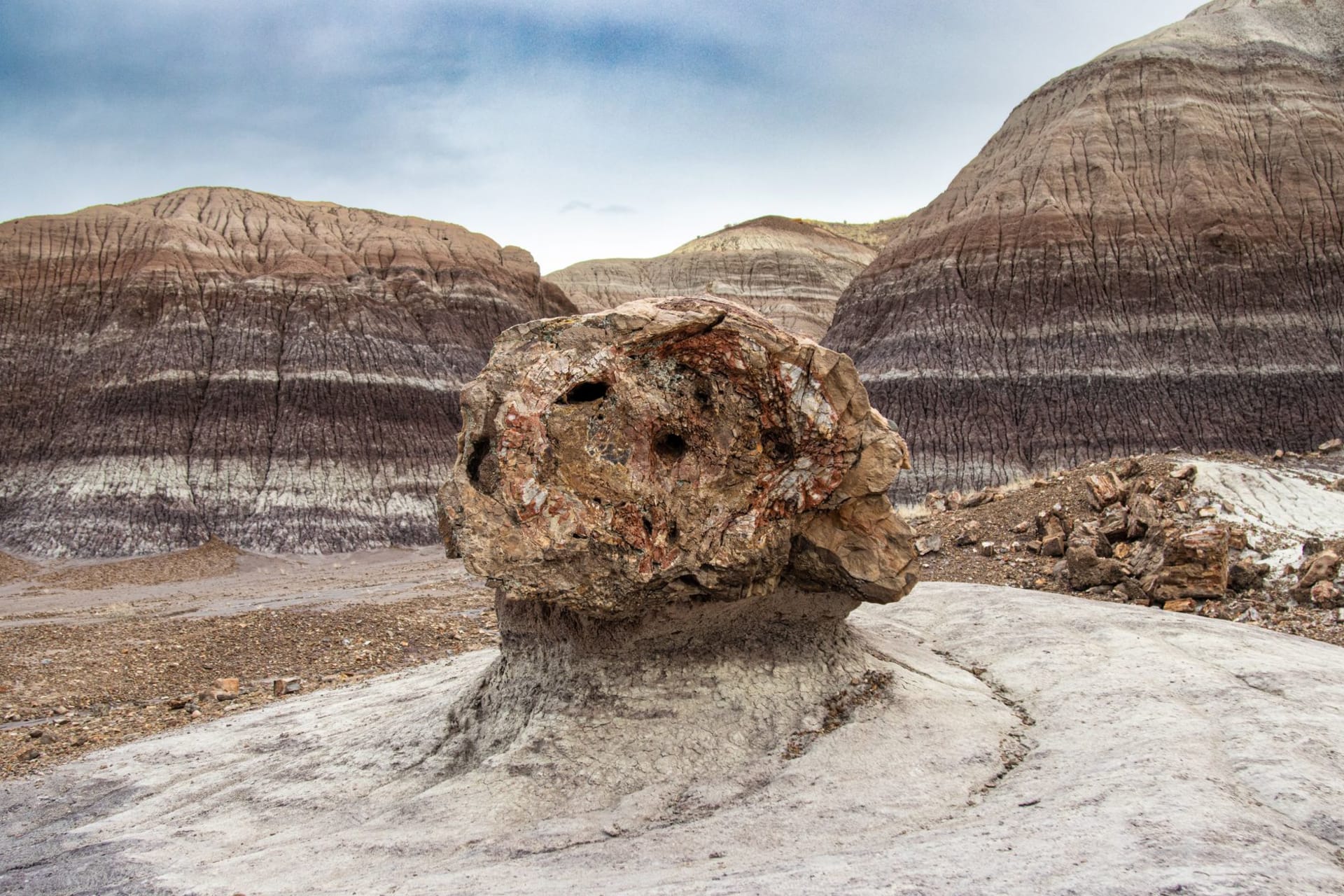
Then the formations started appearing. Hoodoos — eroded columns of rock capped with harder stone that resists weathering and protects the softer material below — in shapes that defy the names I tried to give them. Some look like toadstools fifteen feet tall, their caps balanced impossibly. Some look like figures, or faces, or things without precedent. The stone is layered in colors: grey, black, ochre, russet, pale yellow, a greenish-white I later learned is from volcanic ash deposited during the Cretaceous. Pieces of petrified wood lie on the surface — the remains of a subtropical forest that covered this region seventy million years ago, when shallow seas and river deltas occupied what is now the San Juan Basin.
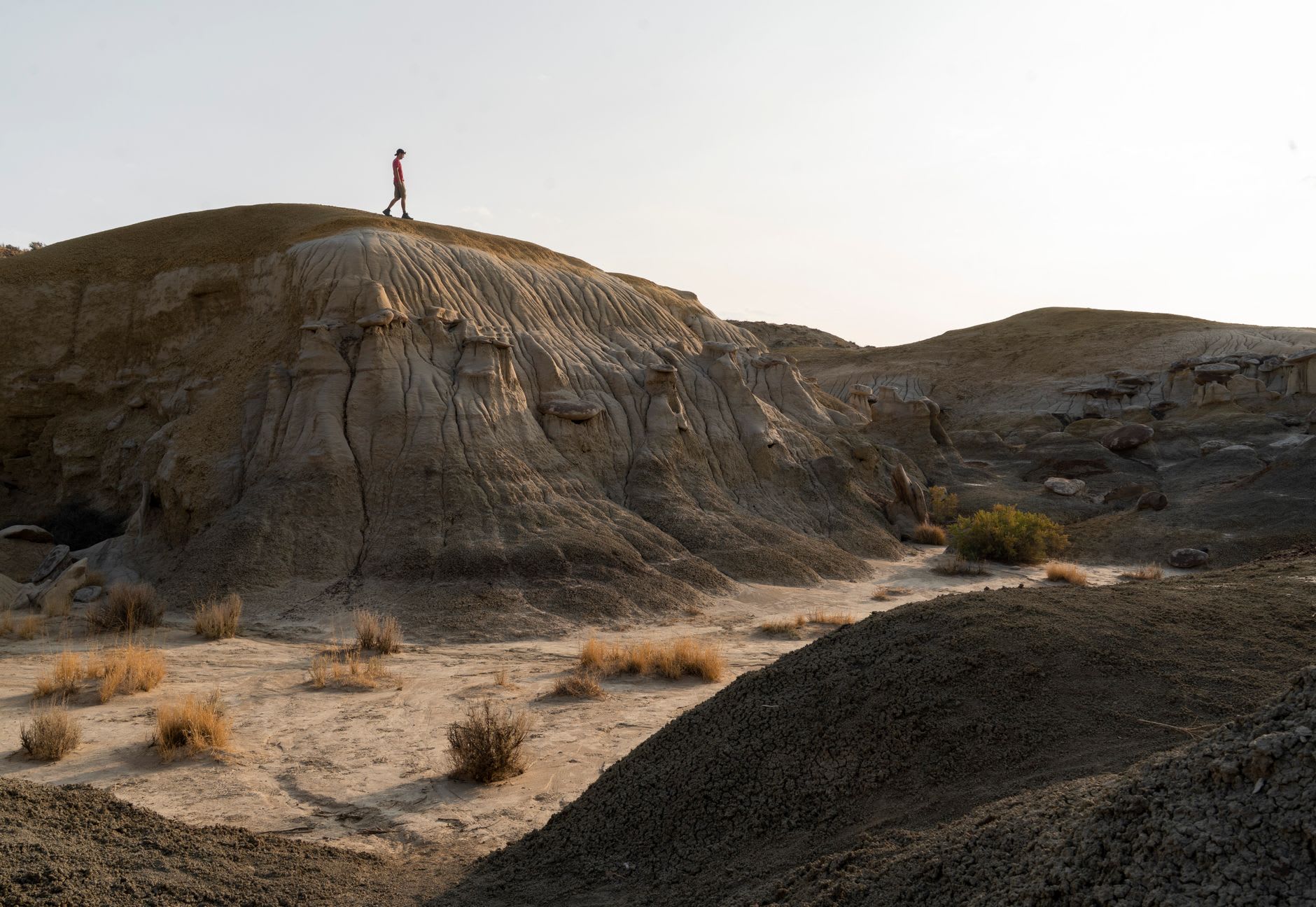
The silence is the first thing you notice when you stop walking, and then the wind, and then the complete absence of any human sound — no aircraft, no highway hum, nothing. The Navajo Nation borders the wilderness to the west and the Four Corners region begins nearby, and this corner of northwestern New Mexico has a spaciousness that is categorically different from the more-visited landscapes around Santa Fe and Taos. I was there on a Tuesday in October and saw three other people the entire day, and they were a kilometer away in a different drainage and we never spoke.
What moved me most was a section I found after about ninety minutes of wandering — a bowl of severely eroded badlands where the clay had dried into a cracked mosaic of grey and black and where dozens of small hoodoos stood at various heights, backlit by the afternoon sun. I sat down in the middle of it and stayed for a while. The light was extraordinary: flat and diffuse through a high overcast, no shadows but also no glare, everything equally illuminated. I tried to take photographs but they looked like someone else’s photographs of somewhere I hadn’t actually been. Some places resist documentation.
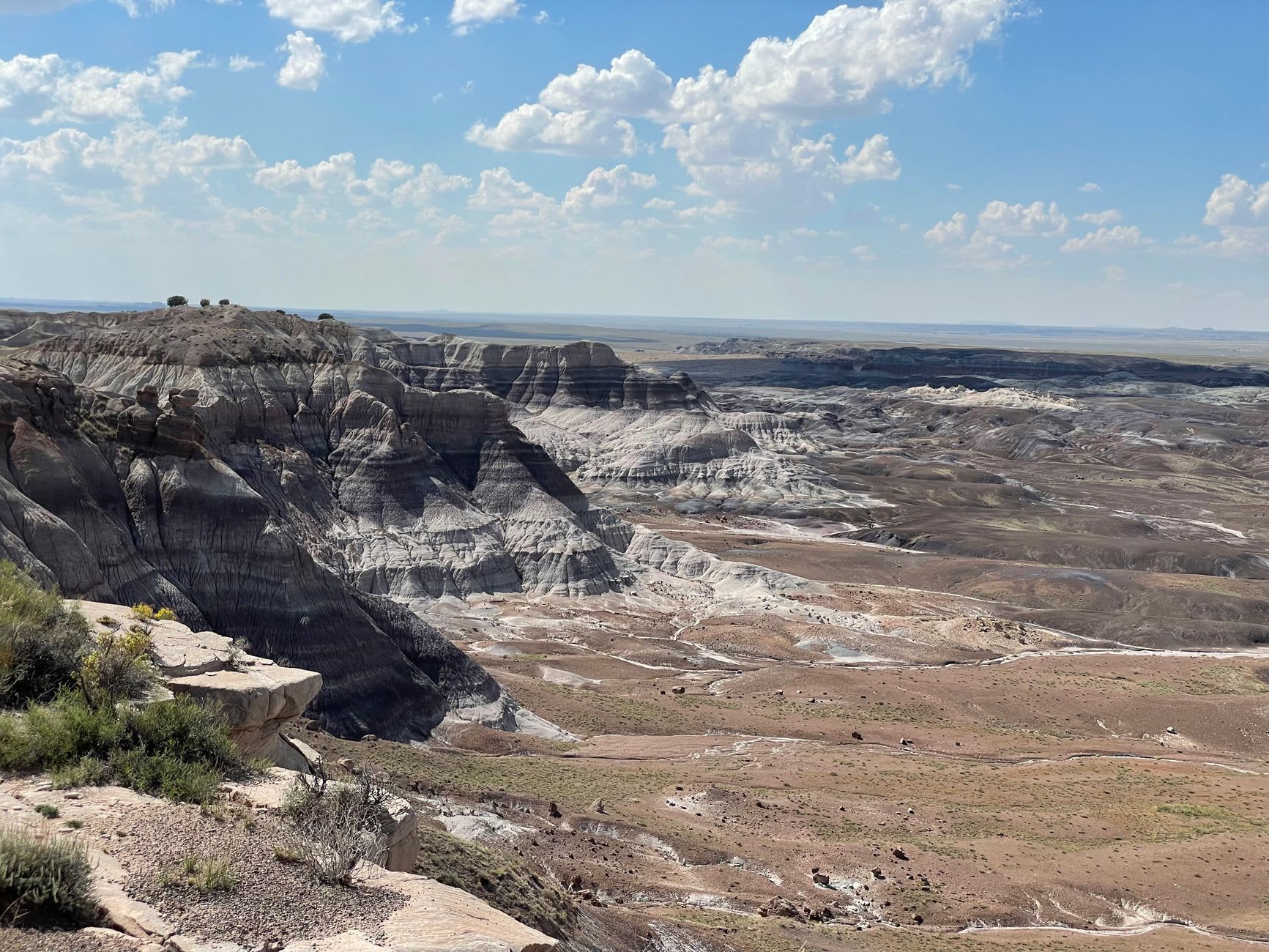
The Bisti is part of a larger wilderness called the De-Na-Zin Wilderness, and the two sections are separated by a road but share the same character. De-Na-Zin has different formations — more Dragon’s Back ridges, less hoodoo concentration — and is even less visited. Most people who come to Bisti focus on the famous “cracked eggs” formation, which requires some navigation and some luck, as the eggs (large spherical concretions) move or erode between visits. A current GPS track downloaded from a hiking app before you lose cell service is the practical answer.
When to go: March through May and September through November. The summer heat in the San Juan Basin is serious and the exposed landscape offers no shade whatsoever. Winter is feasible on clear days but requires monitoring road conditions — the dirt track becomes impassable mud after rain or snow. Always bring more water than you think you need.