Abiquiú
"You understand O'Keeffe the moment you see Pedernal at dusk — she wasn't stylizing. She was just looking."
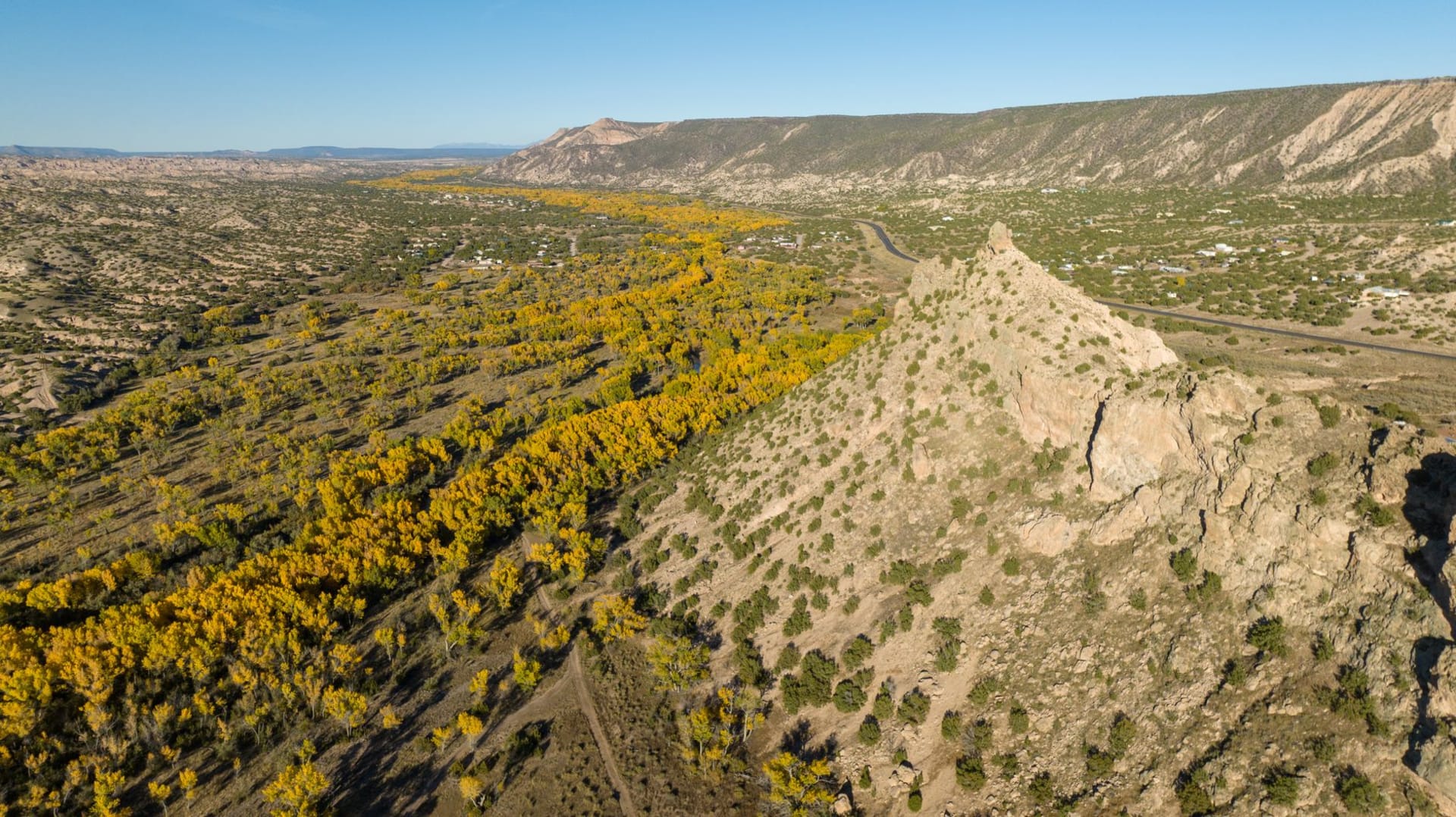
The highway north of Santa Fe, US-84, climbs through the Chama River valley past cottonwood groves and adobe villages that have been here since the seventeenth century, and then the landscape opens into something else entirely. The cliffs appear first — bands of red and ochre and cream rock stacked in horizontal layers, eroded into forms that look designed, purposeful. Then the mesa called Pedernal comes into view to the southwest: a flat-topped volcanic formation that appears and disappears with the road’s curves, always the same profile, that clean horizontal line against whatever color the sky is doing that hour. Georgia O’Keeffe said God told her that if she painted it enough times He would give it to her. She painted it dozens of times. I am not religious but I looked at Pedernal for a long time and thought I understood the impulse.
Abiquiú is the village, small and quiet, where O’Keeffe lived and worked from 1949 until her death in 1986. The house and studio are now managed by the Georgia O’Keeffe Museum, which runs limited tours by reservation — actual entrance into the compound she inhabited, the studio where the canvases were made, the courtyard with the door that appears in so many paintings. I booked months in advance and was glad I did. The guide was careful and specific, not reverential in a hagiographic way but genuinely knowledgeable about the place’s physical properties — the way the light moves through the studio windows at certain times of year, the shade of blue she painted her door because it was the color Pueblo people painted doors to keep spirits out.
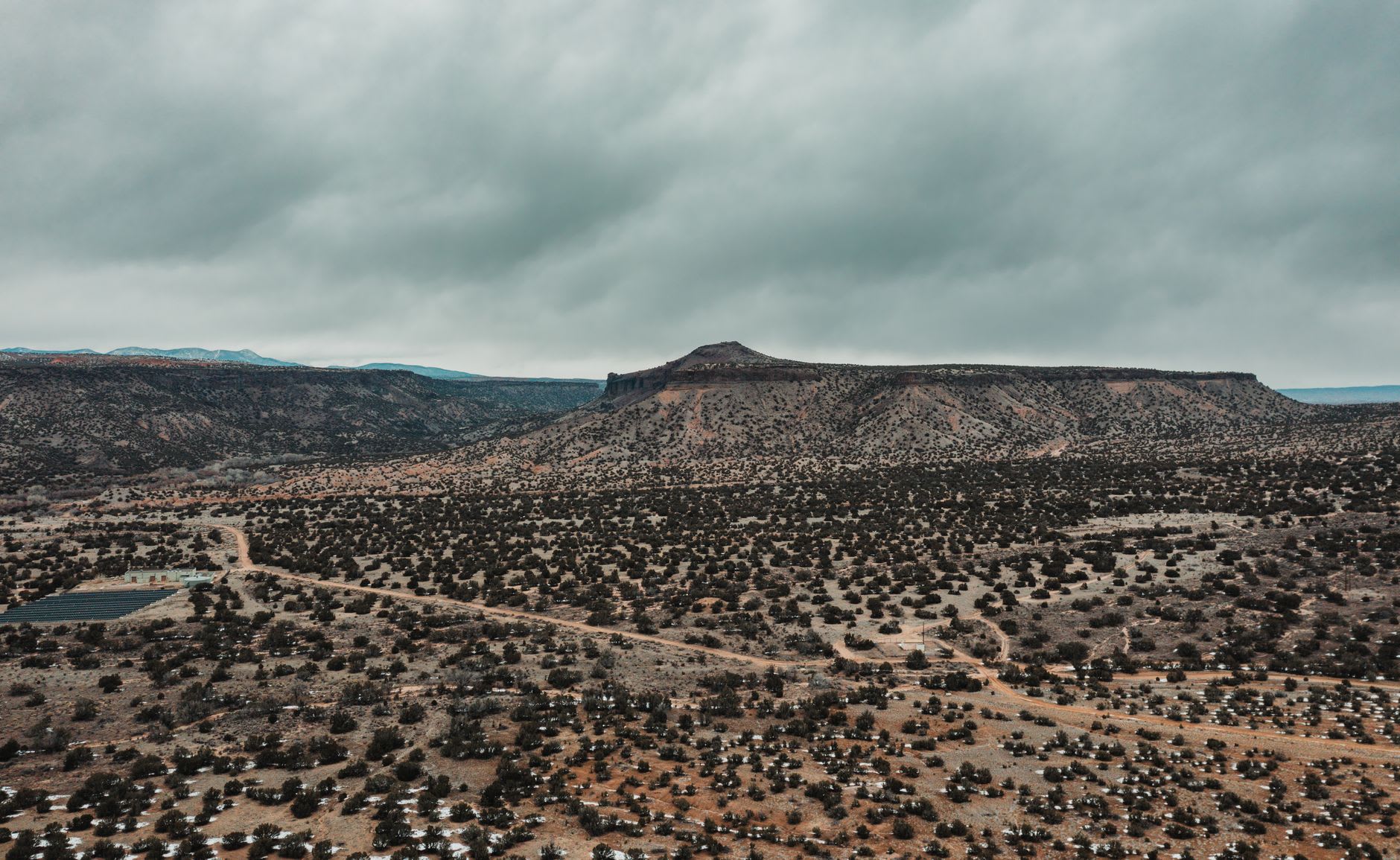
Ghost Ranch, sixteen kilometers north of the village, is the larger of O’Keeffe’s two properties and the one set against the most dramatic landscape — red cliffs directly behind the buildings, the Piedra Lumbre valley stretching south toward the Rio Chama. The ranch is now a Presbyterian conference center that operates tours and has a small museum, and the surrounding land is public, traversable on trails that take you up into the cliff formations she spent four decades rendering. I hiked the Kitchen Mesa Trail on a cold October morning, climbing switchbacks through juniper and piñon, emerging onto a plateau with views in every direction. The colors were the colors in the paintings. Not similar to the paintings — actually the same colors, that same compressed palette of red and grey-green and bone-white and deep blue sky.
The village of Abiquiú itself has a small General Store that serves as community center, post office, and the only place within thirty kilometers to get coffee and a breakfast burrito. I ate there both mornings, sitting at a table with a view of the street and the mountains, talking to nobody, feeling the particular quiet that comes from being in a landscape that has absorbed so much artistic attention it has become self-sufficient.

The evening light in this valley is the argument for staying two nights instead of one. Around five in the afternoon the cliffs begin to shift color — red deepening to almost purple, the cream bands glowing amber, Pedernal going from brown to a saturated orange-pink before fading to grey. It lasts maybe forty minutes. I stood outside the General Store both evenings and watched it happen and each time it was different and each time I thought about O’Keeffe staying forty years in one place and finding it inexhaustible.
When to go: September and October are the best months — cool temperatures, clear light, the cottonwoods along the Chama turning gold. O’Keeffe Museum house tours run March through November by advance reservation only, and they sell out weeks ahead, especially in peak months. Come in March if you want the tours without the crowds.