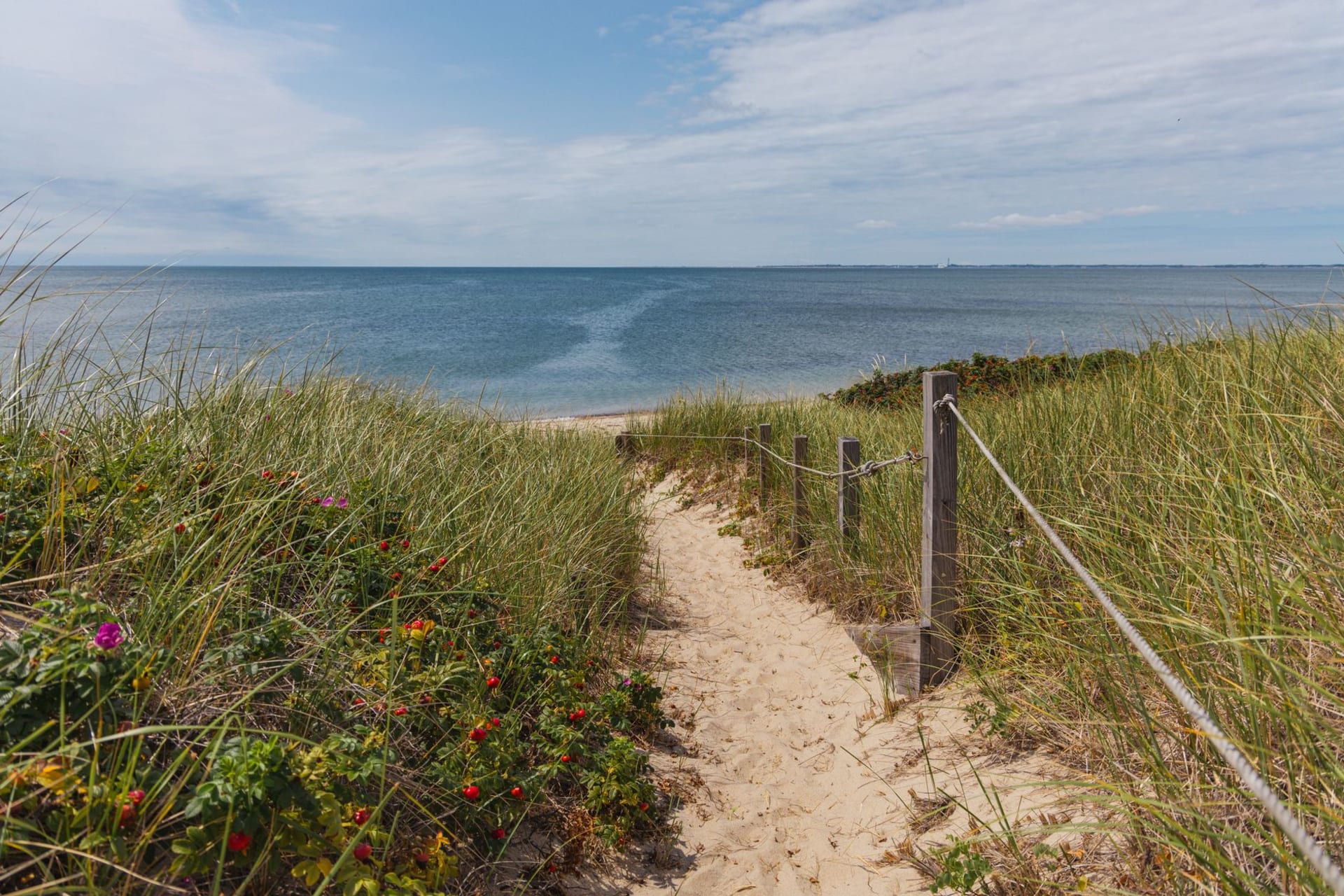
I arrived on the Cape in the last week of September, driving over the Sagamore Bridge on a morning that felt cleared out and purposeful in the way of rooms just after someone has left. The summer people were gone — really gone, not just thinned — and what remained was the thing they had been obscuring all along: a fourteen-mile-wide strip of glacial sand curling seventy miles into the North Atlantic, the light coming off the water at angles that seemed almost apologetic in their beauty, the roadside stands selling corn and squash from unattended honor boxes. I drove east through Barnstable and Orleans without stopping, following something I could feel but not yet name, and only pulled over when the dunes of the National Seashore rose on my left and the Atlantic appeared on my right and I realized they were barely four hundred yards apart.
The outer Cape — Truro, Wellfleet, Provincetown at the tip — is where the peninsula reveals its geological argument. The land narrows until it is essentially a sandbar with ambitions: dunes forty feet high built from nothing but wind and time, salt marshes behind them still and brown in the October light, and then the Atlantic coming in from the east as if it has a point to make. I walked the Great Island Trail in Wellfleet on a Wednesday afternoon and met exactly two other people. The trail runs through pine barrens and emerges on a beach that looked swept, untouched, as if the season had taken the footprints with it when it left.

Wellfleet oysters deserve their reputation. I ate them at a raw bar on the town pier — a shingled shack with a chalk menu and a view of the tidal flats where the oysters were grown in floating cages. They were cold and briny and tasted precisely of the particular water they had come from, which is the only thing an oyster should taste of. The woman behind the counter told me which beds they came from, named the farmer. That directness felt like the off-season making itself known: when the crowds leave, the people who remain are the ones with actual knowledge. I ate a dozen and then ate another six and felt entirely justified.

Provincetown at the tip earned its literary reputation — Tennessee Williams, Norman Mailer, Edmund Wilson, the whole twentieth-century American canon seems to have passed through these narrow streets at some point. In late September the art galleries were still open but uncrowded, the Portuguese bakeries on Commercial Street were selling malasadas in the morning, and the light on the harbor in the late afternoon was the kind of low, golden New England light that painters came here for and that I now understand completely. The town is wildly alive in summer and something quieter and truer in fall, and I know which version I prefer.
When to go: September is the answer, without hesitation. The crowds are gone, the water is still warm enough to swim, and the Cape Cod National Seashore is essentially yours. October is spectacular for color and wind and dramatic light. July and August are genuinely not worth it unless you have a house here and nowhere to be.