Americas
New England
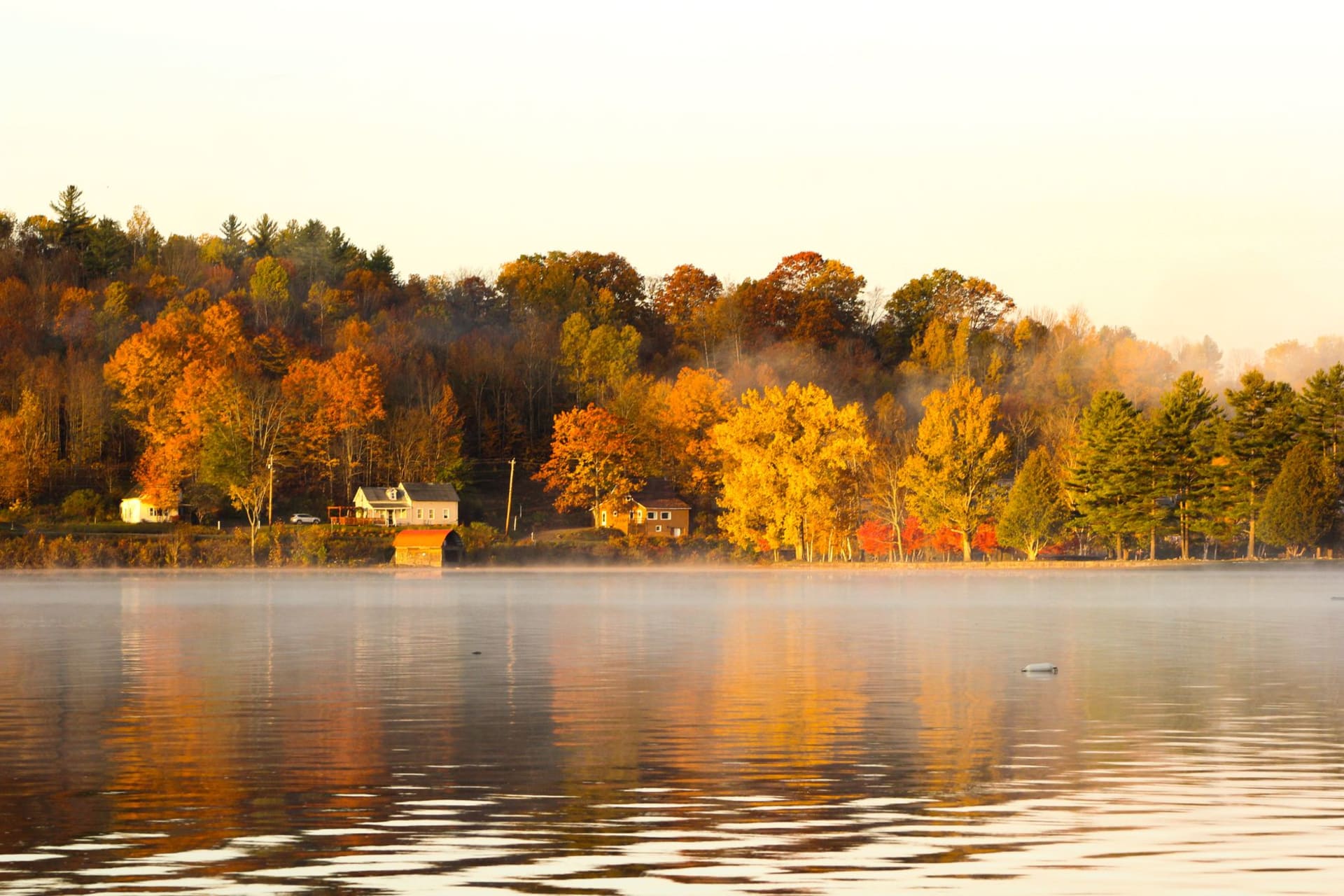
"October here is the closest I have come to walking inside a painting."
I arrived in Vermont in the second week of October, driving north from Boston on roads that kept narrowing until they were barely wider than the car. The maples were doing what everyone said they would do and it still wasn’t enough warning — whole hillsides burning orange and crimson in the late afternoon light, the sky absurdly blue above them, the air cold enough that I could finally wear the sweater I’d been carrying since Mexico City. I pulled over three times in twenty minutes just to stand in it. Embarrassing, maybe, but accurate.
New England is a place that has worked hard to preserve its own mythology, and largely succeeded. The white clapboard churches on the village greens are real. The covered bridges over rocky streams are real. The town meetings and the maple syrup and the lobster rolls eaten on a dock somewhere outside Portland, Maine, with a paper bib and no pretension whatsoever — all real. But what surprised me wasn’t the postcard version. It was the density of it: how quickly the scale shifts from a Boston neighborhood full of brownstones and Irish pubs to a two-lane highway through birch forest where you might not pass another car for forty minutes. Six states, none of them large, and the variety is almost unreasonable. Coastal Connecticut feels nothing like the Connecticut River Valley. Cape Cod in September — after the families have left — is quieter and more beautiful than anything the summer brochures suggest. Newport, Rhode Island has Gilded Age mansions perched above the Atlantic that make you understand why people with obscene amounts of money still sometimes spend it well.
The food is its own argument for the region. Maine lobster, obviously, but the real pleasure is buying one from a shack on a pier where the fishermen are still unloading and eating it at a picnic table with drawn butter and a beer. New Hampshire has apple orchards that you can pick yourself in September, and the cider — actual cider, hard and dry and not sweet — is some of the best I’ve had anywhere. Boston’s North End is a pocket of Italian America so intact that the canoli at Mike’s Pastry at midnight on a Saturday feels like a time warp. Vermont cheese: the sharp cheddars aged in caves, the soft washed-rind wheels from small farms outside Montpelier. I spent a morning at a farmstead dairy near Stowe tasting through their lineup and understood why people make pilgrimages here for food that quietly refuses to be glamorous.
When to go: September through October for fall foliage — peak color shifts north to south, usually hitting Vermont in late September and Connecticut by mid-October. June and July for Maine’s coast and the islands. Avoid August unless you enjoy sharing every road with the rest of the Eastern Seaboard.
What most guides get wrong: They write about leaf-peeping as if it’s the only reason to come, and in doing so reduce a deeply particular region to a single visual trick. The off-season is when New England makes sense — when the summer people leave and the towns go back to being actual towns, when the light turns low and golden by four in the afternoon and the wood smoke starts and the whole place settles into the version of itself it has been for three hundred years.