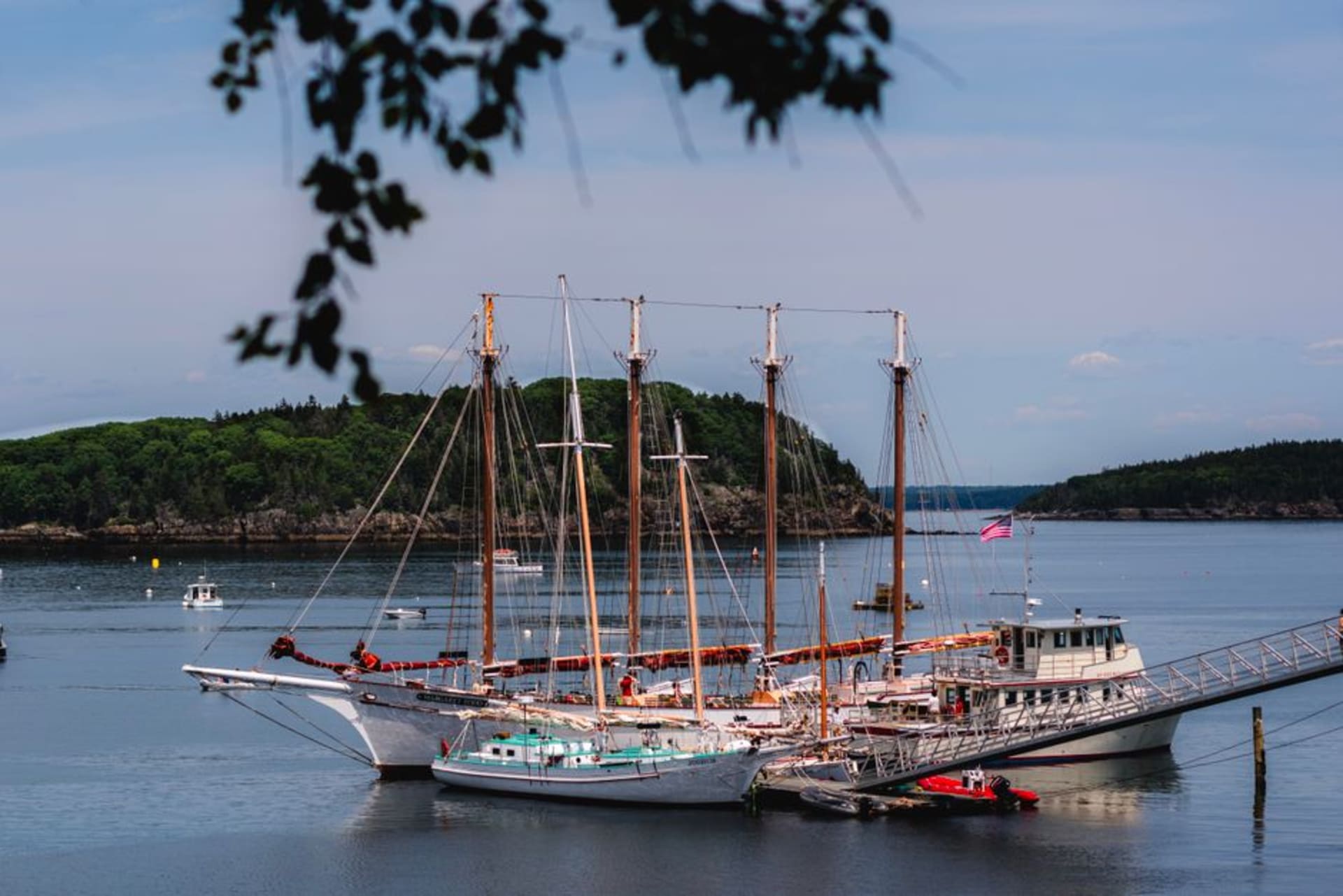
Bar Harbor, Maine
"Twice a day the ocean opens a door and dares you to walk through it before it closes again."
A granite-and-spruce harbor town where Gilded Age fortunes gave way to a park, and the sea itself opens a path to walk on twice a day.
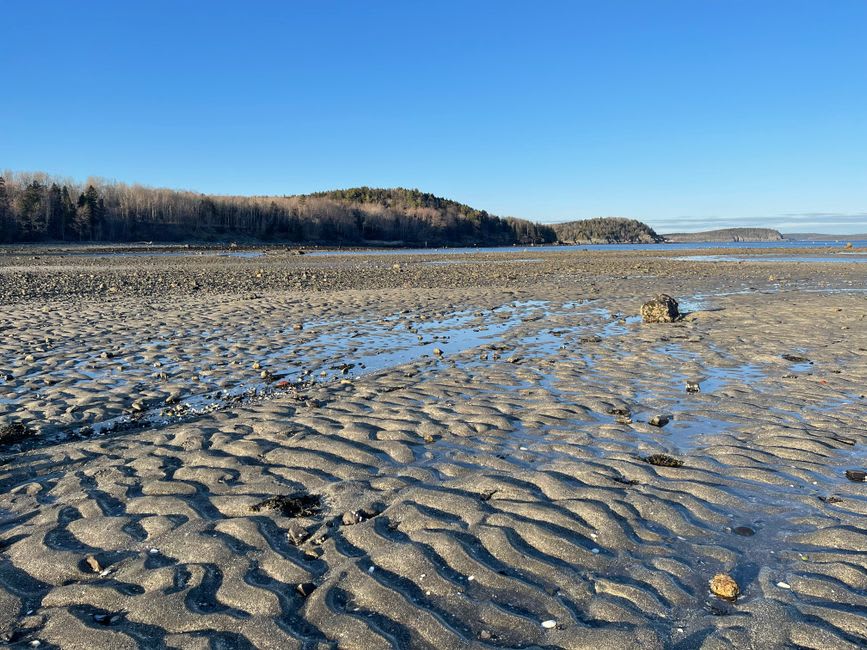
We got to Bar Harbor in the late afternoon, tired from the drive up from Portland, and the first thing Lia said when we parked near the water was “wait, is that a road, or is it the ocean.” Neither, really. It was Bar Island, tethered to the town by a strip of gravel and mudflats that only exists when the tide pulls back far enough to let you cross. We checked a tide chart on a handwritten sign nailed to a post by the harbor and realized we had about ninety minutes before the sea took it back. So we just went, no plan, sneakers getting wet at the edges, other people’s dogs running loose ahead of us like they owned the place.
That sandbar became the thing I kept thinking about for the rest of the trip. It’s such a strange, humbling kind of geography — a passage that’s only sometimes true. We made it across, stood on Bar Island looking back at the town’s church steeples and the hills of Acadia behind them, and then started walking back with maybe twenty minutes of margin, watching the water visibly creeping back in over the flats on both sides. Lia kept saying we should hurry and I kept saying we’re fine, which is a conversation we have in a lot of countries.
The next morning we rented bikes and rode out into Acadia on the carriage roads, and I hadn’t quite understood before arriving that these were built on purpose to keep cars out — John D. Rockefeller Jr. spent decades and a small fortune having them laid through the park with stone bridges and no room for an engine, just horses and now bikes and hikers. It’s such a specific kind of generosity, funding infrastructure whose entire point is subtraction. We stopped at one of the stone bridges to eat sandwiches we’d bought from a bakery on Main Street, and I remember thinking how quiet it was — no traffic hum, just wind through spruce and the click of somebody else’s bike gears passing us.
In town that evening we walked the Shore Path, which has apparently been a public route along the harbor since 1880, past what’s left of the old summer “cottages.” I say cottages loosely — Lia laughed at the word once we saw the size of some of the surviving ones. Almost none of the original Rockefeller-and-Vanderbilt-era mansions made it past 1947, when a fire tore through the island and took most of them with it, so what’s standing now is this odd mix of grand old survivors and everything rebuilt after. We ended the walk at a lobster shack by the water, and I ordered the roll without really asking what came on it, which in Maine turns out to be the correct move every time.
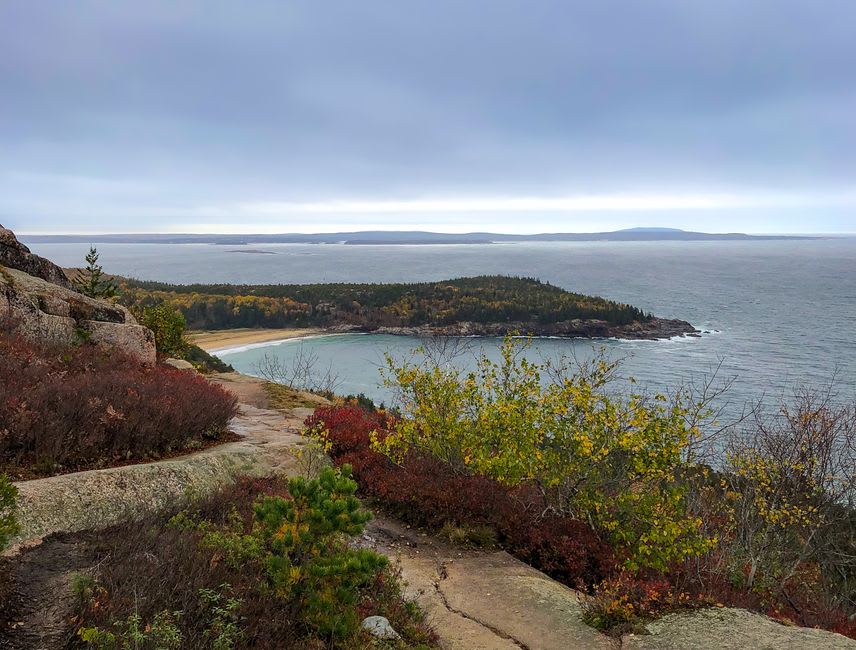
When to go: Aim for June through October, when the weather is warm enough for the carriage roads and the tides cooperate for a walk out to Bar Island — and if you can time it for September or October, the hills around Acadia turn color in a way that makes the whole bay look like it’s on fire.