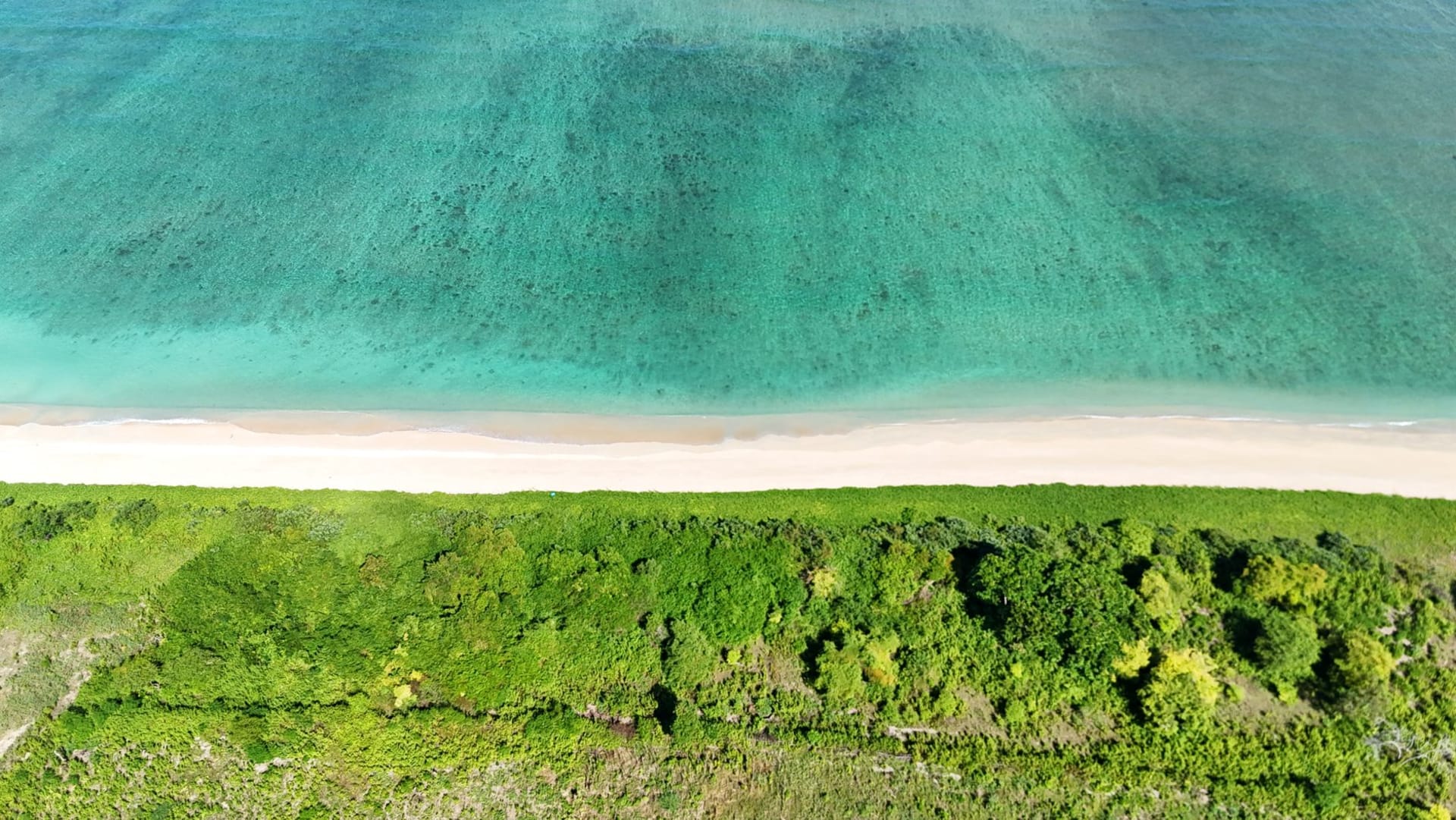
You fly into Ouvéa on a small plane that banks low over the atoll before landing, and the view on approach is the thing that undoes you. The island is essentially a reef — a long, thin arc of land barely raised above sea level, with the open Pacific on one side and a lagoon the colour of something tropical medicine or Caribbean tourism brochures promise but rarely deliver. I pressed my forehead against the window and tried to photograph it, then put the camera away because the photograph would be embarrassing in its inadequacy.
The beach at Ouvéa runs for roughly forty kilometres along the western edge of the atoll without interruption, curving gently as the island curves, the sand white enough to seem synthetic, the water shallow for a long way out and graduating through ten shades of blue before it reaches the reef. I walked a long section of it in the morning before the heat came fully in, barefoot, the sand cool where the night tide had reached it. No one else was around. A frigate bird cruised overhead. The coconut palms along the upper beach made their particular sound in the wind — a dry, papery rattling — and that was the entirety of the noise.

The island has a history that sits uncomfortably alongside the beauty. In 1988, during a period of Kanak insurgency, nineteen gendarmes were taken hostage in a cave near the northern tip of the island, and the French military assault that followed killed nineteen Kanak independence fighters and two gendarmes. The Gossanah Cave and a nearby memorial mark the site now. I visited on a quiet Tuesday and found only a local family picnicking nearby, apparently comfortable with the proximity of recent, violent history to an otherwise placid afternoon. The tension between Ouvéa’s extraordinary natural setting and what happened there in 1988 is something the island carries quietly rather than loudly.
The villages that dot the interior and the eastern shore are small and intimate — thatched cases interspersed with more recent concrete-block houses, a church here and there, men repairing fishing gear in the shade. The pace is genuinely slow, and not in the way of a place that has decided slowness is charming. It is simply how an atoll with limited infrastructure and deep-rooted custom life operates. I bought grilled fish from a woman cooking at the side of the road near Mouli village and ate it on the beach at her suggestion, which was excellent advice.

The bridge at Mouli connects the main island to a smaller islet at the southern end of the atoll, and the channel it crosses is a swimming spot that competes with the main beach for the clarity of its water and exceeds it for the abundance of fish. I snorkelled there in the afternoon when the light was still high and the water was like looking through clean glass at a very well-stocked aquarium — except the fish were completely indifferent to me, which is the best kind.
When to go: May through October covers the dry season when the lagoon is at its clearest and the risk of cyclones is minimal. August is peak season and sees the most visitors, mostly from Nouméa and mainland France. June and September offer the same conditions with considerably fewer people and a better chance of having the beach to yourself for hours at a stretch.