Hienghène
"The rocks at Hienghène look like something a mythology invented — except they're just geology being excessive."
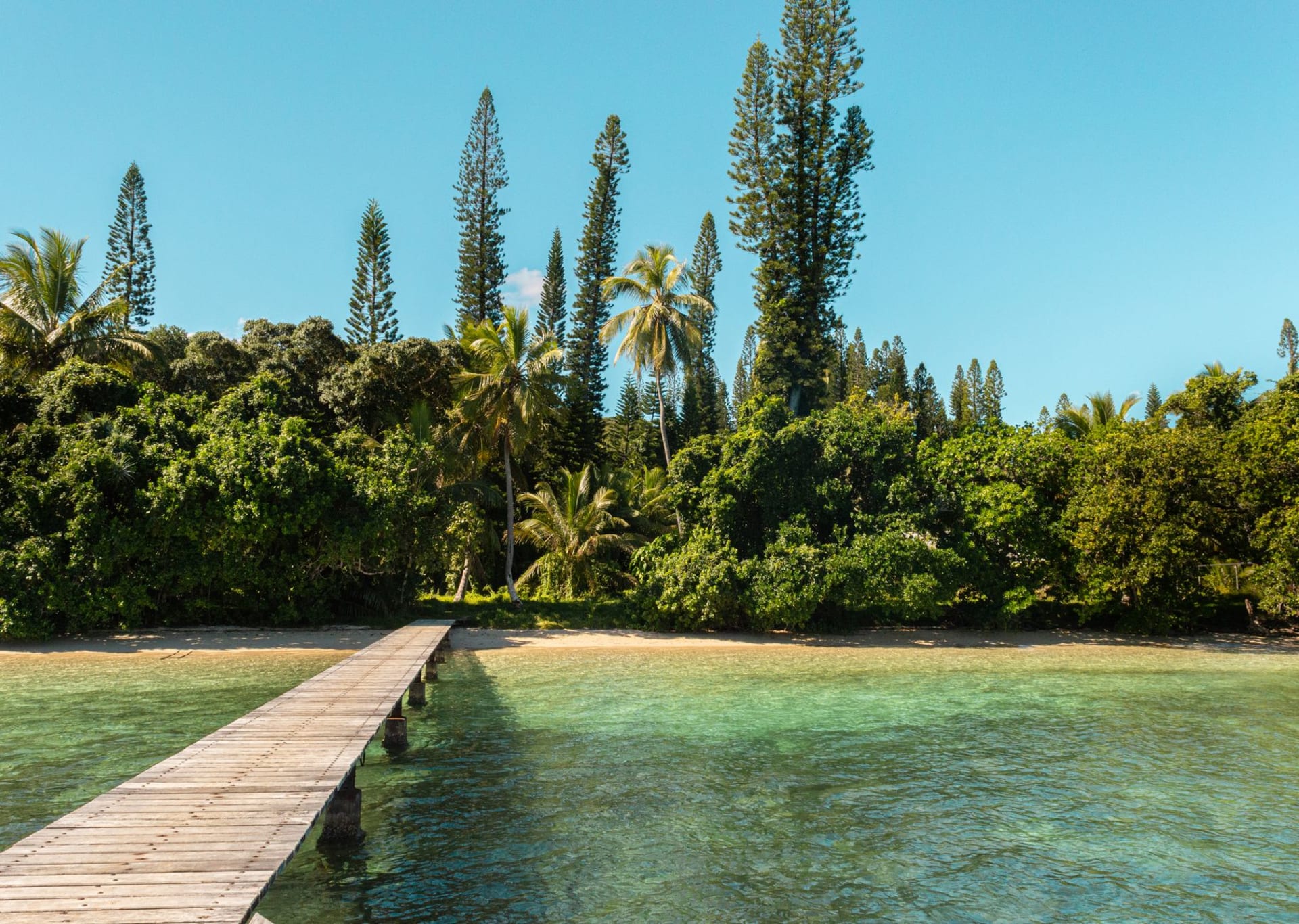
The drive north from Koné to Hienghène takes you over a mountain pass and down through a valley that opens, suddenly, onto the bay — and there they are, the black limestone formations that make Hienghène unlike anywhere else on Grande Terre. The most famous is the Poule Couveuse, the Brooding Hen, a stack of dark rock rising from the water with a shape that does, with some imagination, suggest a hen in the act of sitting. The imagination required is modest. They are dramatic in the way that geological formations sometimes achieve — not because they are the tallest or most colourful, but because they are unexpected, and because the combination of dark rock, deep green jungle, and the particular shade of the bay’s water creates a scene that refuses to be unremarkable.
I arrived in the late afternoon when the light was coming from the west and catching the limestone surfaces in a way that picked out every fold and seam. The bay was still. A pirogue was crossing from the far shore, too distant to see the paddler clearly but the sound of the paddle carrying across the water with that flat, emphatic quality that still water produces. I stayed there long enough for the light to change three or four times.
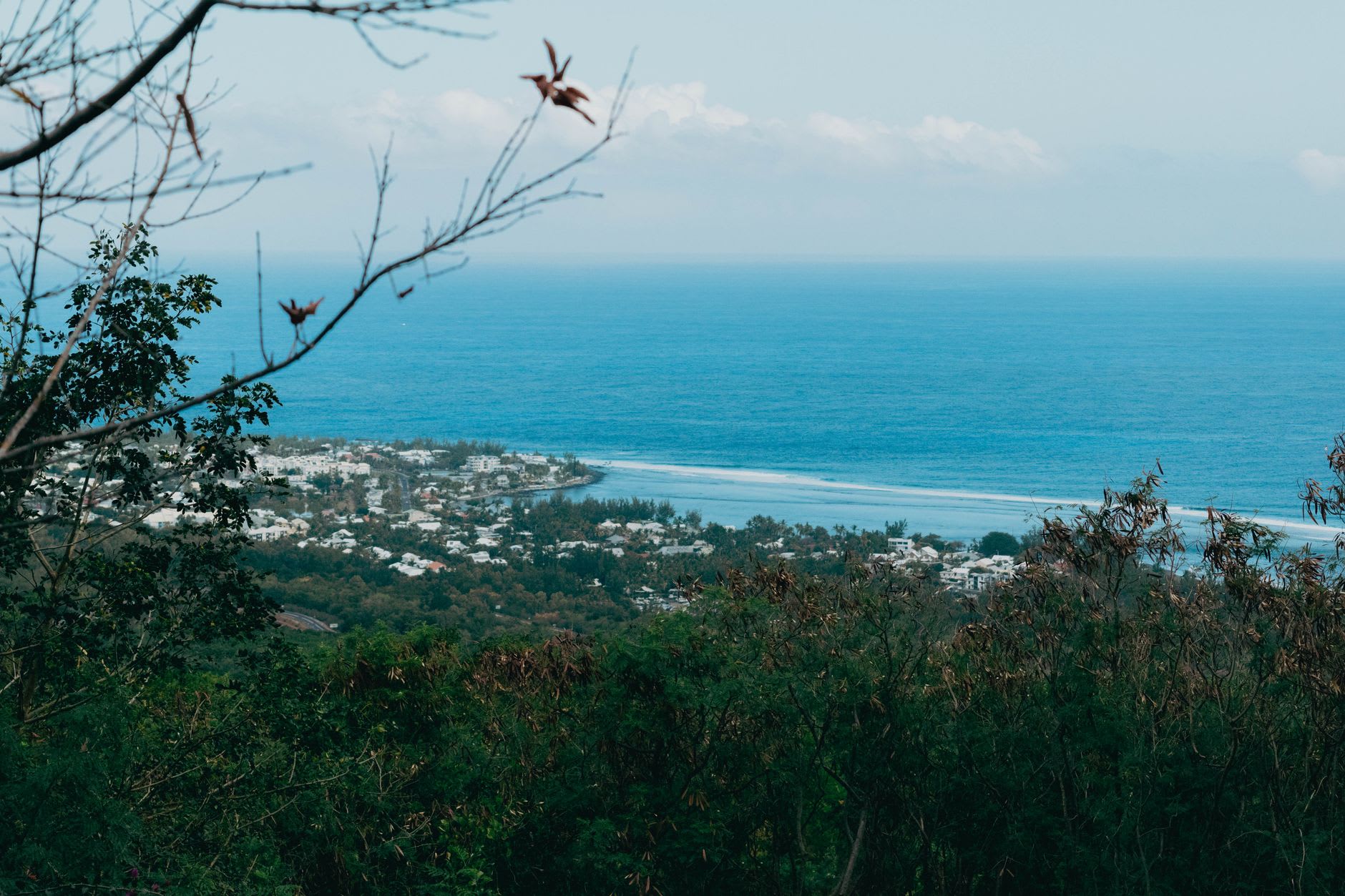
Hienghène village is small and primarily Kanak, one of the strongholds of the independence movement since the 1980s. Jean-Marie Tjibaou, the most prominent figure of the Kanak independence movement and the man after whom the cultural centre in Nouméa is named, was from Tiendanite, a village a short distance inland from Hienghène. The area around the village still carries a certain political weight, and there is a directness in how people discuss the territory’s history here that you don’t encounter in Nouméa, where the conversation is more diluted by population diversity and the softening effect of tourism.
The surrounding territory is among the most biodiverse on Grande Terre. The Panié massif to the south includes Mont Panié, the highest peak in New Caledonia at 1,628 metres, and the forests on its upper slopes contain plant species found nowhere else on earth — New Caledonia has an extraordinary rate of botanical endemism, and this northern region is at the centre of it. I walked the lower tracks of a trail heading toward the massif one morning and found orchids I couldn’t name, tree ferns the height of small buildings, and a quality of forest density that made the air feel solid.
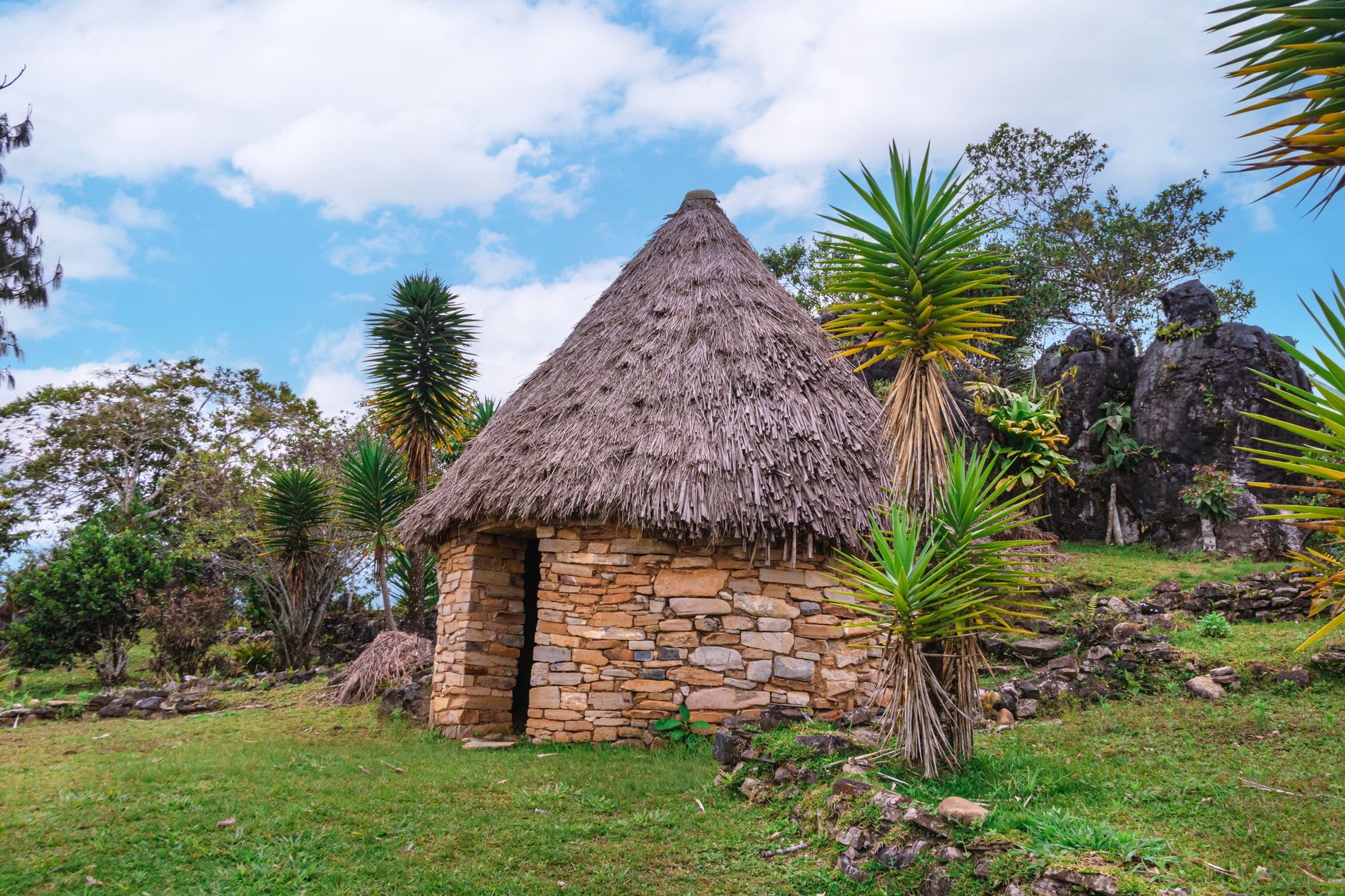
There is accommodation near the village — modest, functional, clan-run — and a small restaurant attached to the gîte that serves local food: grilled fish from the bay, bougna on request with enough notice, and fruit that comes from the gardens surrounding the village. I ate there both evenings, at a table on the terrace facing the bay, and watched the sky go through its changes while the lights of the village came on one by one in the dark.
When to go: May through October is the dry season and the window for hiking toward the Panié massif, when the trails are passable and the views from elevation are clear. The drive north from Nouméa takes between three and four hours depending on stops, which makes Hienghène a genuine commitment — stay at least two nights to justify the road.